
The First Automated Ball-Strike System Review in MLB History
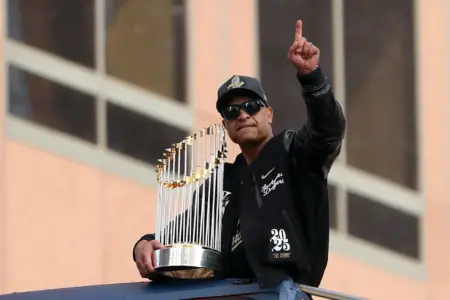
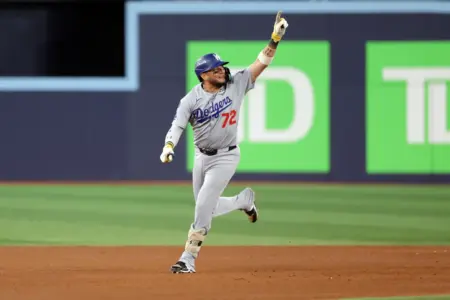
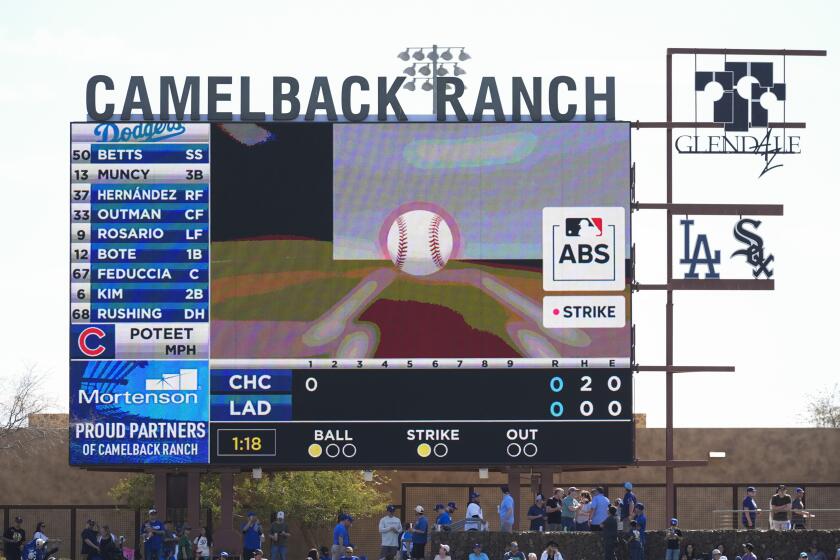
On Thursday at Camelback Ranch, the Dodgers and Cubs faced off in a spring training game that marked a historic moment in baseball: the first-ever use of an automated challenge system for reviewing balls and strikes. Dodgers manager Dave Roberts humorously set the tone before the game, jokingly instructing veteran third baseman Max Muncy not to challenge any calls. Known for his selective hitting and critical eye at the plate, Muncy has a reputation for disagreeing with the strike zone. Despite Roberts’ playful warning, Muncy found himself on the receiving end of the first challenge.
Muncy’s Experience with the ABS
In the bottom of the first inning, with the count 0-1 against Cubs right-hander Cody Poteet, Muncy took a pitch that he and Poteet both thought was a strike. However, home plate umpire Tony Randazzo called it a ball. Poteet, aware of the new system, quickly tapped his head to signal for a challenge. The scoreboard then displayed a digital rendering of the pitch, based on the Hawk-Eye ball tracking system. An animation confirmed that Poteet’s pitch had indeed clipped the corner of the strike zone, changing the count from 1-1 to 0-2. Muncy, who later struck out looking on a similar pitch, became an unwitting participant in a groundbreaking moment in baseball rules history.
The Mechanics and Rules of ABS
Major League Baseball’s (MLB) Automated Ball-Strike System (ABS) is still in an exploratory phase, with no immediate plans to introduce it in regular-season games. The system is currently being tested in select Cactus and Grapefruit League ballparks during spring training. The rules are straightforward: pitchers, catchers, and hitters can trigger a review by tapping their heads after a ball or strike call is made. No one else, including managers, can request a challenge. Each team gets a minimum of two challenges per game, and successful overturns retain the challenge. Challenges must be made immediately, and umpires can deny requests if they suspect delays for signals from the dugout.
Initial Impressions and Reactions
Despite the novelty, the ABS system did not significantly disrupt the game’s flow. MLB’s experiments in the minor leagues found that each challenge added only about 17 seconds to the game time. After the game, Roberts expressed a positive first impression, noting the system’s potential to ensure accurate calls in critical moments. “Especially in a big spot, you want to get the call right,” he said. Muncy, who received some good-natured teasing from his teammates, found the process interesting. “It doesn’t slow the game down at all. It moves fast,” he remarked, adding that the longest part of the challenge was the umpire trying to get the stadium microphone to work.
Strategic Implications and Future Potential
The introduction of ABS could bring new strategic dynamics to baseball. Pitchers might learn to exploit certain pitches that are typically not called strikes, while hitters could benefit from a consistent strike zone across games. Right-hander Bobby Miller, who has experienced ABS in Triple-A, noted that the system could counteract the framing skills of catchers, who are trained to make borderline pitches look like strikes. “When you get some really good catchers back there, you want to challenge it, but it’s a ball,” Miller said. However, he also expressed a preference for human umpire calls, acknowledging that technology will eventually take over. “A ball is a ball and a strike is a strike. So it is what it is,” he added.
Team Dynamics and the Next Steps
The Dodgers, like many teams, are still in the early stages of developing strategies for using ABS. Catcher Will Smith stated that the team hasn’t spent much time discussing the specifics, but they are confident that a solid strategy will emerge. “I’m sure we’ll come up with a strategy of how we’re using it,” Smith said. “We’ll have the front office look at what makes sense.” Muncy, who was the first to be challenged under the new system, took the ribbing in stride. “Of course it’s me that gets the first one after all those guys are joking about it. So fitting,” he laughed. The ABS system represents a significant step forward in baseball’s technological evolution, and while opinions are divided, its impact on the game will be closely watched in the coming years.