
The Looming MLB Salary Cap Negotiations
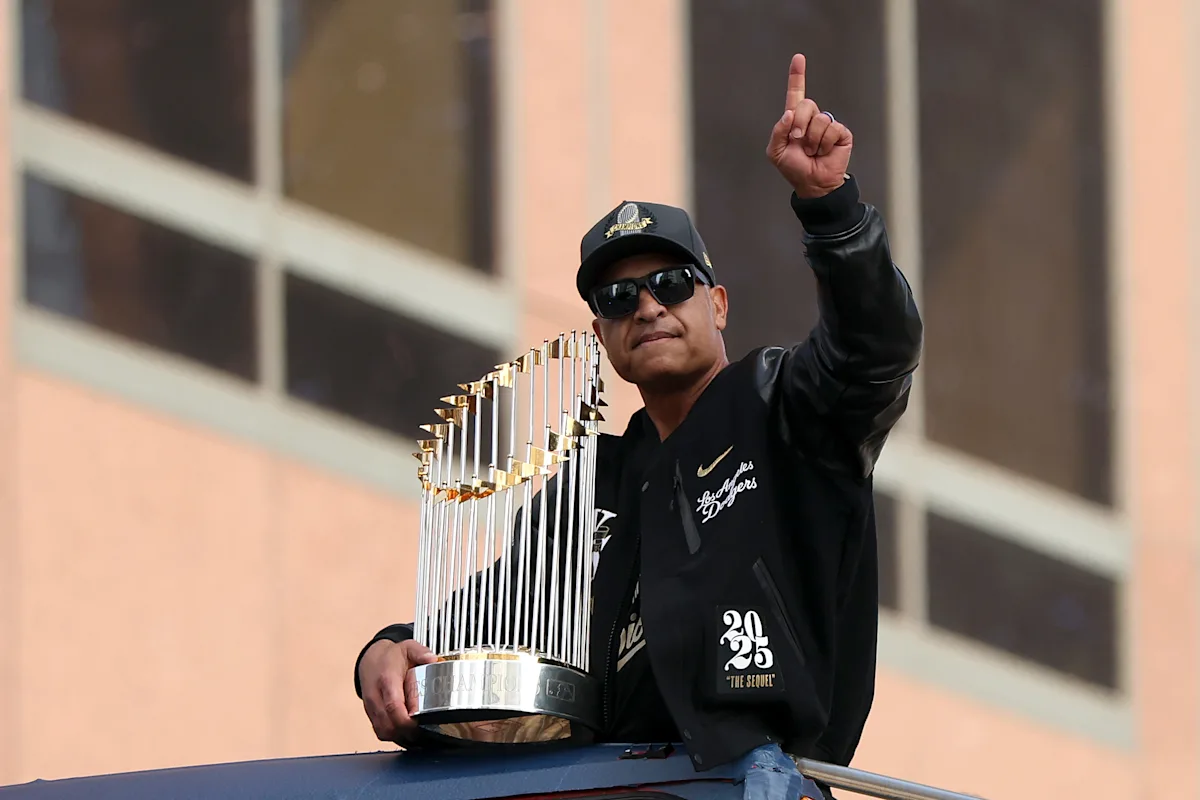
The next collective bargaining agreement (CBA) negotiations for Major League Baseball (MLB) are still a year away, but one topic is already dominating the discourse: the potential imposition of a salary cap. At the forefront of this debate is the Los Angeles Dodgers, who have won two consecutive World Series with a payroll in the neighborhood of $400 million. The Dodgers’ dominance and spending power have reignited discussions about leveling the playing field in MLB. Manager Dave Roberts, who recently appeared on Prime’s “Good Sports,” offered a surprising perspective on the issue. Host Kenan Thompson asked Roberts if baseball should have a salary cap, and his response was intriguing: “You know what? I’m all right with that. I think the NBA has done a nice job of revenue sharing with the players and the owners. But if you’re going to kind of suppress spending at the top, I think that you got to raise the floor to make those bottom-feeders spend money, too.”
The Paradox of Roberts’ Stance
This statement is particularly notable given Roberts’ history. Just a month and a half ago, he openly mocked detractors who claimed that the Dodgers were “ruining baseball.” The manager’s willingness to consider a salary cap, despite his team’s massive payroll, suggests a broader perspective on the game’s health. Roberts’ suggestion of a salary floor in addition to a cap is a potential compromise that could make the idea more palatable to players. Historically, the idea of a salary cap has been a non-starter in MLB labor negotiations, but with the increasing disparity in team payrolls, the landscape is shifting. If the owners decide to push for a cap, the possibility of a labor stoppage in 2025 becomes a near certainty.
The Current State of MLB Finances
MLB remains the only major North American sports league without a salary cap. In 2025, team payrolls ranged from the Dodgers and New York Mets at around $338 million to the Chicago White Sox at $92 million and the Miami Marlins at $85 million. The Dodgers’ payroll, when considering all factors including player benefits and salaries for players no longer on the roster, reached $415 million, the largest in MLB history. This sum includes a staggering $167 million in luxury tax alone. The Dodgers have already committed $320 million to contracts for the 2026 season, and they are likely to add more spending to address gaps in their outfield and bullpen.
The Dodgers’ Resilience and Player Development
However, the imposition of a salary cap does not necessarily spell the end of the Dodgers’ dynasty. The team boasts one of the most advanced player development pipelines in the league, with a farm system considered one of the best in baseball. Manager Dave Roberts is acutely aware that if the Dodgers need to rely on young, cost-effective talent, they have the resources and infrastructure to do so. A salary cap would merely remove one aspect of their competitive advantage, but their ability to develop and promote talent from within would remain a significant asset.
The Broader Impact on MLB
The disparity in team payrolls has long been a point of contention in MLB. The league’s lack of a salary cap has led to significant gaps between the top-spending teams and those at the bottom. This disparity can lead to a lack of competitive balance, which can ultimately harm the league’s financial health and fan engagement. The NBA, with its salary cap and revenue-sharing model, has been cited as a potential blueprint for MLB. The NBA’s system has helped to ensure a more balanced league where smaller market teams have a chance to compete with the larger markets. Roberts’ suggestion of a salary floor to complement a cap could help to address the concerns of teams with smaller payrolls, making the idea more feasible.
The Future of MLB Negotiations
As the 2025 CBA negotiations loom, the topic of a salary cap will likely be a central point of contention. The Dodgers’ willingness to consider the idea, as evidenced by Dave Roberts’ comments, could influence the players’ association and the owners. The key to a successful negotiation will be finding a balance that addresses the concerns of both parties while maintaining the integrity and competitiveness of the league. The suggestion of a salary floor, alongside a cap, could be the compromise that makes this possible. As the league continues to grapple with financial disparities, the discussions around a salary cap will only intensify, and the outcome of these negotiations could shape the future of MLB for years to come.