
A New Era in Pitch Review: The Automated Ball-Strike System
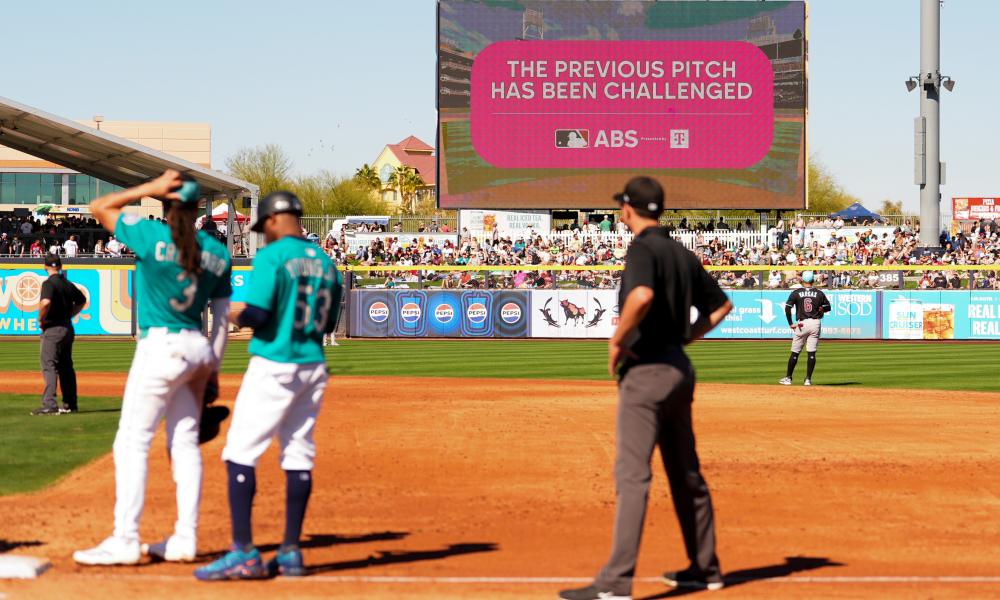
For the first time ever this month, Major League Baseball (MLB) players have the power to contest an umpire’s call of the strike zone. This marks a significant shift from the traditional methods of expressing dissatisfaction, such as exaggerated gestures of disbelief or verbal protests that often lead to ejection. Now, players can appeal to a higher, more objective authority: technology. The Automated Ball-Strike System (ABS), using Hawk-Eye technology, is being tested in about 60% of Spring Training games this preseason. This system measures each pitch relative to a defined strike zone, providing an opportunity to correct human errors that could significantly impact the game.
How the Challenge System Works
The process is straightforward: human umpires continue to call balls and strikes as usual, but each team begins the game with two challenges. The batter, catcher, or pitcher can challenge a call by tapping their head, and the challenge must be made within seconds without input from teammates or coaches. Hawk-Eye technology then confirms or rejects the challenge. If the challenge is successful, the team retains it; if the umpire’s call is upheld, the team loses a challenge. This system adds a layer of accountability and accuracy to the game, ensuring that crucial moments, such as a called third strike to end an inning with the bases loaded, are not marred by missed calls. Despite the technological backing, the challenge system still relies heavily on human judgment and decision-making.
The Evolution and Testing of ABS
MLB’s journey toward implementing ABS is marked by meticulous and incremental testing. The league began experimenting with the system nearly six years ago in the independent Atlantic League. As trials progressed through the affiliated minor leagues, a significant concern was the precise definition of the strike zone. While it might seem logical to define the strike zone as a three-dimensional space, a ball that drops below the zone as it crosses the plate might nick the front edge of a 3D zone, making it difficult to determine its hittability. To address this, MLB adopted a two-dimensional rectangular zone positioned over the middle of home plate, with the size of the zone varying based on the batter’s height. Each player was measured in a two-step process earlier this spring to ensure accurate individual strike zones.
Full ABS vs. Challenge System
Despite the potential for ABS to make every call perfect, MLB has opted for the challenge system, especially in higher-stakes games. One reason is the ease of expanding the use of robots when needed, rather than retracting it. Full ABS would also dramatically alter the role of catchers, affecting the game’s dynamics and aesthetics. The challenge system, on the other hand, introduces a new strategic element to the game, adding excitement and complexity for both players and fans. While some teams might adopt a laissez-faire approach, many are developing specific strategies to maximize the use of their challenges.
Player and Manager Strategies
Mick Abel, a pitcher in the Philadelphia Phillies system, emphasizes the importance of being smart and strategic with challenges. "Be smart; don’t blow them in the first few minutes," he advises. Caleb Ferguson, a pitcher for the Pittsburgh Pirates, successfully challenged one of his own pitches but decided to defer future challenges to the catcher to avoid emotional bias. Managers are also considering player priorities in their strategies. Terry Francona, the manager of the Cincinnati Reds, has instructed his big leaguers to avoid challenging calls altogether, as Spring Training is not as competitive as the regular season. Meanwhile, Rob Thomson of the Philadelphia Phillies encourages saving challenges for fringe players who need every opportunity to prove themselves. He envisions using a challenge in a crucial situation, like a bases-loaded, two-strike pitch with starring player Bryce Harper at bat.
Future Implications and Strategies
If the challenge system is implemented in regular-season games, front offices will likely analyze how and when to best use these new tools. Similar to the strategic calculations for stolen bases, teams will weigh the risks and benefits of challenging calls in different game scenarios. This could lead to a new competitive edge, where players and managers become adept at reading the game and making effective use of their challenges. The addition of the challenge system does not diminish the human element of the game; instead, it provides players with another tool to optimize their performance and strategy. As the system evolves, so too will the ways in which baseball is played and managed.