
The Reluctant Acceptance of Beards
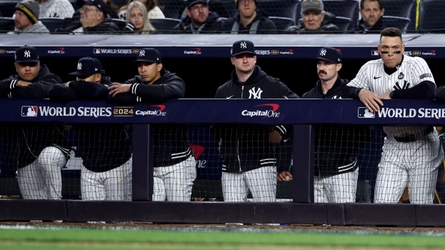
PORT ST. LUCIE — Glenn Sherlock, now the Mets’ catching instructor, was taken aback by the news that the New York Yankees had finally lifted their ban on facial hair. As a young coach in the Yankees’ minor league system during the late 1980s, Sherlock had been involved in the extensive meetings that established the Yankees’ facial hair policy, among other stringent rules that have long defined the organization. “I’m extremely surprised,” Sherlock said at Mets camp on Friday morning, recalling the days when “during pregame stretch, if anyone came out unshaven, we would have to send them back in to shave.” The rule’s genesis and evolution, known to Sherlock and a few others, is a tale richer than most fans realize, reflecting the Yankees’ commitment to discipline and tradition.
The Military Background of Yankee Discipline
The origins of the Yankees’ personal appearance policy trace back to the mid-1970s when George Steinbrenner, the new owner, sought to instill a military-like discipline in his players. Steinbrenner, who had attended military school and served in the U.S. Air Force, wanted the Yankees to mirror the structured, clean-cut image he was familiar with. He ordered players to trim their hair and facial hair, but at the time, the policy was not formally documented. The process of codifying these rules began with a fateful encounter in 1976 between Steinbrenner and Jack Butterfield, a college coach from the University of South Florida. Butterfield’s deep knowledge and no-nonsense approach resonated with Steinbrenner, leading to his hiring to oversee scouting and player development.
A Legacy of Discipline
Brian Butterfield, Jack’s son and a respected coach in his own right, recounted his father’s alignment with Steinbrenner’s vision. “Dad was organized and detailed,” Brian said. “He was in perfect line with what Mr. Steinbrenner represented. Mr. Steinbrenner was extremely disciplined — the short hair and playing the game the right way. He had a football background, and dad had also been the football coach at [the University of] Maine. Mr. Steinbrenner valued toughness, and dad believed in all the same things. He was fearless.” Jack Butterfield’s tenure was cut short by a tragic car accident in 1979, but his legacy lived on through Steinbrenner’s ongoing emphasis on discipline. Bill Livesey, one of Butterfield’s proteges, was promoted to continue this work.
The Importance of Uniform Presentation
One spring training in the early 1980s, Livesey vividly remembered a morning when several squads of Yankee minor leaguers were playing against Baltimore on a backfield. Steinbrenner, sitting between the fields, was not pleased. “Livesey, come here!” he barked. “You see those uniforms?” Livesey, initially puzzled, responded, “Our uniforms?” Steinbrenner replied sharply, “No! The Baltimore uniforms!” On closer inspection, the name patches on the back of the Orioles’ jerseys were sloppily applied and peeling off. Steinbrenner made it clear, “If I ever see a Yankee uniform like that, you’re gone!” Recalling this incident in 2022, Livesey chuckled, “He can’t find anything we’re doing wrong, so he warns me about the other team’s uniforms!”
The Codification of the Yankee Way
In the late 1980s, Livesey and Mark Newman, another long-serving Yankees player development official, gathered a group of coaches to work on a comprehensive manual that would define the “Yankee Way.” Among the participants were Sherlock, Buck Showalter, Brian Butterfield, and Rob Thomson, who would later become the manager of the Philadelphia Phillies. “I remember sitting in a room with all the coaches, along with Mark Newman and Bill Livesey, when Bill and Mark were putting this together,” Sherlock recalled. “They would ask questions that drew from everybody’s expertise in that room. We had a lot of young coaches, but we also had experienced ones.” The discussions delved into minute details, such as the best technique for outfield play. “It was interesting, the attention to detail,” Sherlock said. “When Mark Newman was asking about outfield play, I can remember sitting in that room and listening to [former major leaguers] Ted Uhlaender and Clete Boyer getting into this lengthy debate: whether you should catch the ball on your left side of your body or the right side or over your head. This went on for hours. At some point, it was like, man — it was just a small thing. But I’ll never forget how much time we spent talking about it.”
The Evolution of the Manual
The resulting document, titled The Yankee Systems Development Manual, was a 500-page tome. While the majority of the manual focused on baseball techniques, the first chapter laid out the rules for a Yankee’s personal appearance, including the now-defunct no-beard policy. As technology advanced, the three-ring binder transitioned to a CD-ROM, then a flash drive, and eventually became an element of the Yankees’ iPad app. Pat Roessler, the current Yankees assistant hitting coach, managed each update, a task he once described as “a lot of f–king work!” However, the core Steinbrenner/Butterfield rules on personal appearance remained largely unchanged for decades. This week’s announcement regarding facial hair was not the first change; General Manager Brian Cashman revealed that he had ended the rules about blousing pants and showing four inches of stirrups after Newman’s retirement in 2014. Cashman felt these requirements distorted player evaluations, making them appear larger and less athletic than they were. Despite the recent changes, Cashman confirmed that the Yankees still enforce rules on hair length and jewelry.
A New Era of Flexibility
The lifting of the facial hair ban marks a significant shift in the Yankees’ approach to personal appearance, reflecting a broader trend in professional sports toward greater personal expression. However, the organization remains committed to its core values of discipline and professionalism. “The Yankees are still the Yankees,” Cashman emphasized. “We’re just adapting to the times while maintaining our standards.” This change has been well-received by current players and coaches, who appreciate the balance between tradition and modern sensibilities. As Sherlock noted, “It’s a good move. The game is evolving, and so are the players. It’s important to keep up while still respecting the legacy.” The Yankees’ decision to update their longstanding policies underscores their ability to evolve while honoring the foundational principles that have made them one of baseball’s most storied franchises.