
The Echoes of Past Labor Disputes
The last time Major League Baseball (MLB) and the players association negotiated a collective bargaining agreement (CBA), the owners initiated a lockout before the 2022 season. This work stoppage threatened to result in the loss of regular-season games for the first time since 1995, creating a tense and uncertain atmosphere for both players and fans. Now, with the current CBA set to expire after the 2026 season, there are growing concerns that another, potentially more destructive labor dispute could be on the horizon. The stakes are high, and the issues at play are complex, involving payroll disparities, competitive imbalance, and a long-standing debate over the potential implementation of a hard salary cap.
The Dodgers’ Spending Spree and Its Implications
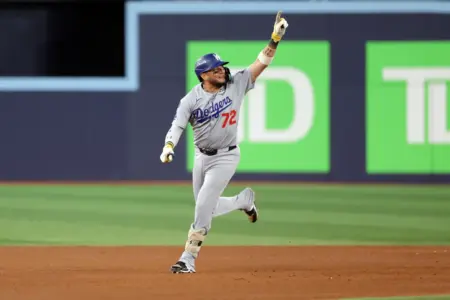
Over the past two offseasons, the Los Angeles Dodgers have embarked on a staggering spending spree, which has positioned them for an MLB-record luxury tax payroll of $402 million, according to Cot’s Baseball Contracts. This massive expenditure is roughly $75 million more than the next highest payroll and well beyond the most punitive tax thresholds, which start at $241 million. The Dodgers’ deep-pocketed Guggenheim ownership group has invested heavily, adding stars like Shohei Ohtani, Yoshinobu Yamamoto, Tyler Glasnow, and Blake Snell on nine-figure contracts. This spending spree has raised a critical question: Is the Dodgers’ spending bad for baseball?
Commissioner Rob Manfred and the Union’s Stance
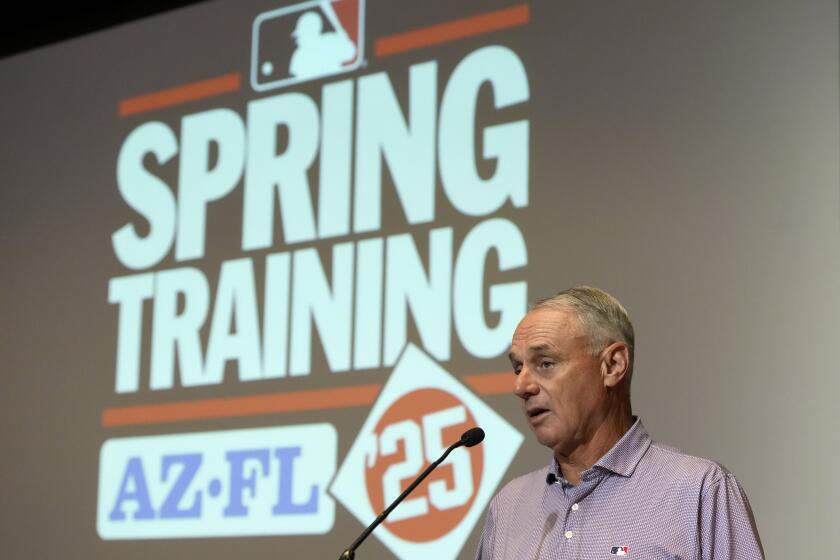
On the surface, both Commissioner Rob Manfred and MLB Players’ Association (MLPA) Executive Director Tony Clark agree that the Dodgers’ spending is within the existing rules and serves the competitive spirit of the game. Manfred stated, “The Dodgers have gone out and done everything possible, always within the rules that currently exist, to put the best possible team on the field. I think that’s a great thing for the game.” However, he also acknowledged the concerns fans and other owners have about the payroll disparities that have emerged as a result of the Dodgers’ spending. “When I say I can’t be critical of the Dodgers, they are doing what the system wants. If I’m going to be critical of something, it’s not going to be the Dodgers. It’s going to be the system,” Manfred added.
The Broader Context of Payroll Disparities
Clark, while echoing Manfred’s sentiments, pointed to a broader issue: why more teams, despite having resources, are not as eager to sign players that can help them be the last team standing. “The bigger question is, teams that have resources — and they do, whether you’re a small market, a mid-market or a large market — is why they don’t seem to be as interested in signing players that can help them be the last team standing,” Clark remarked. Despite the league’s record $12.1 billion in revenue last season, the majority of clubs decreased their luxury tax payrolls, raising questions about financial priorities and competitive drive.
The Debate Over a Hard Salary Cap
The debate over a hard salary cap is a long-standing one in MLB, the only major North American league without such a cap. The league’s current luxury tax structure, introduced in 2003, acts as a de facto soft cap, with penalties for surpassing certain payroll thresholds. The strengthening of these penalties in the 2022 CBA was designed to discourage any club from dominating the sport financially. However, the Dodgers’ spending spree has highlighted the limitations of this system. Manfred did not explicitly state whether owners would push for a hard salary cap, but many industry insiders expect this issue to resurface in next year’s negotiations. The MLPA, staunchly opposed to a hard cap, sees the Dodgers’ spending as an example for other teams to follow. Clark argued, “We’ve always had a team, or teams, that have found themselves in the same conversation that Dodgers find themselves in here. But in an industry that’s growing, why do we have so many teams that aren’t as interested in trying to improve their club as some others?”
A Path Forward and the Risks of Inaction
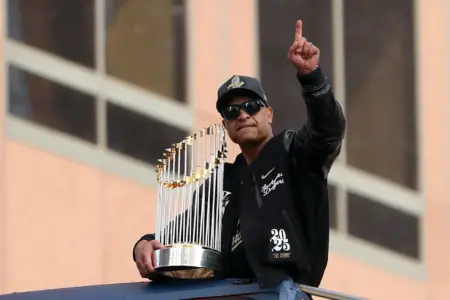
The legitimacy of worries over competitive imbalance remains a point of contention. Despite vast payroll disparities, MLB has not had a repeat champion since the luxury tax was created in 2003, and only three teams with the highest payroll have won the World Series during that period. Past concerns were addressed through measures like increased revenue sharing and the expansion of the postseason. Clark emphasized, “There are opportunities to affect change in the system that aren’t cap-driven. Let’s have a conversation about that, as opposed to what it appears to be, which is a very purposeful and deliberate focus on the one thing the league has been committed to for decades.” The baseball world can only wait and hope that the Dodgers’ disproportionate spending does not contribute to another elongated work stoppage. As Dodgers manager Dave Roberts put it, “That’d be very disappointing for all of us. I just hope that we all realize that it’s a pretty good game right now. Attendance has shown that. The players are better than they’ve ever been, in my opinion. So I hope and pray that we don’t lose that momentum.”