
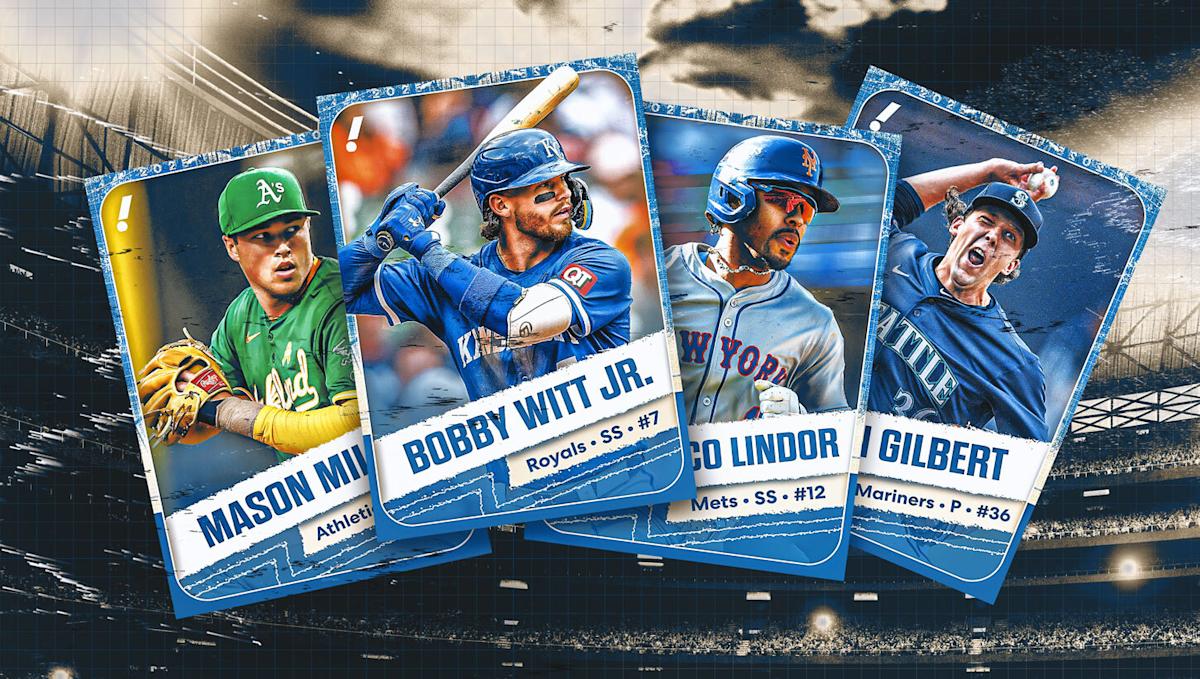
Welcome to the Fantasy Baseball Season
The fantasy baseball season is among us, and it’s a glorious time. This is the truest fantasy sport in many ways, demanding the most decisions and knowledge of the most players, and it’s tied to the longest season. For those reasons, the winner of a fantasy baseball league is mostly determined by skill. Six months is an awfully long time for flukes and bad bounces to even out and iron out the rough edges. However, the preparation for a fantasy baseball season can be intimidating. So many decisions, so many options. The paradox of choice can be a pesky thing in modern society— it’s possible to be frozen by so many alternatives staring back at you. So today, I’ll try to help you out with this planning, make it less scary. Of course, you’re welcome to adopt any piece of my strategy and player takes, as small a slice of it as you want. You can even ignore all of it completely. At the end of the day, you’re the one who has to be satisfied with your team, and heck, any strategy will work if you pick the right players (and sadly, the converse of that is also true).
A Hero-Driven Pitching Strategy
When it comes to drafting pitchers, I favor a Hero-Driven strategy. Think back to fantasy football, where the Hero RB strategy is a common one. I like to examine the starting pitcher and relief pitcher boards and ask myself what good player—but not at a prohibitive price—has a chance to climb a tier and be elite at the end of the season. Said another way, I’m looking for a B or B+ purchase who could give me an A season. If I can get one starting pitcher in this frame and one reliever in this frame, I’ve filled my Hero quota. And in the meantime, I’m loading up on a fantastic offense, too. Some of the affordable aces who could jump a tier include Hunter Brown, Hunter Greene, MacKenzie Gore, Kodai Senga, and Clay Holmes. These pitchers have shown significant potential and are tied to good teams and favorable parks. For example, Gilbert and Kirby are in one of the best parks in baseball, and Webb had an unfortunate BABIP (batting average on balls in play) in 2024, but that San Francisco park will hide a lot of his mistakes. Crochet gives me Chris Sale 2.0 vibes, and the early Sale years in Boston were especially fruitful.
Building a Balanced Roster
For your secondary pitching picks, I recommend a combination of intriguing-upside picks and boring-floor picks. On the upside side, consider Hunter Brown, who figured it out over his final 22 turns, posting a 2.31 ERA and 1.08 WHIP. Hunter Greene led the NL in pitcher WAR last year, and though he has a high walk rate, he also hit 19 men. He’s entering an age-25 season with a strong ceiling. MacKenzie Gore, despite a 4.00 ERA, struck out 181 batters and has pedigree. If a career season is going to happen, why not in 2025? On the boring side, look at Bailey Ober, who has good defense, the right park, and stable peripherals. Seth Lugo and José Berríos are also solid choices, offering consistency and durability. For closers, Mason Miller, Ryan Walker, and Jeff Hoffman are affordable options with high potential. Miller is fifth on the Yahoo board, but the Athletics could be this year’s Tigers, with a competitive team. Walker was lights out all of 2024 and has no competition for the ninth inning, tied to a big park. Hoffman, with his wipeout ratios last year, is a value pick well after pick 100.
Prioritizing Offensive Picks
My early picks will focus on power-speed combos while keeping an eye on batting average. You want dynamic players on top-tier offenses, and there are very few who check most of these boxes, so the supply will deplete quickly. That’s why I recommend against taking a pitcher in the first couple of rounds. The dramatic offensive dropoff is something to be mindful of. Hopefully, I draft in a slot where I can get at least three major impact bats. If you have a choice on your draft position, take one as early as possible. The talent drop-off is most significant early, and then becomes unrecognizable as the draft goes on. Here’s how I consider every position with respect to depth: catcher is deep, especially if you only need one starter. First base and third base are top-heavy, so you might want a starter in single-digit rounds. Shortstop is the fun zone, with many top players eligible, making it a valuable position to target early. Second base has average depth, neither a panic nor a blowoff position. Outfield depth depends on how many you need—three to four is manageable, but five can be challenging. Avoid platoons and bad batting slots whenever possible.
Specific Player Targets
Here are some of my favorite targets, round by round, both hitters and pitchers. In Round 1, consider Bobby Witt Jr. early, Gunnar Henderson in the middle, and Francisco Lindor in the second half. If the Astros didn’t know something when they traded away Kyle Tucker, he’s a solid pick. In Round 2, Lindor is a must if he slips, and Yordan Álvarez and Jackson Chourio are strong choices. In Round 3, Austin Riley is a snap call, and Logan Gilbert or Matt Olson are also good options. By Round 4, it’s a good time to lock in that SP1, with George Kirby often landing here. In Round 5, I need to have a pitcher if I start with four bats, but if not, a Util/OF cheat code would make sense. Middle-round targets include Hunter Brown, any Seattle rotation guy, Bryan Reynolds, Mark Vientos, and Riley Greene. Later-round targets are Xavier Edwards, Isaac Paredes, Brandon Pfaadt, Yusei Kikuchi, Seth Lugo, and Bryson Stott. After Pick 200, consider Spencer Arighetti, Gleyber Torres, Michael Toglia, Kyle Finnegan, Josh Jung, A.J. Puk, Lourdes Gurriel Jr., Mackenzie Gore, Willi Castro, and Tyler Soderstrom.
Players to Fade and Other Tips
I’m fading several players at their current ADP (Average Draft Position). Jacob deGrom, despite his pedigree, is a head-over-heart pick, and I’d limit his keeper shares. Mike Trout has a similar upside to Byron Buxton but is over 100 picks more expensive. Ronald Acuña Jr. has indicated he doesn’t want to run much, so believe him. Willy Adames is moving to a bad park and faces the pressure of a new contract in San Francisco, which also doesn’t favor running. Xander Bogaerts’ career arc is heading in the wrong direction, and Randy Arozarena is in a dangerous age pocket and a challenging park. Co-managing with a friend who shares a similar baseball view is a cheat code, providing support and sharing the workload. The 2025 Dodgers are almost guaranteed to make the playoffs, but be cautious of load management affecting their in-season usage. Staying engaged in August and September can give you an edge, as many managers disengage when football season starts. Always take note of the waiver calendar and cadence when your league assembles, and make sure everything is in your online calendar. Trust WHIP over ERA, and focus on K/BB ratios for both pitchers and hitters. New relievers emerge every season, so keep an eye out for them a few weeks into the season. Lastly, remember that fantasy baseball is supposed to be fun. It’s okay to draft a local player or two for kicks.
Staying Connected and Enjoying the Ride
I’m here to share the ride with you. Catch me on X/Twitter (@scott_pianowski) or on Blue Sky (@pianow.bsky.social) and let’s talk some ball. Whether you’re a seasoned veteran or a newbie, the key is to enjoy the process and make informed, strategic decisions. The fantasy baseball season is a marathon, not a sprint, and the more you prepare and stay engaged, the better your chances of success. So, open up your draft list, season it to taste, and let’s make this season a memorable one!