
Yes, the Numbers Do Lie
In the world of baseball, numbers can often be deceiving. A cursory glance at a box score or a brief study of fantasy baseball categories might paint a misleading picture of a player’s true performance. Fantasy players and analysts need to dig deeper to uncover the real story behind the stats. Here are a few notable examples of players whose 2024 numbers don’t tell the whole story and why you should be wary when drafting them for the 2025 season.
Willy Adames’ 112 RBI Were a Lie
Willy Adames had a standout year in 2024, setting career highs in several key categories: 32 home runs, 93 runs scored, 112 RBI, and 21 stolen bases. These impressive numbers, especially the RBI total, are worth a closer look. Adames’s run production was significantly boosted by his position in the batting order, often hitting cleanup, which naturally increases his chances to drive in runs. However, the most striking factor was the sheer volume of opportunities he had with runners in scoring position. Adames saw 224 plate appearances in these situations, the highest since 2012. He even tied Ken Griffey Jr. for the most three-run homers in a season in MLB history and added a grand slam to his tally. Despite his hot performance with runners in scoring position (posting a 1.073 OPS), his OPS with the bases empty was a much more modest .694. Additionally, he left the sixth-most men on base (70) last season, underscoring the abundance of RBI opportunities he received.
For the 2025 season, Adames will be hitting in a different lineup and a much more favorable pitcher’s park after signing with the San Francisco Giants. His 2024 RBI surge was largely due to unsustainable opportunities, and these are likely to regress in 2025. Drafting Adames based on his 2024 RBI total could be a costly mistake, as his performance may not match last year’s numbers.
Hunter Greene’s 2.75 ERA Was a Lie
Hunter Greene’s 2.75 ERA in 2024 was a testament to good fortune rather than consistent performance. While his ERA would have ranked fourth among qualified pitchers (he was just 10 innings short), his Skill-Interactive Earned Run Average (SIERA) was a more modest 3.81, placing him 30th among qualified starters. Greene’s .237 Batting Average on Balls in Play (BABIP) was the third lowest among qualified starters, and his 80.5% Left on Base (LOB) rate was the fourth highest. These statistics are indicators of a pitcher who benefited from a lot of batted balls falling for outs and runners not crossing the plate, which is not a sustainable trend.
Adding to the skepticism is Greene’s career history. He entered the 2024 season with a 15.2% home run per fly ball (HR/FB) rate, but this dropped to a mere 6.9% last year. The Great American Ballpark, his home field, has seen a 28% increase in home runs over the past three seasons and typically features one of the league’s highest BABIPs. Greene’s good fortune last year is unlikely to carry over, especially considering he was sidelined with right elbow soreness in August. While Greene is a talented and exciting young pitcher, his 2024 ERA is a statistical anomaly, and his Average Draft Position (ADP) is inflated as a result. Fantasy managers should approach drafting Greene with caution.
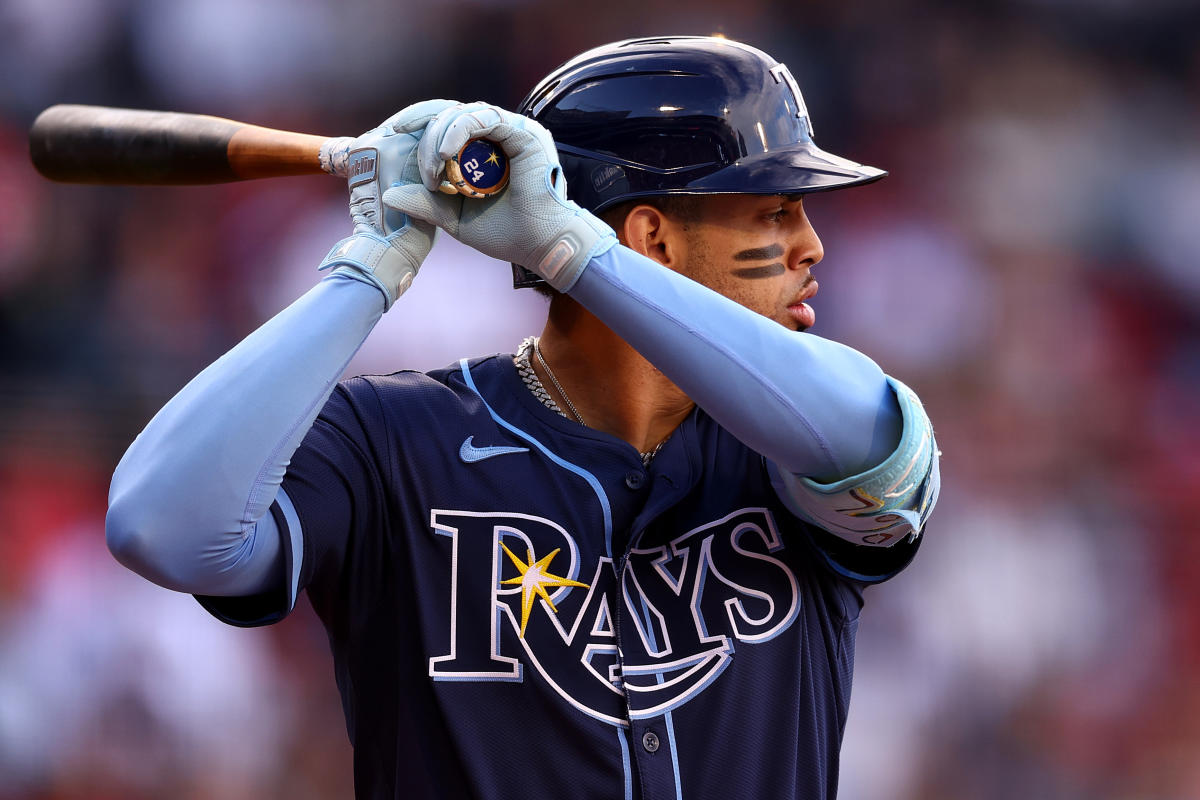
Christopher Morel’s .196/.288/.346 Batting Line Was a Lie
Christopher Morel’s 2024 season was a tale of two halves, but the overall numbers are misleading. After a solid start, Morel’s performance took a significant hit, especially after his trade to Tampa Bay, where he struggled to a .191/.258/.289 batting line over 49 games. His batting average (BA) dropped more than 50 points compared to 2023, despite an increase in his walk rate (BB%) and a decrease in his strikeout rate (K%). Morel’s Weighted On-Base Average (wOBA) and expected wOBA (xwOBA) showed a fourth-largest discrepancy among all hitters, indicating that his performance was not as poor as his batting line suggested.
Morel’s .233 BABIP was the second lowest among 129 qualified batters, a stark contrast to his .311 BABIP over his first two seasons. This suggests that his hit rate should improve in 2025. Morel also showcased an impressive batted ball profile in his sophomore year and should be more comfortable in 2025 without the distraction of a midseason trade. Furthermore, the Rays’ move from the pitcher-friendly Tropicana Field to the warm-weather Yankee Stadium could significantly boost Morel’s numbers. OOPSY projects Morel to hit .247 with 25 homers and 10 steals in fewer than 120 games, with a 128 wRC+. At just 25 years old and with eligibility at 2B/3B/OF, Morel offers substantial value at a discounted price in fantasy drafts this year.
Ryan Helsley’s 49 Saves Were a Lie
Ryan Helsley’s 49 saves in 2024 made him the leading closer in MLB, breaking a franchise record. However, his success was not as straightforward as it seems. Helsley managed these saves despite the Cardinals winning only 83 games, posting a save in a staggering 59% of St. Louis’ victories—an unsustainable ratio. The rebuilding Cardinals are projected to win even fewer games (79) in 2025, which could significantly reduce Helsley’s save opportunities.
Helsley’s dominance in 2024 also came with a significant drop in his strikeout rate (K%) compared to the previous two seasons. His 3.08 SIERA ranked a more modest 35th among relief pitchers, indicating that his performance was not as exceptional as his ERA suggested. Additionally, his injury history is a cause for concern, and his upcoming free agency could make him a trade candidate midseason. Fantasy managers should be cautious about drafting Helsley as a top-five fantasy closer in 2025, as his 2024 save total is not a reliable indicator of his future performance.
Brandon Pfaadt’s 4.71 ERA Was a Lie
Brandon Pfaadt’s 4.71 ERA in 2024 placed him among the bottom five among qualified starters, but this statistic is more misleading than it appears. Pfaadt’s Skill-Interactive Earned Run Average (SIERA) of 3.65 ranked 21st, even ahead of new teammate Corbin Burnes. One of the key factors contributing to his inflated ERA was his extremely low LOB% of 64.5%, the second lowest among qualified starters. This statistic is likely to regress in 2025, bringing his ERA closer to his SIERA.
Pfaadt’s performance notably improved after the All-Star break, although his bloated second-half ERA of 5.93 (due to a .368 BABIP, the highest in the league) doesn’t reflect it. His strikeout-to-walk rate (K-BB%) of 22.1% and hisCalled Strikes and Whiffs (CSW) rate of 29.4% in the second half were among the best in the league. The decrease in home runs at Chase Field, his home park, by 14% over the past three seasons (the fifth most) further supports the idea that Pfaadt’s pitching skills are better than his 2024 ERA suggests. His ADP (SP55 in Yahoo) is much lower than it should be, making him a potential sleeper pick for 2025.
A Closer Look at Misleading Numbers
In fantasy baseball, it’s crucial to look beyond the surface numbers and understand the underlying factors that contributed to a player’s performance. Willy Adames, Hunter Greene, Christopher Morel, Ryan Helsley, and Brandon Pfaadt all had seasons that were influenced by various statistical anomalies. Adames’ RBI total was bolstered by an extraordinary number of plate appearances with runners in scoring position, while Greene’s ERA was a product of an unusually low BABIP and LOB rate. Morel’s poor batting line is likely to improve due to a low BABIP and a more favorable home park, Helsley’s save total is unsustainable given the Cardinals’ projected win total, and Pfaadt’s ERA is expected to regress as his LOB% normalizes.
By recognizing these misleading numbers and their underlying causes, fantasy managers can make more informed and strategic draft picks. Adames, Greene, and Helsley might not repeat their 2024 success, while Morel and Pfaadt offer value due to their potential for regression to more favorable performance metrics. Always dig deeper into the stats and consider the context to avoid falling prey to the lies numbers can tell.