

The Dodgers’ Approach: A Double-Edged Sword
Baseball Commissioner Rob Manfred finds himself in a conundrum when it comes to the Los Angeles Dodgers. On one hand, he admires the franchise’s relentless drive to compete, which has seen the Dodgers break the bank with a $353 million luxury tax payroll and a $103 million tax last season. On the other hand, he worries about the financial disparity this creates within the league. Manfred’s concerns are not unfounded, as the Dodgers’ spending has set a new standard that few other teams can match. However, the players on the field, like Athletics slugger Brent Rooker, see the Dodgers’ big spending as a positive force in baseball. "Teams spending money is never bad for baseball and never bad for players. Ever. In any situation," Rooker asserts. The sentiment among players is clear: while the Dodgers’ financial prowess might create gaps, it ultimately benefits the sport and the players.
A Player’s Perspective: Envy and Admiration
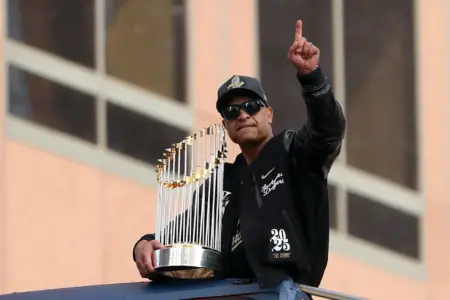
For players around the league, the Dodgers’ deep pockets are a source of both envy and admiration. Former Dodgers right-hander Walker Buehler, who signed with the Boston Red Sox this past winter, understands why players are flocking to Los Angeles. "It’s a first-class organization and obviously coming off a huge World Series," Buehler explains. "On top of that, you have a team with four or five Hall of Famers, making it an attractive place to play." Even players from other teams, like Red Sox pitcher Patrick Sandoval, express a sense of awe at the Dodgers’ roster. "I worked out with some guys who ended up signing with the Dodgers and was like, at a certain point, ‘I didn’t know they had room on the 40-man roster,’" Sandoval says. This admiration is not just about the money; it’s about the organization’s commitment to excellence and the camaraderie it fosters.
The Financial Reality of Baseball
Major League Baseball is unique among major American professional sports in that it lacks a salary cap, though there are luxury tax penalties for exceeding certain spending thresholds. The Dodgers’ financial might has been on full display, with significant investments in players like Teoscar Hernandez, Michael Conforto, Tanner Scott, Kirby Yates, and Roki Sasaki during the offseason. This comes on the heels of a staggering $1 billion commitment to Japanese stars Shohei Ohtani and Yoshinobu Yamamoto last year. Despite the astronomical spending, the Dodgers remain within the rules and have used their resources to build a formidable roster. For Commissioner Manfred, the challenge lies in balancing the Dodgers’ competitive spirit with the broader financial health of the league. "The Dodgers have gone out and done everything possible, always within the rules that currently exist, to put the best possible team on the field, and that’s a great thing for the game," Manfred acknowledges. However, he also recognizes the concerns of fans and the potential for competitive imbalance.
The Historical Context of Financial Disparity
Financial disparity in baseball is not a new phenomenon. Since the advent of free agency in the 1970s, teams with deep pockets have often dominated the sport. One of the most vivid examples is George Steinbrenner’s New York Yankees, who used aggressive spending to win multiple World Series titles, including a three-peat from 1998 to 2000. D-backs manager Torey Lovullo draws a parallel between the Yankees and the current Dodgers. "They’re within the rules, they’re doing what they have to do to get the best players on the field. When I was a kid, it was the Yankees, remember? George Steinbrenner was going crazy with his spending and it yielded World Championships. That’s what we’re all chasing," Lovullo reflects. The Dodgers are not just following in the Yankees’ footsteps; they are attempting to carve out their own legacy as a dominant force in baseball.
The Competitive Spirit of the Game
Despite the financial disparity, the game of baseball is defined by its unpredictability. Third baseman Max Muncy, in his eighth season with the Dodgers, emphasizes that a big payroll does not guarantee success. "This sport is really tough. It doesn’t matter what kind of roster that you have. Time after time, teams have shown that you get into the playoffs and anything can happen," Muncy notes. The 2023 postseason is a prime example, with the Arizona Diamondbacks, despite having a much smaller payroll, sweeping the Dodgers out of the NL Division Series. This underdog victory underscores the heart and determination that can level the playing field, no matter the financial resources. The Dodgers’ success is not just about spending; it’s about the team’s ability to come together and perform on the biggest stage.
The Future of Baseball’s Financial Landscape
As the Dodgers continue to set new benchmarks in spending, the question of how this will shape the future of baseball remains. Commissioner Manfred’s concerns about competitive balance highlight the need for a nuanced approach to the sport’s financial regulations. While the Dodgers’ big spending is a testament to their commitment to winning, it also raises questions about the sustainability and fairness of the current system. The challenge for MLB is to maintain the competitive spirit that fans and players love while ensuring that the league remains financially healthy and accessible to all teams. The Dodgers’ success may be a double-edged sword, but it is one that the league will have to navigate with care to preserve the integrity and excitement of the game.