
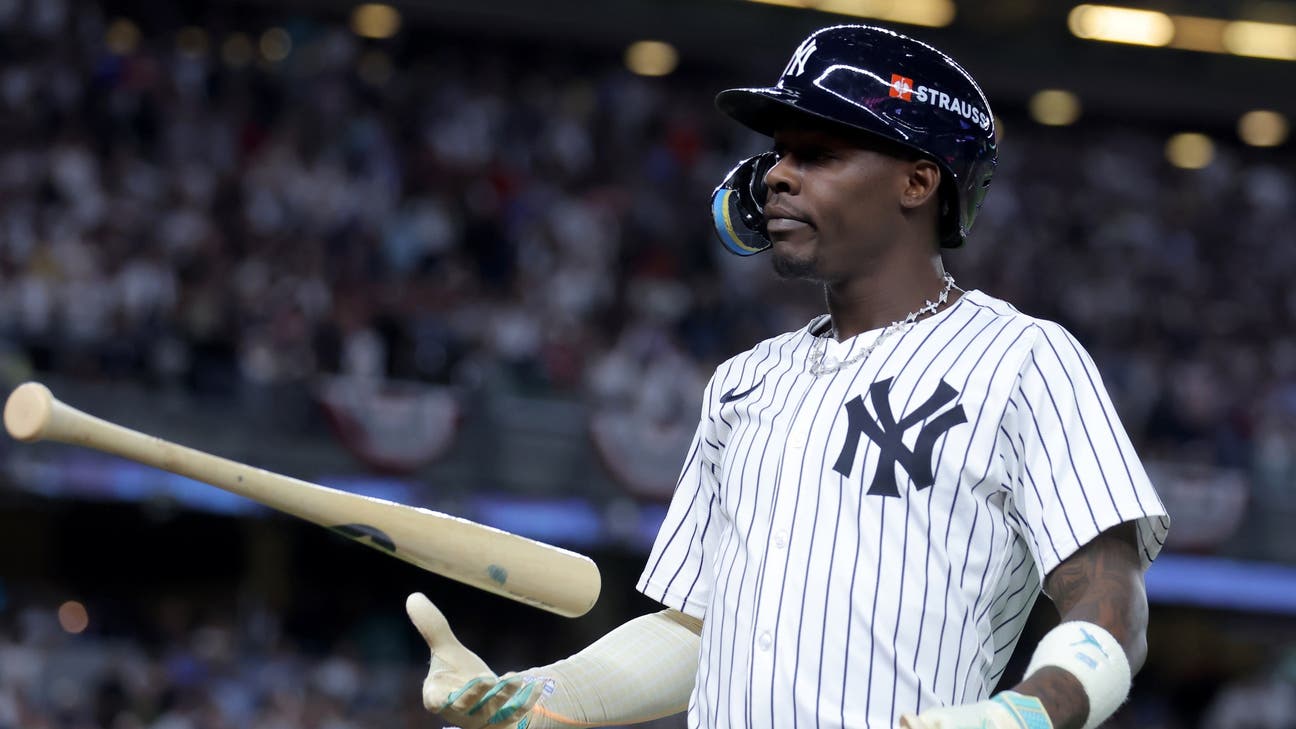
Captain’s Perspective on the Chisholm Controversy
Aaron Judge had not yet seen the video of Jazz Chisholm Jr.’s postgame reaction or read his quotes. As the captain of the Yankees, Judge’s insights carry immense weight within the clubhouse. His understanding of how team dynamics and external perceptions intertwine makes his opinions far more valuable than mine. The incident was already spreading rapidly across the digital landscape, and I needed Judge’s take to solidify my own thoughts. “I haven’t seen it,” Judge said, polite and truthful, when I briefed him on the situation. Chisholm, a popular and generally mild-mannered teammate, had not been in the starting lineup due to Boone’s strategic decision to use a right-handed heavy lineup against Boston’s left-handed ace, Garrett Crochet. Amed Rosario started at second base, and Chisholm came in to replace him defensively in the eighth inning.
Chisholm’s Reaction and Media Fallout
After the game, as reporters gathered in the clubhouse waiting for Max Fried to speak, Chisholm walked to his locker. Reporters and camera operators followed him, hoping for a candid response. When asked if he was surprised about not starting, Chisholm turned away, fiddled with the plastic hangers in his locker, and replied, “I mean, I guess, yeah.” Another reporter followed up by asking if he had a conversation with Boone about it, to which Chisholm answered, “It’s a little conversation, not much.” His nonverbal cues and brief responses created an awkward moment that was ripe for misinterpretation. While Chisholm is known for his pleasant demeanor, his reaction was not ideal given the team’s precarious position facing elimination. It was a situation that could easily escalate on social media and online forums, where nuanced communication often gets lost in the noise.
Internal Dynamics vs. External Drama
Standing at his locker after addressing the media, Judge contemplated the potential fallout from Chisholm’s remarks. “It will cause some drama on the outside, but in here we’ll definitely be good,” he said. “Inside this clubhouse, we’re all good. We’re pulling for each other. We’ll be good. There’s always a storm on the outside — but we can’t work that way.” Judge’s comments suggest a strong sense of unity and resilience within the team. He indicated that he would handle the situation internally, but downplayed it as a major crisis. Before the game, a Yankees official (who was not Boone) had assured me that Boone had communicated the decision effectively and that Chisholm had taken it well. After the game, other team insiders echoed that sentiment, stating that Chisholm was not visibly upset or angry behind the scenes. They speculated that he might have been embarrassed and preferred to handle the matter privately. Despite the initial stir, it seems that the team’s internal bonds remain strong.
Boone’s Decision to Remove Max Fried
While Chisholm’s reaction was a significant talking point, another major focus of tomorrow’s discourse was likely to be Boone’s decision to remove Max Fried in the eighth inning of the Yankees’ 3-1 loss to Boston. According to Boone and scouts who were either in the stadium or watching on television, Fried showed signs of fatigue in the sixth inning. In that frame, he induced a groundout, issued a walk, and managed to escape with a ground ball double play. While his velocity remained consistent, his command began to waver. “I felt like his command was not as good those final few [innings],” Boone explained. “He was making so many big pitches and his stuff was good. Look, he gave us what we needed, and felt really good about the outing he put forth. But I felt pretty convinced, especially when we got the double play. Let’s go get one more hitter and be good.”
Fried’s Postgame Comments
Max Fried, a first-year New Yorker, is known for his cautious approach to public comments. He consistently tries to toe the line between honesty and avoiding controversy. After his removal from the game, Fried addressed the media, stating, “I definitely exerted a lot of energy trying to get out of that, but I definitely had enough in the tank for whatever the team needed.” While it might seem like Fried was criticizing Boone’s decision, I believe he was simply trying to avoid creating a headline either way. His awareness of his own fatigue and the need to prioritize the team’s best interests is evident. Fried’s carefully worded response underscores his maturity and professionalism, even as he learns to navigate the complexities of New York media scrutiny.
Moving Forward with Resilience
Despite the brewing controversies, the Yankees remain focused on the task at hand. Judge’s reassurance and the team’s internal support system are crucial in maintaining morale and cohesion. Both the Chisholm situation and Boone’s decision to remove Fried highlight the delicate balance managers and players must navigate in high-stakes series like the Wild Card. External drama can be managed, but the team’s unity and trust are paramount. As the Yankees prepare for the next game, the focus will inevitably shift back to baseball fundamentals and strategic adjustments. The clubhouse remains united, and the team’s ability to handle these moments with grace and resilience will be key to their success moving forward.