
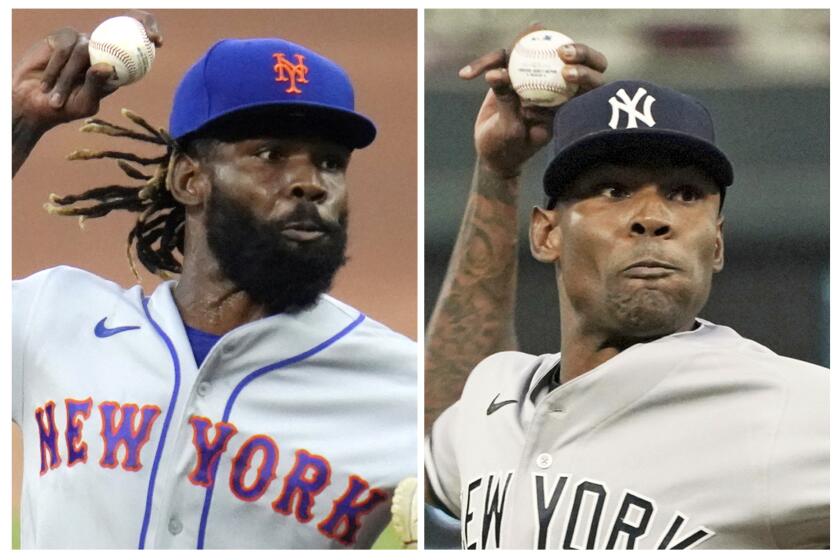
A New Era for Yankee Beards
Miguel Castro, who pitched for the New York Mets on September 2, 2020, found himself clean-shaven and throwing for the New York Yankees on June 9, 2022. This shift in appearance was not just a personal choice but a reflection of a significant policy change within the Yankees organization. The Yankees, known for their strict adherence to a no-facial hair policy, have finally decided to allow their players to sport well-groomed beards. This move marks a notable departure from the long-standing tradition and signals a more modern and flexible approach to player grooming.
The Historical Context
The infamous anti-facial hair policy dates back to 1973 when George Steinbrenner, the larger-than-life owner, purchased the Yankees from CBS. Walking into the clubhouse, Steinbrenner was taken aback by the long hair, mutton chops, and full beards that were popular among players at the time. This style was closely associated with the hippie and anti-establishment movements of the era. Steinbrenner, a man who valued discipline and a professional image, quickly ordered the players to adhere to the "Shave and a Haircut" rule, even if it meant spending a bit more on personal grooming. The policy officially became part of the team’s code of conduct in 1976, following an incident where catcher Thurman Munson sported a beard on his Hostess trading card.
The Influence of the Big Red Machine
Steinbrenner’s decision was not arbitrary; it was heavily influenced by the success of the Cincinnati Reds, known as the Big Red Machine, which won back-to-back World Series in 1975 and 1976. The Reds, under manager Sparky Anderson, maintained a strict no-facial hair policy, and Steinbrenner saw this as a correlation to their dominance. However, he conveniently overlooked the fact that the shaggy-haired Oakland Athletics had defeated the Reds in the 1972 World Series, known as the "Hairs vs. the Squares." This selective memory underscores the simplistic and symbolic nature of Steinbrenner’s stance, conflating a clean-cut appearance with success on the field.
Evolution of Attitudes
As social norms and attitudes have evolved over the decades, the old policy has come under increasing scrutiny. In 1991, Yankees star first baseman and team captain Don Mattingly was benched by manager Stump Merrill for his refusal to cut his hair. Yet, when Mattingly became the manager of the Florida Marlins in 2016, he adopted a similarly strict no-facial hair rule. The irony is not lost, as it highlights the enduring influence of Steinbrenner’s legacy. However, the tide is turning, and the modern baseball world is increasingly accepting of diverse personal expressions. Players like the Dodgers’ third baseman Justin Turner, who became a fan favorite for his performance, leadership, and signature red beard, have shown that facial hair can coexist with professional excellence and team success.
The Decision to Change
The impetus for the change came from the current Yankees owner, Hal Steinbrenner, who announced the new policy on a Friday morning. In a statement, Steinbrenner indicated that this decision was not made lightly. He had been in conversation with a wide range of former and current Yankees players, spanning several eras, to gather their perspectives on the grooming policy. These discussions, which had been ongoing for several years, finally led to the conclusion that it was the appropriate time to move beyond the familiar comfort of the old policy. Steinbrenner’s approach to this change reflects a more thoughtful and player-centric leadership style, in contrast to his father’s more authoritarian approach.
A New Chapter for the Yankees
The policy change is likely to see immediate effects, with new Yankees closer Devin Williams among the first to benefit. Williams, who reported for his spring training physical with a beard he had grown over six years with the Milwaukee Brewers, shaved it within 24 hours to comply with the old rules. However, with the new policy in place, he can now choose to keep his signature look. While social media has been quick to credit Williams for the policy change, it is more accurately a reflection of a broader shift in the organization’s values and priorities. As the Yankees embark on this new chapter, fans and players alike are eager to see how this change will impact the team’s culture and, potentially, their performance.