
The Not-So-Historic Blowout
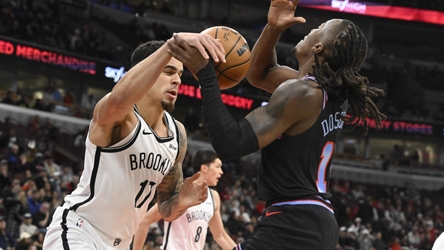
The Chicago Bulls did not suffer the biggest loss in NBA history on Tuesday. That title remains with the Memphis Grizzlies, whose 73-point win over the Oklahoma City Thunder in 2021 still stands alone. The Bulls also didn’t have the most anemic quarter or half in history against the Detroit Pistons, or even one of the bottom 10. In fact, they even won the second half by two points. These facts offer a sliver of consolation, but they do little to soften the blow of a 132-92 defeat. NBA blowouts often mask their true ugliness, with the final score not reflecting the sheer dominance displayed at certain points in the game. The real mark of a blowout is when the arena accepts what is happening, and in the case of the Bulls, this moment came when they entered halftime down 71-29 after one of the worst offensive halves in the history of basketball.
The Halftime Horror
The Bulls’ performance in the first half was nothing short of a disaster. As a team, they shot 12-of-52 (23.1%), including a staggering 1-of-23 from 3-point range (4.3%). They committed 10 turnovers, two fewer than their field goals made. These statistics are not just poor; they are historically bad. The Pistons, a solid but not elite defensive team, outscored the Bulls 34-18 in the first quarter, which felt lopsided at the time. However, the second quarter was even more brutal, with Detroit winning 37-11. This disastrous first half led to the Bulls’ 42-point halftime deficit, a gap that is nearly insurmountable in a 48-minute NBA game.
The Performance in Perspective
This kind of performance is shocking, even from professional athletes. The Bulls’ shooting and turnover issues were exacerbated by their opponents’ efficiency and defensive prowess. Rookie Matas Buzelis ended up leading the team in scoring with 12 points, a telling sign of the Bulls’ struggles. Chicago emptied its bench so fully that every player on its active roster scored at least three points, which is an achievement in itself given the circumstances. However, the fact that the Bulls managed to win the second half by two points is a small silver lining, though it does little to mitigate the overall devastation of the loss.
The Play-In Dilemma
The Bulls’ 22-32 record places them in the final NBA play-in spot, but this position is tenuous. Teams like the Philadelphia 76ers and the Toronto Raptors, who recently acquired Brandon Ingram, are hot on their heels. The 76ers, in particular, have the talent to overtake the Bulls if they can field a healthy lineup consistently. Meanwhile, the Bulls have recently traded away key players like Zach LaVine, signaling a shift towards rebuilding. Given the team’s current roster and form, it’s hard to see them making significant use of a play-in spot, even if they manage to hold onto it.
A Look to the Future
The Bulls’ recent 40-point loss to the Pistons is a stark reminder of the challenges ahead. The team is in a transitional phase, with a focus on developing young talent and building for the future. While the immediate future may be filled with more losses and struggles, the long-term goal is to create a sustainable and competitive team. The decision to trade away players like LaVine is a clear sign that the Bulls are prioritizing long-term success over short-term gains. This approach is understandable, given the team’s current standings and the competitive nature of the NBA.
Conclusion: Embracing the Rebuild
In the aftermath of the devastating loss to the Pistons, the Bulls must find a way to stay focused and maintain their rebuild. While the immediate results are disheartening, the team’s management is making the right moves to ensure future success. The players, despite their struggles, must stay resilient and continue to work on their development. The road ahead is long and challenging, but with the right mindset and strategy, the Bulls can emerge stronger and more competitive in the years to come. For now, the focus should be on learning from this loss and using it as a catalyst for improvement.