
The Changing Narrative of NBA Play
SAN FRANCISCO — Draymond Green, a cornerstone of the Golden State Warriors’ dynasty, was back in the Oakland Arena (formerly Oracle) on Saturday, reflecting on the NBA’s current state. Green, an All-Star and a voice that carries weight, was clear: "Absolutely, the NBA’s style of play is boring right now." Green, who has been instrumental in shaping the modern NBA with his versatile game, is part of a growing chorus of fans and players who yearn for a return to a more physical, less three-point-dominated game. This sentiment is a significant challenge for NBA Commissioner Adam Silver, who has had to navigate a season marked by both thrilling storylines like the rise of the Thunder and Cavaliers and persistent critiques about the game’s evolution.
The Luka Doncic Trade: A Fan’s Perspective
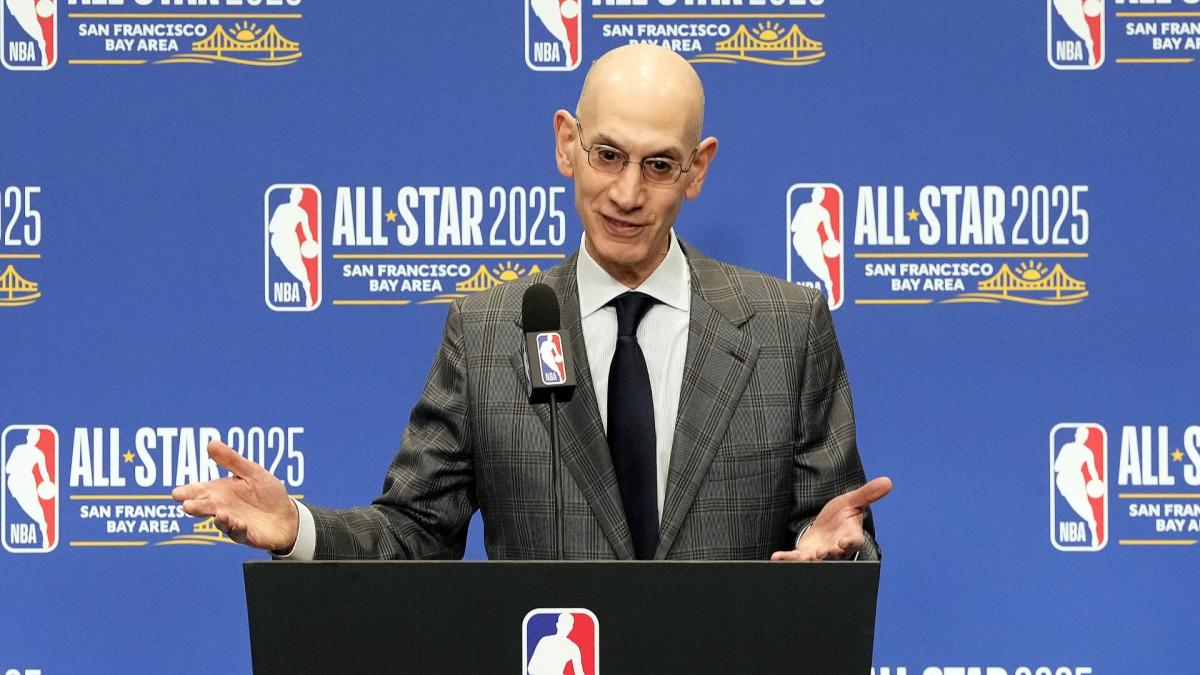
One of the most jarring events of the season has been the trade of Luka Doncic from the Dallas Mavericks. The trade, which was as surprising to many as it was to the player himself, has sparked intense reactions from Mavericks fans. Silver, during his annual All-Star weekend press conference, expressed empathy for the fan base, acknowledging their disappointment and frustration. "In terms of anger with the fan base, I’m empathetic. I understand it," Silver said. Some fans held mock funerals for the franchise, while others were ejected from games for signs and shouts calling for the firing of Mavs GM Nico Harrison. Despite the fan backlash, Silver defended the Mavericks’ decision, stating, "I can say one thing for sure: Whether or not history will ultimately judge this as a smart trade, they did what they thought was in the best interest of their organization." His words, while understanding, also remind us that the league’s ultimate allegiance lies with the owners, not the fans.
The 3-Point Dilemma
The volume of 3-pointers in the NBA has become a contentious issue, with the average game now seeing around 73 3-point attempts between the two teams. Silver, while accepting the criticism, maintains a positive outlook on the game’s overall health. "I think the state of the game is excellent," he said. "It’s the media’s role, the fans’ role, it’s perfectly appropriate to be critical of the game, and I find it very helpful." Steve Kerr, during a recent interview, echoed a similar sentiment: there might be too many 3-pointers, but the game itself is in a great place. The NBA’s Competition Committee regularly discusses this issue, and Silver is open to finding a balance, but he emphasizes the need to avoid overreacting. "There wasn’t one [fix] that he had to suggest," Kerr noted, highlighting the complexity of the problem.
The Impact of Traditional Ratings
Another area of criticism is the decline in traditional television ratings, which some attribute to the league’s style of play or political stances. Silver, however, argues that traditional ratings are an increasingly poor metric for gauging the league’s popularity. "Our ratings are slightly down from last season. We had some weakness early in the season. We rebounded, and ratings are heading up right now," he said. The recent $76 billion television deal with NBC and Peacock is a strong indicator that the league is far from broken. Silver points to record in-person attendance and the league’s substantial social media reach, which now involves an estimated 2.5 billion people. "From that standpoint, record popularity," he said, emphasizing the need to blend traditional and new metrics to understand the league’s true engagement.
A New Generation of Fans
Despite the critics and the nostalgic calls for a return to the "good old days," Silver remains optimistic about the NBA’s future. He believes that the younger generation, which is less influenced by the opinions of former players and traditional critics, will continue to drive the league’s popularity. "I think that’s the really tough question and I think that’s something we are focused on right now," he said, referring to the challenge of measuring engagement in a digital age. The league’s investment in new platforms like podcasts and social media is a clear indication of its commitment to reaching and engaging a broader, more diverse audience.
The NBA’s Path Forward
In the face of ongoing critiques and challenges, Silver’s approach is pragmatic and forward-looking. He acknowledges the concerns but emphasizes the league’s resilience and adaptability. "I don’t even know what you could even compare to us at this time," he said, highlighting the NBA’s broad reach and enduring appeal. The league’s ability to evolve while maintaining its core values will be crucial in addressing the issues at hand. Whether it’s finding a balance in the 3-point volume, navigating fan backlash over trades, or measuring engagement in a digital age, the NBA, under Silver’s leadership, is committed to ensuring the game remains exciting and relevant for all its stakeholders.