
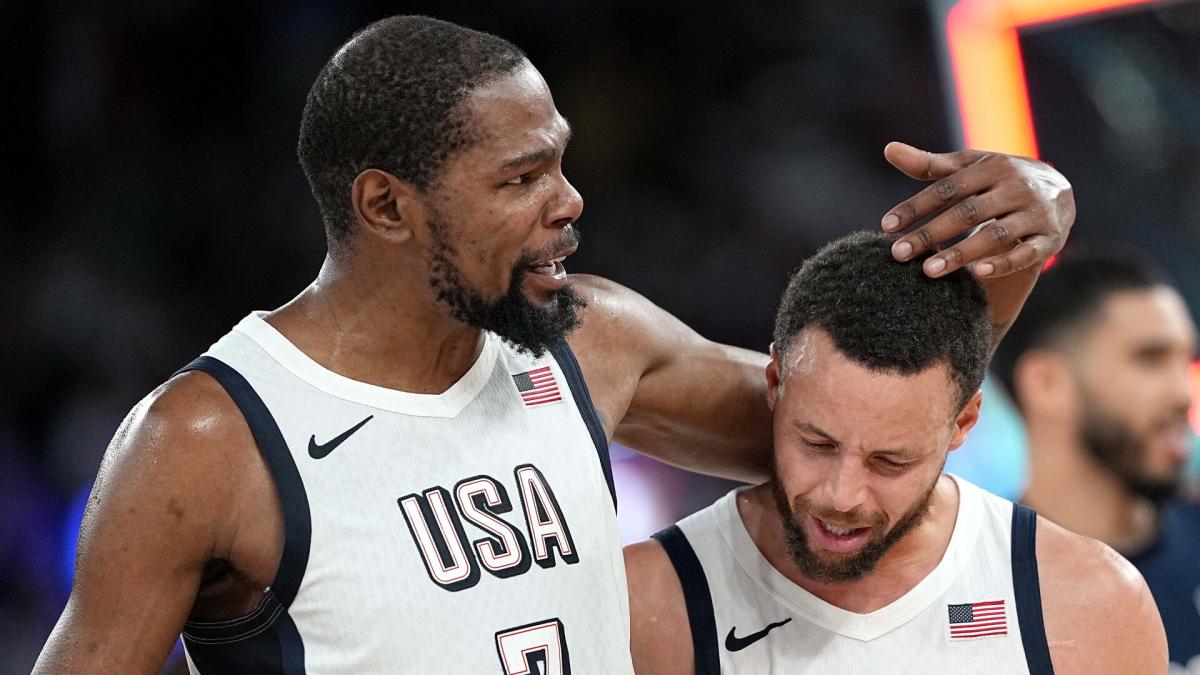
Kevin Durant’s Decision to Reject the Golden State Reunion
Kevin Durant made headlines recently by putting the brakes on trade talks that would have seen him return to the Golden State Warriors to reunite with Stephen Curry. According to Durant, the idea simply "didn’t feel right" and "wasn’t the time." This decision came as a surprise to many, given the successful partnership Durant and Curry had during their time together in Golden State, where Durant won two consecutive NBA Finals MVP awards. However, Durant’s sense of timing and personal comfort played a significant role in his decision, ultimately leading him to stay with the Phoenix Suns.
Curry and Kerr’s Respectful Response
Despite the potential disappointment, Stephen Curry and Warriors head coach Steve Kerr did not take Durant’s decision personally. Speaking to Ohm Youngmisuk of ESPN, Curry emphasized the importance of mutual commitment and alignment in such a significant move. "You need everybody to be all bought in no matter what the history you have," Curry said. "And I respect KD. It’s all about having peace of mind and happiness. Neither one of us controlled that [trade] situation. It’s just you want to make sure somebody wants to be somewhere. Other than that, I’m not trying to convince anybody to be somewhere they don’t want to be." Curry’s perspective highlights a mature and understanding approach to Durant’s choice, acknowledging that personal satisfaction and mental well-being are paramount in an athlete’s career.
The Unusual Trade Process
One of the more intriguing aspects of this scenario is the unusual nature of the trade talks. Historically in the NBA, when a team is considering trading a superstar, the player and their agent/manager are typically informed early and involved in the process to varying degrees. However, in this case, both Durant and Curry were left entirely out of the loop until the discussions had progressed significantly. This lack of communication and transparency likely contributed to Durant’s reluctance, as he felt the need to assess the situation on his own terms. The Warriors, recognizing Durant’s hesitance, pivoted and instead traded for Jimmy Butler, the player the Suns had been targeting all along.
The Legacy of Durant’s Time in Golden State
Kerr, who has coached Durant both with the Warriors and on the USA Basketball team, provided additional context and support for Durant’s decision. "I don’t blame Kevin one bit for not wanting to rerun things here," Kerr said. "He took so much s*** for like, ‘Oh, you’re jumping on the bandwagon’ [when he signed with Golden State as a free agent in 2016]. And then he’s Finals MVP two years in a row. It’s like he still gets criticized." Kerr’s comments shed light on the enduring scrutiny Durant faced, even after his remarkable success with the Warriors. The idea of facing similar criticism again may have been a significant factor in Durant’s choice to reject the trade.
The Importance of Personal Choice and Happiness
The bond between Curry, Durant, and Kerr remains strong, particularly after their shared experiences at the Paris Olympics. This camaraderie is evident in their mutual respect and understanding of each other’s decisions. Curry’s statement that he has "no hard feelings, no resentment" at all underscores the importance of personal choice and happiness in professional sports. Athletes are not just players on a court; they are individuals with their own aspirations, challenges, and emotional considerations. Supporting a teammate’s decision, even when it doesn’t align with one’s own, is a testament to the strength of their relationships.
Looking Forward: Durant’s Future with the Suns
While Durant’s time in Phoenix may be approaching its end, it is clear that he will not be returning to the Warriors this summer. The Suns, who initially sought to acquire Jimmy Butler, now face the challenge of either retaining Durant or finding a new direction that aligns with their long-term goals. Regardless of the outcome, Durant’s decision highlights the complex dynamics of the NBA, where personal and professional considerations often intersect. The respect and understanding shown by Curry and Kerr serve as a positive example of how the league can navigate such situations with grace and dignity.