
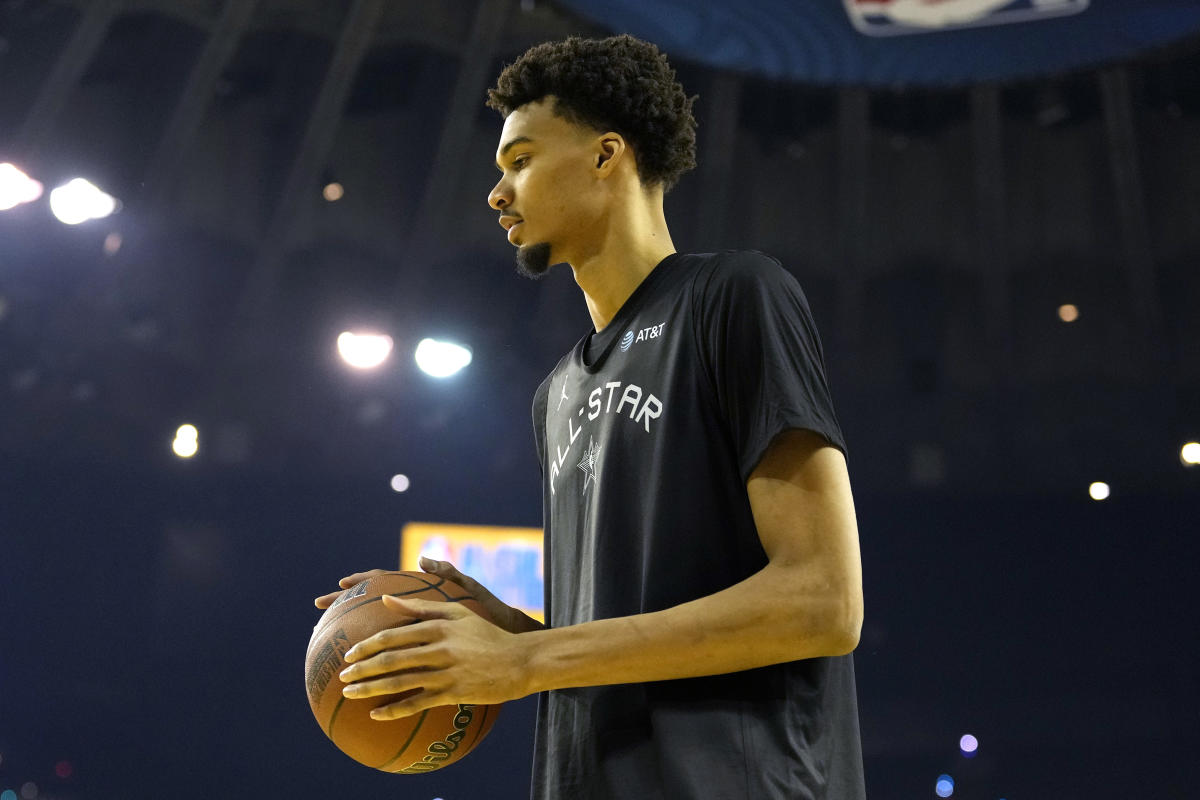
San Antonio Spurs Star Victor Wembanyama Diagnosed with Deep Vein Thrombosis
On Thursday, the San Antonio Spurs delivered a concerning update regarding their star center, Victor Wembanyama. The team announced that Wembanyama will be out for the remainder of the season after being diagnosed with deep vein thrombosis in his right shoulder. The condition was discovered when Wembanyama returned to San Antonio following the All-Star Game. Despite the setback, the Spurs remain optimistic that their young star will be ready for training camp in the upcoming season. However, this diagnosis raises many questions about the nature of the condition and its long-term implications for Wembanyama’s career. It is worth noting that Wembanyama is not the only athlete to have faced similar health challenges, and examining past cases can provide valuable insights.
Understanding Deep Vein Thrombosis
Deep vein thrombosis (DVT) is a medical condition where a blood clot forms in a vein deep within the body. While these clots are most commonly found in the legs, they can also develop in other deep veins, including the arms, pelvis, and shoulders, as in Wembanyama’s case. The primary risk associated with DVT is that the clot can dislodge and travel through the bloodstream, potentially causing a more serious condition known as a pulmonary embolism. A pulmonary embolism occurs when a clot gets lodged in the lungs, blocking blood flow and posing a significant health risk.
DVT is typically more common in older individuals or those who are sedentary. However, it can occur without the usual risk factors, affecting even young and active athletes like Wembanyama. Symptoms often include pain and swelling in the affected area, which is usually how the clot is discovered. Treatment for DVT usually involves blood thinners to help dissolve the clot, but recovery can take several months or longer. For Wembanyama, this means a prolonged absence from the court, but the Spurs are hopeful that he will fully recover and return to his promising career.
Past Cases of Athletes with Blood Clots
Blood clots, including DVT and pulmonary emboli, are not uncommon in the sports world, particularly in the NBA. Several athletes have grappled with these conditions, and their experiences can offer a reference point for understanding Wembanyama’s prognosis.
Brandon Ingram’s Path to Recovery
Brandon Ingram, now with the New Orleans Pelicans, shares a similar medical history with Wembanyama. In March 2019, Ingram was diagnosed with DVT in his right shoulder, leading to his absence for the remainder of the 2018-19 season. He was just 22 years old at the time. However, the condition did not hinder Ingram’s career progression. A few months after his diagnosis, he was traded to the New Orleans Pelicans, where he had an outstanding 2019-20 season, setting career-high averages in points, rebounds, assists, and steals. Ingram’s performance that year earned him his first All-Star nod and the NBA’s Most Improved Player award at the end of the 2020 regular season. His recovery and subsequent success demonstrate that with proper treatment and support, athletes can overcome DVT and continue to excel in their careers.
Chris Bosh: A Career-Shaping Condition
Chris Bosh, a two-time NBA champion and 11-time All-Star, provides a more cautionary tale. Bosh struggled with blood clots throughout the latter part of his career, which ultimately led to his retirement from the NBA in 2019. In 2015, while playing for the Miami Heat, Bosh missed the second half of the season after a blood clot migrated to his lungs. The following year, he was diagnosed with another clot in his leg. The recurring nature of his condition resulted in significant pressure from physicians and the team for him to sit out. After failing a physical and missing the 2016-2017 season, the NBA deemed his condition a career-ending illness. The Miami Heat eventually waived Bosh in 2017 and retired his No. 1 jersey in an emotional ceremony in 2019. Despite multiple attempts to return to the game, Bosh’s career was tragically cut short by the persistent health issues.
Ausar Thompson: A Resilient Return
Detroit Pistons forward Ausar Thompson, like Wembanyama, has also faced blood clots in his young career. In March 2024, Thompson, then 22 years old, was diagnosed with a blood clot, leading to an eight-month absence from the court. After being medically cleared to play, he returned in November and became the Pistons’ starting small forward. Since his comeback, Thompson has averaged 9.3 points, five rebounds, 2.2 assists, and 1.6 steals per game in 33 appearances, including 22 starts. His journey highlights the importance of medical treatment and rehabilitation in allowing young athletes to return to their sport and maintain their competitive edge.
Anderson Varejão’s Life-Threatening Episode
Brazilian forward Anderson Varejão’s battle with blood clots is another significant case. In January 2013, Varejão, then 30 years old and playing for the Cleveland Cavaliers, was hospitalized with a blood clot in his left lung. The pulmonary embolism was discovered after he reported back and chest pain to the team’s medical staff. A CT scan revealed the clot, and Varejão underwent emergency surgery. He was lucky that the clot was discovered and removed before it caused severe harm. Varejão missed the rest of the 2012-2013 season but returned to the court the following year. He continued to play in the NBA and European leagues for a few more years before retiring from professional basketball in 2021. His experience underscores the critical role of early detection and medical intervention in managing DVT and related conditions.
Serena Williams: Overcoming a Lifelong Challenge
While not a basketball player, tennis legend Serena Williams has also faced blood clots and offers inspiration for athletes battling similar conditions. In early 2011, Williams was hospitalized with a life-threatening pulmonary embolism, which involved multiple blood clots in both lungs. Despite the severity of her condition, she returned to the court later that year, reaching the final of the U.S. Open. In 2012, Williams won her fifth Wimbledon singles title and her first Olympic gold medal, completing a career Golden Slam. In 2018, after giving birth to her daughter Olympia, she suffered another pulmonary embolism, requiring multiple surgeries. However, just a year later, Williams was back in the top 10 in the tennis standings. Her resilience and successful return to the sport highlight the potential for athletes to overcome and thrive after dealing with blood clots.
Looking Forward: Wembanyama’s Recovery and Future
The cases of Brandon Ingram, Chris Bosh, Ausar Thompson, Anderson Varejão, and Serena Williams provide a range of outcomes for athletes diagnosed with DVT and related conditions. While each case is unique, the common thread is the importance of timely and comprehensive medical care. For Wembanyama, the Spurs’ optimism and support, along with the guidance of medical professionals, are crucial in his recovery process. The goal is to ensure he returns to the court healthy and ready to continue his meteoric rise in the NBA. As he embarks on this journey, Wembanyama can draw inspiration from the resilience and success of his peers, knowing that with the right approach, he has the potential to overcome this setback and achieve great things in his career.