

The Scorecard Debate
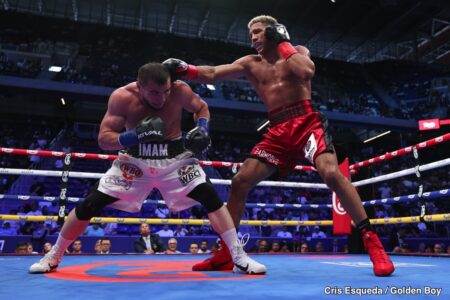
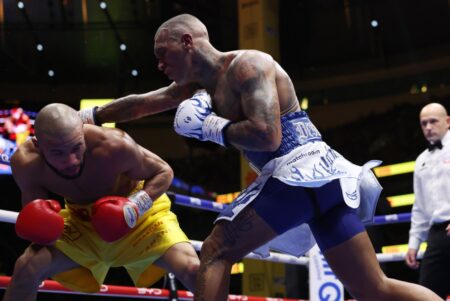
Last Saturday’s rematch between undisputed light heavyweight champion Artur Beterbiev and Dmitry Bivol was a hot topic of discussion, especially regarding the scoring. Coach Stephen Edwards, known for his keen eye and expertise, felt that the fight should have been scored a draw or, at most, a narrow 115-113 in favor of either fighter. The official scores, however, were 115-113, 116-112, and 114-114, resulting in a majority decision for Bivol. Edwards was particularly puzzled by the 116-112 score from one judge, which suggested a clear victory for Bivol. He believed that the judges failed to recognize Beterbiev’s (21-1, 20 KOs) early dominance, particularly in the first round, which he thought Beterbiev had won. The scoring controversy extended beyond just the first round, as Edwards noted that the judges consistently awarded rounds to Bivol that, in his opinion, the champion had lost. This inconsistency in the scoring leaves many questions and adds to the debate surrounding the fight’s outcome.
Commentary Concerns
The issues with the fight’s scoring were compounded by the commentary provided by the DAZN announcing team. Edwards expressed his frustration with the commentary, suggesting that the DAZN commentators were heavily biased in favor of Bivol. “I don’t like the way the DAZN announcers favor everything that Bivol does. In the first part of the fight, Beterbiev had a good round, and they were showing highlights of Bivol. The same thing happened in the first fight,” Edwards told MillCity Boxing. He pointed out that the commentators’ bias was evident not only during the fight but even before it began. This preferential treatment made it challenging for viewers to form an unbiased opinion of the bout. Edwards noted that the commentary often contradicted the action taking place in the ring, making it necessary for some fans, including him, to turn off the sound to avoid being influenced by the overly favorable commentary.
A Closer Look at the Rounds
For Edwards, the fight was evenly matched from start to finish. “It was a dead even fight. That’s why it’s disappointing to see two judges get it so wrong and give Bivol an undeserving win,” he explained. Edwards felt that the fight was so close that a 6-6 draw, which would equate to a 114-114 score, was a fair outcome. Alternatively, a 115-113 score in favor of either fighter was also reasonable. He observed that Beterbiev took control during the middle rounds, while Bivol made a strong comeback later in the fight. “I thought Beterbiev won the tenth, Bivol won the eleventh, and Beterbiev won the twelfth,” said Edwards. The seesaw nature of the fight made it difficult to favor one fighter over the other, and Edwards believed that the judges should have recognized the close nature of the bout by scoring more rounds as even or splitting them more evenly.
The First Round Controversy
One of the most contentious points in the scoring was the first round. Edwards was convinced that Beterbiev had won it, but the judges seemed to disagree. “In the first round, I thought Beterbiev won, but someone said Bivol was up 30-27,” Edwards recounted. He found this score perplexing, as the first round was relatively inactive and didn’t feature a significant amount of action from either fighter. Edwards believed that if the first round was indeed a draw, Beterbiev should have been given the edge due to his slight control. “Much didn’t happen. It probably was another draw, but I thought Beterbiev was edging it a little bit,” he said. The discrepancy in the scoring of the early rounds played a crucial role in the final decision, leading many to question the objectivity of the judges.
The Final Round and the Cut
The final round of the fight was particularly significant, as Beterbiev managed to cut Bivol, which Edwards believed could have swayed the decision in his favor. “Then, when he [Beterbiev] cut him in the last round, I thought it was going to be 6-6 or 7-5,” he said. The cut was a clear indication of Beterbiev’s effectiveness and could have been a decisive factor in the scoring. However, the judge who scored the fight 116-112 in Bivol’s favor seemed to disregard this key moment, leading Edwards to be “shocked to hear 116-112. Neither guy won eight rounds,” he emphasized. The final round was a pivotal moment that should have been closely examined, but the scoring suggested that it was either ignored or heavily weighted in Bivol’s favor, further fueling the controversy.
The Broader Implications
The debate over the scoring and commentary of the Beterbiev-Bivol rematch extends beyond the immediate event and raises important questions about the fairness and objectivity in boxing. Some fans on social media have even speculated that there might have been a business agenda at play, given the potential financial benefits of Bivol holding all four light heavyweight titles. “If you’re into conspiracy theories, there’s more money to be made with Bivol holding the four belts,” Edwards noted. This includes potential lucrative rematches with fighters like Canelo Alvarez and David Benavidez, who have expressed a preference for facing Bivol over Beterbiev. Whether or not these theories hold any merit, the public perception of the fight’s fairness has been tarnished. Edwards believes that the judges and commentators have a responsibility to remain impartial and objective, and their failure to do so in this fight has only added to the mounting criticism. As the boxing community continues to discuss the outcome of the rematch, the need for transparent and fair judging and commentary becomes increasingly apparent.