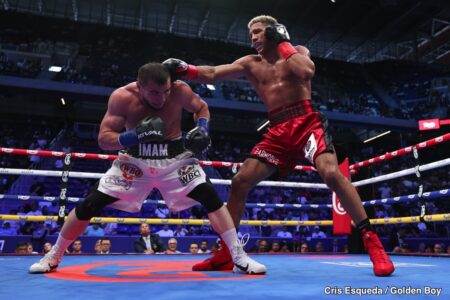


Crawford’s Unavoidable Belt Loss
The news of Terence Crawford being stripped of his WBC 168-lb title on Wednesday came as no surprise to many in the boxing world. This decision was a direct result of Crawford’s refusal to pay the $300,000 sanctioning fee from the $50 million purse he earned in his September fight against Canelo Alvarez. The WBC had already made a significant concession, lowering the usual 3% fee to just 0.6% to accommodate Crawford, but he still refused to comply. This stubborn stance has not only cost him a title but has also potentially devalued his market value as a boxer.
WBC’s Attempts to Compromise
The WBC had shown considerable flexibility in trying to work with Crawford. Typically, the sanctioning body charges a 3% fee on the total purse, which would have amounted to a hefty $1.5 million for Crawford. However, the WBC reduced this to a mere 0.6%, bringing the fee down to $300,000. Despite this significant reduction, Crawford remained intransigent. The WBC’s efforts to find a middle ground were clear, yet Crawford’s refusal to pay any fee, no matter how reduced, left the sanctioning body with no other choice but to strip him of his title. This decision highlights a broader issue in the sport: the importance of compliance and the consequences of non-cooperation.
The Impact of Crawford’s Decision
Crawford’s decision to dig in his heels and refuse to pay the sanctioning fee has repercussions beyond just losing a title. As a 39-year-old boxer with a stellar record of 42-0 and 31 knockouts, Crawford’s market value is tied to his status as an undisputed champion. Holding all four major belts in the super middleweight division (WBC, IBF, WBA, and WBO) would have kept his value high and made him a more attractive opponent for big-money fights. By losing the WBC belt, Crawford now enters negotiations as the former undisputed champion, which could impact his earning potential in future matchups, including a potential rematch with Canelo Alvarez or a fight against any other top contender.
Misplaced Emotions and Misjudgment
Someone needed to sit Crawford down and explain the broader implications of his decision. Emotions can often cloud judgment, and in this case, Crawford’s stubbornness and refusal to pay the relatively minor fee have cost him dearly. His reluctance to part with $300,000, a fraction of his recent earnings, suggests a lack of strategic foresight. Crawford’s failure to understand the importance of maintaining all four belts has not only weakened his position but also raised questions about his long-term planning. This miscalculation could have far-reaching consequences, especially as Crawford approaches the latter stages of his career.
The Conspiracy Theory Debunked
Tim Bradley, a former world champion and boxing analyst, suggested a conspiracy theory linking the WBC’s decision to Hamzah Sheeraz, a fighter allegedly favored by Turki Alalshikh, the chairman of Saudi Arabia’s General Sports Authority. Bradley claimed that the WBC stripped Crawford to give Sheeraz a title without having to face Crawford. However, this theory is rooted in speculation rather than evidence. The real issue is Crawford’s unwillingness to pay the reduced sanctioning fee, which is a standard practice in the sport. The WBC’s decision is a clear example of the organization enforcing its rules and ensuring fairness in the process.
Crawford’s Future and Lessons Learned
As Crawford moves forward, he will need to reassess his strategy and priorities. His refusal to pay the $300,000 fee has not only cost him a title but has also potentially impacted his market value and future opportunities. Holding three belts instead of four may not carry the same weight in negotiations, and at 39, Crawford cannot afford to make such miscalculations. The boxing world is unforgiving, and Crawford’s actions have provided a cautionary tale about the importance of compliance and strategic thinking in a highly competitive and lucrative sport.