
Rebuilding the Gaddafi Stadium: A Home for Cricket’s Oldest Rivalry
When the Gaddafi Stadium in Lahore was rebuilt over the past few months at breakneck speed, the Pakistan Cricket Board (PCB) may have envisioned it opening with cricket’s most ferocious rivalry. However, cricket’s oldest rivalry will have to do instead. Despite Pakistan not being guaranteed a game at this venue, no other match here had greater demand for tickets than England vs Australia. The winners of the last two One Day International (ODI) World Cups, England and Australia, kick off their Champions Trophy campaigns in a venue that has seen a frenzy of ticket sales. The reconstruction of the stadium, a symbol of Lahore’s cricketing legacy, has been a testament to the city’s passion and the sport’s enduring appeal.
The State of ODI Cricket: Two Titans in Decline
However, this match is not a typical battle of two current white-ball titans. Neither team starts this tournament in the best of ODI health, and how they address—or more pertinently, conceal—their weaknesses may be the most consequential factor in the outcome. England has lost 16 of their last 23 ODIs, a run stretching back to the 2023 World Cup. Australia, on the other hand, has come up second best in six of the last eight games. Compounding these issues, Australia is further hampered by injuries and high-profile withdrawals. Notable absentees include Pat Cummins, Josh Hazlewood, Mitchell Starc, Mitchell Marsh, and Marcus Stoinis, leaving the side with a less formidable lineup.
England’s Tactical Shift: A Gambit at No. 3
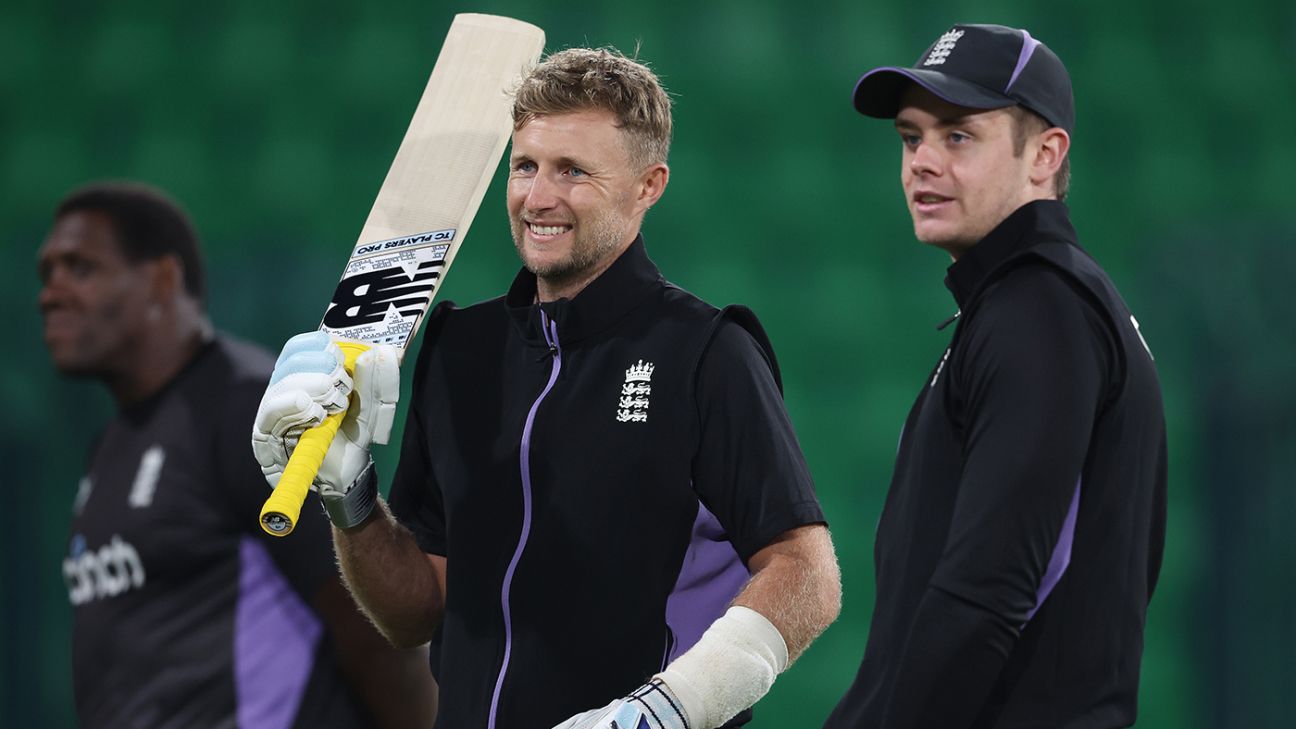
After a series of disappointing ODI performances against India, England’s most significant tactical move may appear as a defensive ploy masquerading as aggression. Two days before the game, England announced their starting XI, revealing that wicketkeeper Jamie Smith will bat at No. 3 for the first time in his international career. Jos Buttler, England’s captain, explained the decision: "We just feel it’s a nice position to give him a free hit to try and really impact the game, making that top three really dynamic. Jamie’s someone with incredible talent and taken to international cricket so well that we feel he’s got the game to place him in that position to try and have a really big impact with a number of guys behind him."
This move, while bold, is not without its strategic underpinnings. England’s recent history has been marked by vulnerabilities in their middle order, especially against India’s spinners in the middle overs. With a calf injury ruling Smith out of the series against India, his ability against spin was best showcased in the longest format. During the third Test in Rawalpindi in October, on a wicket that heavily favored spin, Smith launched a remarkable counter-attack. Despite England being on the ropes at 118 for 6, Smith hit five fours and six sixes in a 119-ball 89, allowing England to rack up 267. His performance included a takedown of Pakistan’s premier offspinner, Sajid Khan, scoring 61 runs at a run a ball without giving away his wicket.
Smith’s Versatility and Captain Buttler’s Confidence
"He’s obviously got the game technically and tactically, but I think the head on his shoulders seems to be one of the biggest strengths," Buttler said. "Nothing seems to faze him too much: I think you could ask him to bat anywhere in the line-up and it wouldn’t faze him. We feel it gives him a nice position to try and really impact the game, make some big runs, and put some pressure on the opposition." This move means that Joe Root, Harry Brook, and Buttler himself will slot down the order, spreading England’s quality through the middle overs and, theoretically, inoculating against the collapses that characterized their white-ball tour of India. The cynical view might term this a rearrangement of the deckchairs in the absence of more wholesale changes, but on these wickets and against the arguably less challenging task of negotiating Australia’s spinners, Buttler had reason for guarded optimism.
The Unique Conditions and Player Experiences
The conditions at the Gaddafi Stadium will differ from those in India, and Buttler acknowledged this. "I think the conditions will be different here [to what] they were in India. Everywhere you go around the world has its own nuances and different conditions. We’ve got lots of guys who’ve played in Pakistan before, guys who’ve played in the PSL, so [they’ll be] sharing those experiences. And then every day in a game of cricket, you’ve got to turn up and assess conditions and play accordingly and work on that." The unique conditions of the Gaddafi Stadium, coupled with the shared experiences of players who have competed in the Pakistan Super League, offer England a strategic advantage in adapting to the venue.
A Stadium Reborn: The Joy of the Lahore Crowd
And unlike the febrile partisanship that can take hold of these occasions when these two sides play each other home or away, this time around, they’ll find themselves greeted by a crowd who doubted they’d see this fixture played here, and are simply glad that it is. For the few lucky spectators who managed to secure tickets, the match represents a moment of triumph and a celebration of cricket’s return to Lahore. The Gaddafi Stadium, once a symbol of Lahore’s cricketing glory, has been reborn, and the city’s passion for the sport is palpable. This match, more than just a clash of two cricketing giants, is a testament to the resilience and spirit of the cricket community in Lahore.