
A New Era for New Zealand
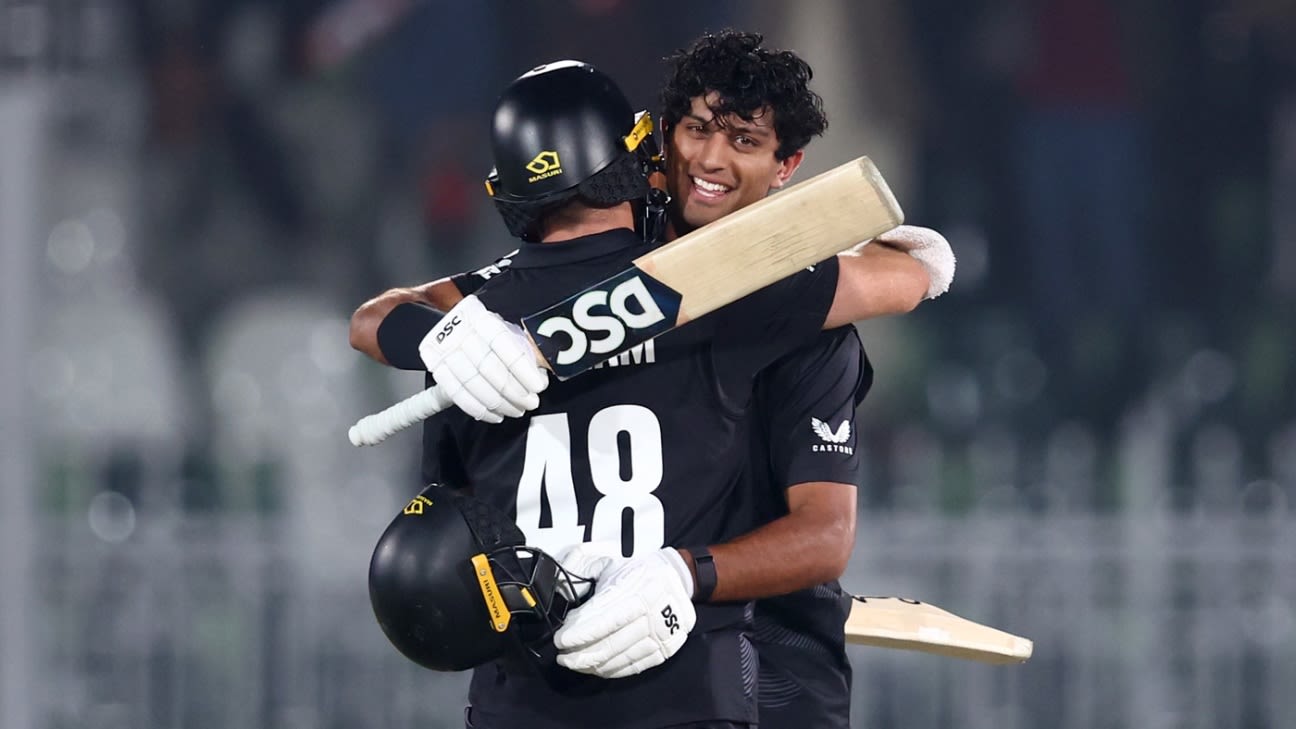
New Zealand’s victory over Bangladesh in the Champions Trophy not only sealed their place in the semi-finals but also India’s. The Black Caps, led by a stellar performance from Rachin Ravindra, showcased the readiness of their new generation to take the baton from the likes of Kane Williamson. Ravindra, batting out of his usual position, was unperturbed when he walked out to the crease with the score at 15 for 2. His innings of 112, replete with poise and touch, confirmed his potential to carry the team forward.
Bangladesh’s Struggle and Shanto’s Fight
Bangladesh, needing a win to stay alive in the tournament, started aggressively but could not sustain their momentum. Their batting lineup, including experienced players like Mushfiqur Rahim and Mahmudullah, faltered under pressure. Their combined 511 matches of experience translated to just 6 runs in a must-win situation. Najmul Hossain Shanto, with a valiant 77 off 110 balls, tried to anchor the innings but found himself constantly readjusting to new partners and match situations. His effort, while noteworthy, was not enough to steer Bangladesh to a competitive total.
Early Wickets and the Rise of Ravindra
Taskin Ahmed and Nahid Rana provided a fiery start for Bangladesh, rattling Will Young’s stumps and dismissing Kane Williamson early. The atmosphere was electric, with the crowd adding to the tension. Into this charged environment walked Rachin Ravindra. Promoted to No. 4 due to Daryl Mitchell’s illness, Ravindra displayed mature batting despite the pressure. His pure touch and timing allowed him to find gaps and capitalize on field restrictions early in his innings. His first 23 runs came off 21 balls with five fours, setting the tone for his innings.
Fielding and Bowls: The Turning Points
New Zealand’s fielding was a crucial factor in their success. Williamson, despite his rare low-score with the bat, was sharp in the field, taking crucial catches at short midwicket and cover. Michael Bracewell, who took an incredible 4 for 26 off 10 uninterrupted overs, made a game-changing diving catch that could have been missed. Bangladesh, on the other hand, missed opportunities, notably a mix-up between Ravindra and Devon Conway that could have resulted in a run-out. This disparity in fielding was a significant point of difference between the two teams.
Bowling Accuracy and Dot Balls
Bracewell’s offspin was instrumental in stifling Bangladesh’s batsmen. His 43 dot balls out of 178 total dot balls highlighted the discipline and accuracy of New Zealand’s bowling. Bangladesh struggled to rotate the strike, a problem exacerbated by the slow afternoon pitch. Mushfiqur’s slog sweep against Bracewell failed to clear the boundary, and Mahmudullah’s ill-advised run down the track led to his dismissal. By the 23rd over, Bangladesh were 106 for 4, and the match situation demanded consolidation. However, their decision-making faltered, leading to Taskin facing a maiden over in the 45th over.
A Smooth Chase and a Deserving Victory
New Zealand entered the chase with confidence, knowing they needed a couple of solid partnerships. Ravindra and Devon Conway put on 57 runs, followed by a 129-run partnership with Tom Latham. Latham, known for his crisis management skills, played a crucial role in guiding the team to victory. His ability to stay calm under pressure and adapt to different situations was evident throughout the chase. New Zealand’s composure and execution in the death overs, with only three fielders on the boundary at times, further emphasized their dominance. As the final wicket fell, New Zealand’s place in the semi-finals and India’s qualification were secured, while Bangladesh’s tournament hopes were extinguished.
This match not only highlighted the emergence of a new generation in New Zealand but also underscored the challenges Bangladesh need to overcome to compete at the highest level. As New Zealand looks forward to the semi-finals, the cricket world watches with anticipation, eager to see what the future holds for these young stars.