
Kohli’s Resurgence Secures India’s Triumph
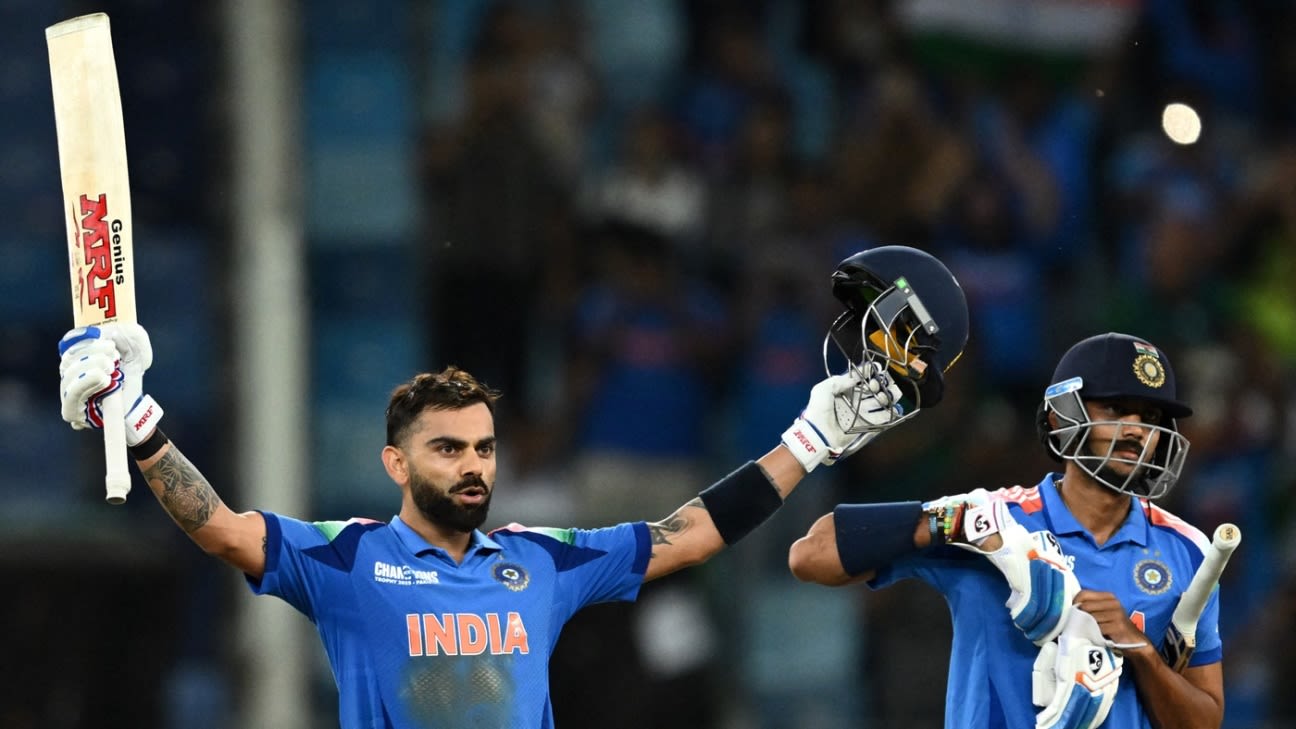
In a match that bore the weight of history and anticipation, Virat Kohli, often considered a footballer’s nemesis, once again proved his enduring mettle. The game was not just a clash of cricketing titans but a personal milestone for Kohli, who reached 14,000 runs in ODI cricket and brought up his 51st ODI century. His performance was crucial in leading India to a six-wicket victory against Pakistan, setting the stage for India’s semi-final appearance in the 2025 Champions Trophy and effectively sidelining the holders and hosts from the tournament. The match highlighted Kohli’s ability to rise to the occasion, even as his mortality appeared more evident than ever.
India’s Dominant Bowling Display
India entered the contest as the favorites, and their bowling attack lived up to the billing. Hardik Pandya, an all-rounder with the flair of a magician, delivered a performance that could be deemed illegal by any standards. Not only did he dismiss Pakistan’s best batter, but he also took down their top scorer, showcasing his versatility and strategic acumen. Pandya’s role was more than just a name on the scorecard; he was the secret sauce that added depth and unpredictability to India’s lineup.
Kuldeep Yadav added the necessary spice to India’s bowling mix. His left-arm wristspin is a rarity, and he made it even rarer by maintaining a quick pace through the air without sacrificing turn or accuracy. This made it incredibly difficult for batters to pick his deliveries, leading to three crucial end-overs wickets. Despite Pakistan’s attempts to mount a late surge, Kuldeep’s relentless accuracy and spin kept them in check. The injury that had plagued him seemed to have no effect on his menacing deliveries, underscoring his resilience and skill.
Pakistan’s Brief Moments of Hope
Pakistan did manage to create a few moments that hinted at a potential comeback. Shaheen Shah Afridi, with a scorching 143kph inswinging yorker, shattered Rohit Sharma’s stumps early in the game. Abrar Ahmed, known for his carrom ball, sent Shubman Gill packing with a devilish delivery that drifted in and turned away to rattle the stumps. However, these flashes of brilliance were not enough to turn the tide. Pakistan’s inability to capitalize on these moments led to a series of collapses, and the game turned decisively against them.
The Middle-Order Collapse
Mohammad Rizwan, who came in at 47 for 2, initially showed promise with a boundary off his first ball. However, his cautious approach saw him scoring at a snail’s pace, accumulating just 24 runs off 50 balls. He hardly put the ball away in anger, and his reluctance to attack seemed to stem from a fear of the adverse consequences of aggressive play. On the other hand, Saud Shakeel tried to keep the innings alive by converting good balls into singles, reaching his fifty with relative ease. But once Rizwan’s aggressive attempt to clear the boundary off Axar Patel’s bowling resulted in his dismissal, the floodgates opened. Shakeel and Tayyab Tahir fell in quick succession, leading to a middle-order collapse that saw Pakistan’s score plummet to 165 for 5. By the end of the innings, they were bowled out for 241, with their inexperienced tail unable to provide the resistance needed.
Hardik Pandya’s Masterclass
Hardik Pandya’s bowling was a standout performance. He effectively exploited the pitch’s grip and unpredictable bounce, taking out Babar Azam at a crucial juncture. This came at a time when India’s lead fast bowler, Mohammed Shami, was sidelined with a shin injury. Pandya’s dismissal of Shakeel, immediately following a boundary, showcased his ability to adapt and read the game. He bowled just short of a length, making life miserable for the batters. Kuldeep Yadav and Harshit Rana, with their disciplined death bowling, further stifled Pakistan’s attempts to build momentum. They bowled 6.4 overs for just 28 runs and claimed four wickets, ensuring that Pakistan’s total remained sub-par.
Kohli’s Clinical Finish
India’s chase was a clinical affair, with Kohli and Shreyas Iyer setting the tone. Gill was the early star, showing a conscious effort to adjust his front-foot movement to better handle Afridi’s full-length deliveries. His aggressive strokes, including a powerful thrust down the ground and a spectacular lift into the sightscreen, hinted at a potential game-changing innings. However, Abrar Ahmed’s masterful carrom ball caught Gill off guard, puzzling the young batter and turning the tide slightly.
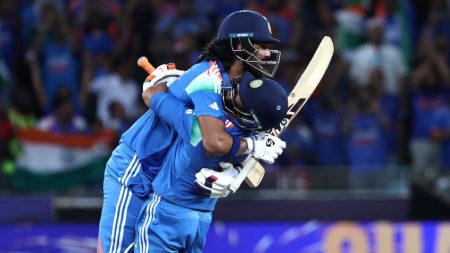
Kohli, though, remained unflappable. He set the tempo early, accumulating 50 runs off his first 62 balls with only three boundaries, demonstrating his ability to score quickly without relying on big shots. As the game progressed, the conditions under lights favored his style of play, and he seemed to know that a century was within reach. His crisp cover drive off Haris Rauf to surpass 14,000 ODI runs was a testament to his form. Despite a brief moment of tension when Axar Patel turned down a quick double to ensure Kohli had the best chance to reach his ton, the veteran batter remained focused. When he finally brought up his century off the last ball of the match, Kohli’s celebratory gesture to the dressing room, "I told you. Relax," spoke volumes about his confidence and the inevitability of his performance. The game, which began as a fierce rivalry, ended as a testament to Kohli’s enduring brilliance and India’s collective dominance.