

A Historic Day in Karachi: New Zealand Spoils Pakistan’s Party
Pakistan had to wait nearly three decades for a global cricket tournament to return to their soil, and the anticipation was palpable as the Champions Trophy kicked off in Karachi. However, the day unfolded in a manner few would have predicted. New Zealand, led by the exceptional performances of Will Young and Tom Latham, handed Pakistan a 60-run defeat, setting a somber tone for the co-hosts’ campaign.
The Early Setback for Pakistan
The match began with an unexpected twist. Just two balls into the game, Fakhar Zaman, one of Pakistan’s key batsmen, suffered an injury while chasing a cover drive from Will Young. This unfortunate incident forced Fakhar off the field for a significant portion of the first innings, and when he finally returned to bat at number four, Pakistan was already in trouble at 22 for 2 in the tenth over. Fakhar’s injury hampered his mobility, and he struggled to keep up with the required run rate, eventually falling to Michael Bracewell for just 24 runs off 41 balls.
New Zealand’s Dominant Batting Display
New Zealand’s batting lineup faced early challenges, losing Devon Conway and Kane Williamson in quick succession. However, it was the partnership between Will Young and Tom Latham that turned the tide. Young, who has often been on the fringes of the national team, seized his opportunity with both hands, scoring a maiden international century away from home. His innings was a masterclass in patient accumulation, as he weathered the storms bowled by Pakistan’s spinners, Abrar Ahmed and Naseem Shah. Young brought up his century in the 35th over, converting it from a fifty in 107 balls.
Latham, too, played a crucial role, showcasing his resilience and adaptability. After a series of ducks leading up to the match, Latham scored an unbeaten 118 off 104 balls. His innings was characterized by a variety of inventive shots, particularly his sweeping and reverse sweeping, which proved particularly effective against Pakistan’s spinners. Together, Young and Latham laid the foundation for a strong total, and with a late surge from Glenn Phillips, New Zealand managed to post an imposing 320 for 5.
Pakistan’s Struggle to Chase
Pakistan’s chase was a tale of missed opportunities and underwhelming performances. With Fakhar still struggling, the burden fell on Babar Azam, who needed 81 balls to reach his fifty. The pitch, which offered turn and variable bounce, played into the hands of New Zealand’s spinners, Michael Bracewell and Glenn Phillips. The spin duo kept the pressure on, making it difficult for the Pakistani batsmen to accelerate. New Zealand’s attack, despite being depleted by the injuries to Lockie Ferguson and Ben Sears, maintained a tight line and length, with the spinners stepping up to the plate.
The Turning Point: Phillips’ Heroics
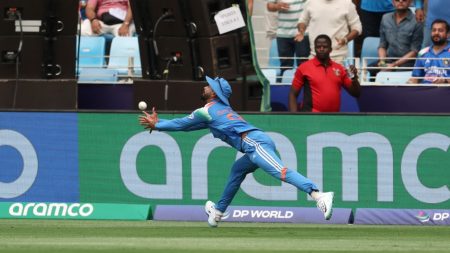
Glenn Phillips’ contribution went beyond his 61 runs. His fielding was nothing short of spectacular, with a remarkable catch at point to dismiss Mohammad Rizwan for just 3 runs. Phillips’ agility and reflexes were on full display, as he leapt to his left and stuck out one hand to grab a screamer. This dismissal, coupled with Will O’Rourke’s early wickets, set the tone for Pakistan’s struggle. Matt Henry, who returned from a knee niggle, also provided crucial support in the early overs, keeping the run rate in check.
Final Stages and New Zealand’s Dominance
Despite late-order resistance from Khushdil Shah, who hit 69 off 49 balls, Pakistan’s chase never gained the momentum needed to overhaul New Zealand’s total. The lower order’s efforts were insufficient, and Pakistan was ultimately bowled out for 260 in the 48th over. For New Zealand, Colin de Grandhomme, in his first match as captain, demonstrated his leadership by taking three wickets, though he conceded some runs towards the end. New Zealand’s victory, their third over Pakistan in as many weeks, solidified their status as genuine title contenders in the Champions Trophy.
The match was a testament to New Zealand’s depth and resilience, as they overcame early setbacks to post a competitive total and defend it with skill and determination. For Pakistan, the loss serves as a wake-up call, highlighting the need for better starts and more consistent performances if they are to advance in the tournament.