
The Pressure Mounts: Australia’s Fourth Wicket Moment
By the time Australia’s fourth wicket fell, Josh Inglis had already switched into a focused, decluttered mode of play. With over 200 runs still to chase and an asking rate nearing eight, the situation seemed dire. There was little room for error and even less time to regroup. However, Inglis understood that dwelling on these challenges would be counterproductive. "We were in and around the run rate to start off with, so that was a big help," Inglis reflected after the game. "The partnership between Shorty [Matt Short] and Marnus [Labuschagne] was really important. They set the platform and got us off to a good start. Then, me and [Alex] Carey, we didn’t really say too much out there. Carey is pretty quiet when he’s batting, so I think we were going pretty well. I just tried to not look at the scoreboard too much, [not] look at the run rate, just keep batting the way we were going."
Inglis’ Unique Challenge
Inglis was tasked with leading Australia in pursuit of what would be the highest chase in an ICC tournament. Despite his evident talent, Inglis hadn’t had a particularly notable ODI career. In 28 matches, he had scored 543 runs, averaging under 22, with his most significant contribution being a quickfire 65 against West Indies in February 2024. If Australia were to get close, he had to produce an effort that his career thus far had provided little reason to expect. In the immediate term, Carey and Inglis minimized risks while keeping the asking rate under control. England had opted for a deeper batting order, which meant they would have to compensate with part-time bowling. This strategy played into Australia’s hands, as Inglis and Carey capitalized on the weaker bowling, striking consistently and efficiently.
Strategic Play and Environmental Factors
"We trained here at night for the last couple of days and it got really dewy around half past seven or eight o’clock," Inglis shared. "So, we sort of knew that was in our favor during the run chase and if we could take it deep enough it would be tough for the bowlers at the back end. It made life easier for us, the wicket skidded on beautifully and it really helped our run chase." The duo’s understanding of the conditions was crucial. They added 146 runs in just 116 deliveries, balancing respectful caution with the need to keep the run rate manageable. They were particularly effective against Adil Rashid, striking boundaries to keep the momentum going without falling too far behind. Their partnership was so strong that by the time Carey holed out to mid-off, Australia just needed to maintain a similar rate of scoring.
Maxwell’s Explosive Finish
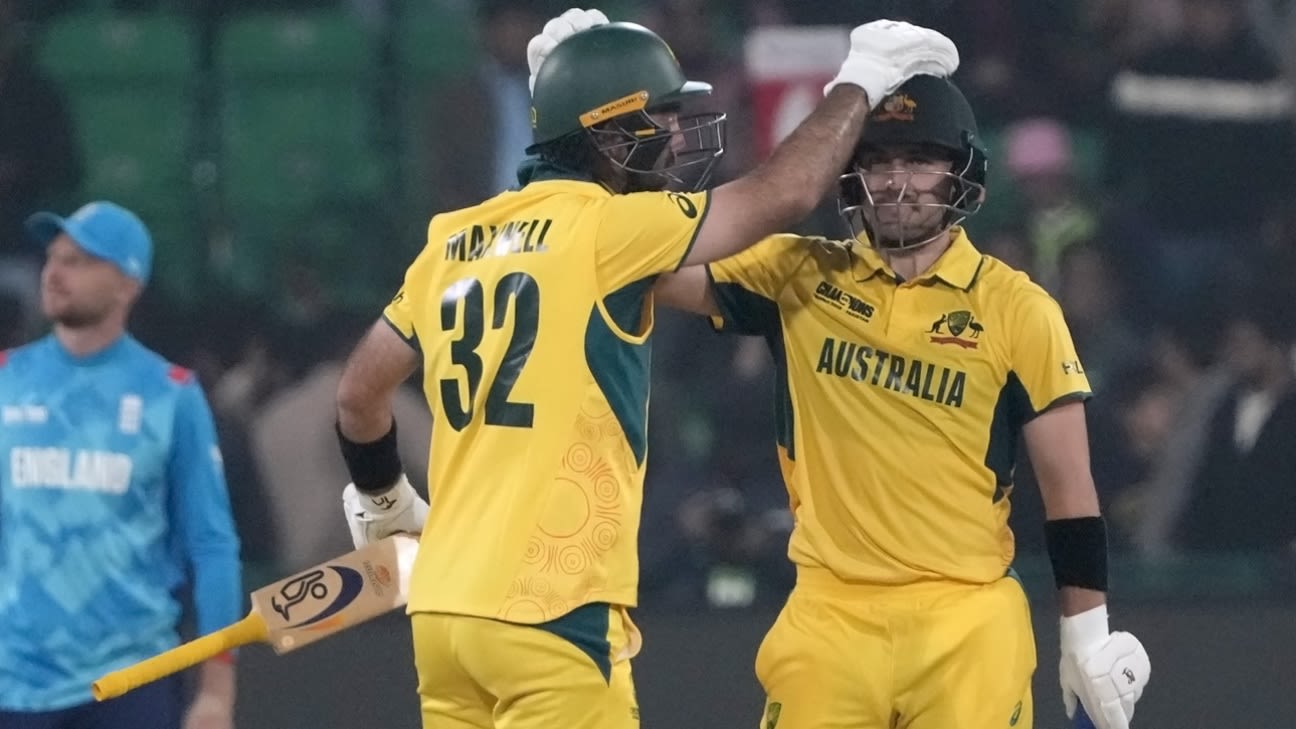
The fireworks came courtesy of Glenn Maxwell’s bat, a familiar sight for cricket enthusiasts. Maxwell took the sting out of England’s two gun seamers, Jofra Archer and Mark Wood, scorching them for 31 runs in just 11 balls. Inglis, however, wasn’t far behind. His last 36 runs came off just 14 balls, including a massive six over midwicket off Archer to bring up his hundred, and another one in the same region off Wood to seal the win. "Maybe under the circumstances [it’s my best innings]," Inglis mused. "It’s really special. I think in an ICC event, you want to have an impact and you want to help your team win a game, so maybe – I’ll reflect on that in the future."
Personal and Team Triumph
Inglis’ personal history with England adds an intriguing layer to the story. Born in Leeds and only moving to Australia as a teenager, he admitted as recently as 2022 that he still supported England at cricket. However, those days, he said, were "long gone now." "It doesn’t matter who it’s against," he emphasized. "It’s a really tight, quick tournament. We knew how we started the World Cup in India last year and we weren’t able to get a good start, we knew you can’t work your way into this Champions Trophy. You’ve got to be right on it from the first game. So, I think that’s probably the most pleasing thing, to get a win on the board in game one." His loyalty to Australia was undeniably clear, and his performance was a testament to his commitment to the team.
Fan Engagement and a Memorable Night
The game itself was a spectacle, with 26,232 spectators packing the new Gaddafi Stadium. Australian and English flags were visible in roughly equal measure, and the crowd’s enthusiasm was palpable. Celebrations at each six or wicket, almost irrespective of who they came from, added to the electric atmosphere. The quality and intensity of the game kept the spectators engaged until the final blow. "I thought the atmosphere was amazing all day today. It’s obviously the new stands. I think the ground and the stadium look amazing. To play tonight in front of a packed crowd was unbelievable and the noise at times was deafening, especially with the Mexican wave. I saw that going around a few times and it was a really nice crowd and good atmosphere tonight," Inglis said, capturing the spirit of a truly memorable night in cricket.