
Controversial Run-Out Decisions in the WPL 2025 Final
The Women’s Premier League (WPL) 2025 match between Delhi Capitals (DC) and Mumbai Indians (MI) in Vadodara was a nail-biter that came down to the last ball. However, the final moments of the game were marred by three contentious run-out decisions that left spectators and players alike questioning the accuracy and consistency of the umpiring. These decisions, all of which were ruled not out by third umpire Gayathri Venugopalan, played a significant role in DC’s dramatic victory, adding a layer of controversy to an already intense encounter.
The First Controversy: Shikha Pandey
The first of these controversial decisions occurred early in Shikha Pandey’s innings, during the very first ball of the 18th over of DC’s chase. Pandey, known for her aggressive batting, stepped across the stumps in an attempt to hit a big shot but missed the ball. She then looked to steal a bye, but Niki Prasad, her partner, sent her back. A direct hit at the striker’s end followed, and the run-out appeal was referred to the TV umpire. The replays clearly showed that Pandey’s bat was on the line when the LED stumps first lit up. However, Venugopalan, the TV umpire, made a decision based on the next frame, where the bails visibly came off the groove, and by that time Pandey’s bat was safely inside the crease. This decision was highly criticized, with former India captain Mithali Raj, who was commentating on JioHotstar, stating that Pandey should have been ruled out. According to Raj, the bat should be considered in the crease when it first touches the line, not when it bounces up. Despite the controversy, Pandey remained at the crease, and the bye brought DC’s required run rate down to 24 off 14 balls.
The Second Controversy: Radha Yadav
The second contentious decision involved Radha Yadav in the 19th over. Yadav and Prasad found themselves in a mix-up, with both players running in opposite directions. The ball was thrown to the striker’s end, where Yadav was diving to make her ground. The wicketkeeper, Yastika Bhatia, broke the stumps just as Radha dived, with the bat clearly not touching the ground inside the crease when the LED stumps first lit up. This moment was crucial, as had the ball been thrown to the non-striker’s end, Prasad would likely have been well short of the crease. Despite the clear evidence from the LED stumps, Venugopalan once again ruled not out, this time basing her decision on the frame where the bails visibly lifted off their groove, by which time Radha was safe. Mithali Raj was particularly critical of this decision, emphasizing that the bat must be touching the ground inside the crease at the moment the LED lights illuminate. Venugopalan’s decision meant that Yadav survived and went on to hit a crucial six in the next ball, significantly reducing DC’s run chase to 10 off 6 balls.
The Third Controversy: Arundhati Reddy
The final and most dramatic run-out decision came in the last over of the match, with DC needing just two runs to win. Niki Prasad, who had been involved in the earlier mix-up, holed out to deep midwicket, bringing Arundhati Reddy to the crease to face the final ball. Reddy managed to chip the ball over cover, where it narrowly evaded Harmanpreet Kaur, MI’s captain, who was running backwards. The batters took off for the winning run, and Harmanpreet’s flat throw to Bhatia was met with a full-stretch dive from Reddy. The LED stumps lit up for the first time with Reddy’s bat on the line, but Venugopalan, yet again, based her decision on the next frame, where the bails had visibly lifted off their groove, and Reddy had managed to get her bat inside the crease. The third umpire concluded that "the batter has made her ground before the wicket is completely dislodged," a decision that allowed DC to complete their chase and seal the match with a last-ball win. The DC players erupted in celebration, while the MI players did not protest, possibly accepting the decision or simply being out of time to challenge it.
The Role of LED Stumps in Controversy
The use of LED stumps, which are meant to provide instant and accurate indications of when a wicket is broken, became a focal point in the discussion of these decisions. According to Appendix D of the WPL 2025 playing conditions, "Where LED wickets are used, the moment at which the wicket has been put down shall be deemed to be the first frame in which the LED lights are illuminated and subsequent frames show the bail permanently removed from the top of the stumps." This rule suggests that the LED lights should be the primary indicator of when the wicket is broken. However, Venugopalan’s decisions seemed to disregard these guidelines, focusing instead on the frames where the bails visibly dislodged from the stumps. This inconsistency in the application of the rule has raised questions about the reliability and fairness of the umpiring in high-pressure situations.
Reactions and Implications
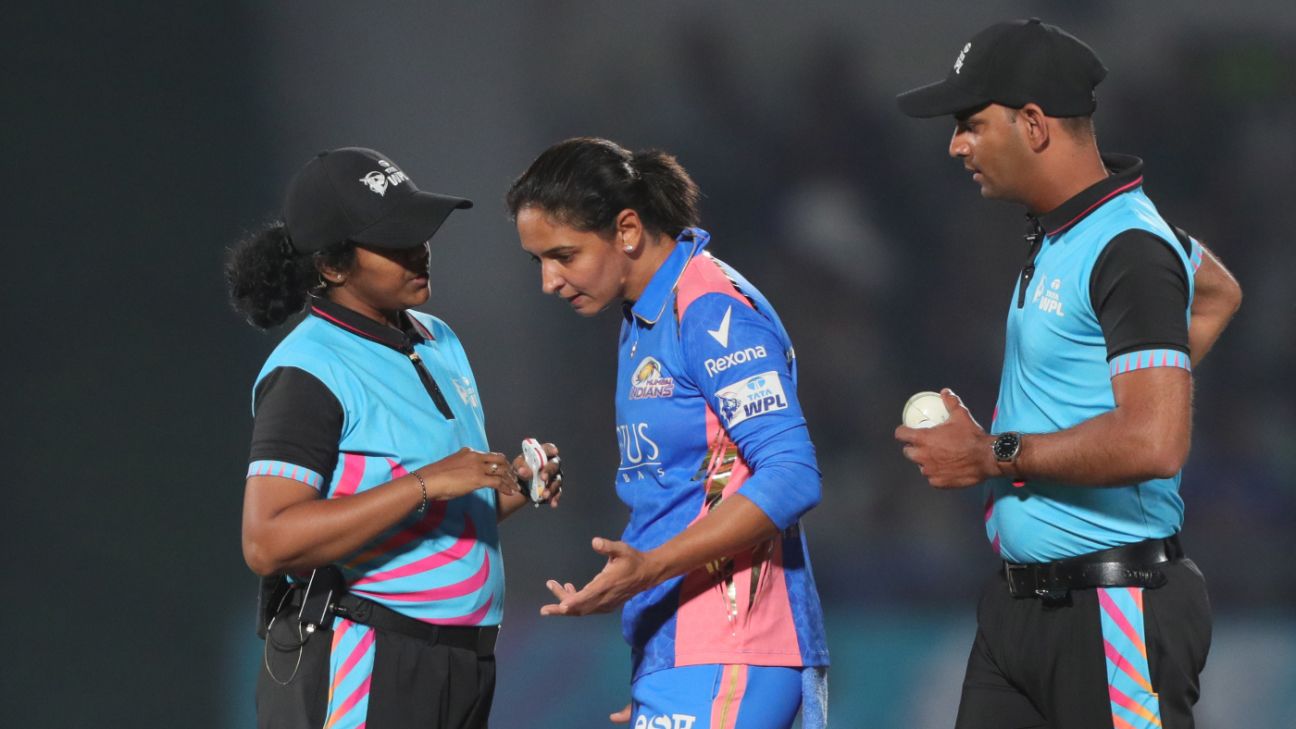
Harmanpreet Kaur, MI’s captain, was visibly upset with the decisions, especially the one involving Radha Yadav. She had a lengthy discussion with the on-field umpires, N Janani and Anish Sahasrabudhe, but the decisions stood. The frustration was palpable, as these run-out decisions could have changed the course of the game in MI’s favor. Mithali Raj’s comments during the post-match analysis on JioHotstar added to the controversy, as she pointed out the clear discrepancy between the rules and the decisions made. Raj’s expertise and experience in the game gave weight to her critique, making the issue even more contentious. The cricket community, including fans, former players, and officials, has been abuzz with debate over these decisions, questioning the role of technology and human judgment in modern cricket.
The Future of Umpiring and Technology
The controversies surrounding these run-out decisions highlight the ongoing tension between traditional human judgment and modern technological aids in cricket. While LED stumps and other technologies are designed to enhance the accuracy of decision-making, the events in Vadodara suggest that there is still room for improvement in how these tools are used and interpreted. The playing conditions clearly outline the criteria for when a wicket should be considered broken, and it is essential that these guidelines are followed consistently to maintain the integrity of the game. Moving forward, the cricket authorities may need to revisit the protocols and training for umpires to ensure that technology is used to its full potential and that decisions are made in the spirit of the game. The Delhi Capitals’ last-ball win over the Mumbai Indians will be remembered not only for its thrilling finish but also for the crucial role these controversial decisions played in determining the outcome.