
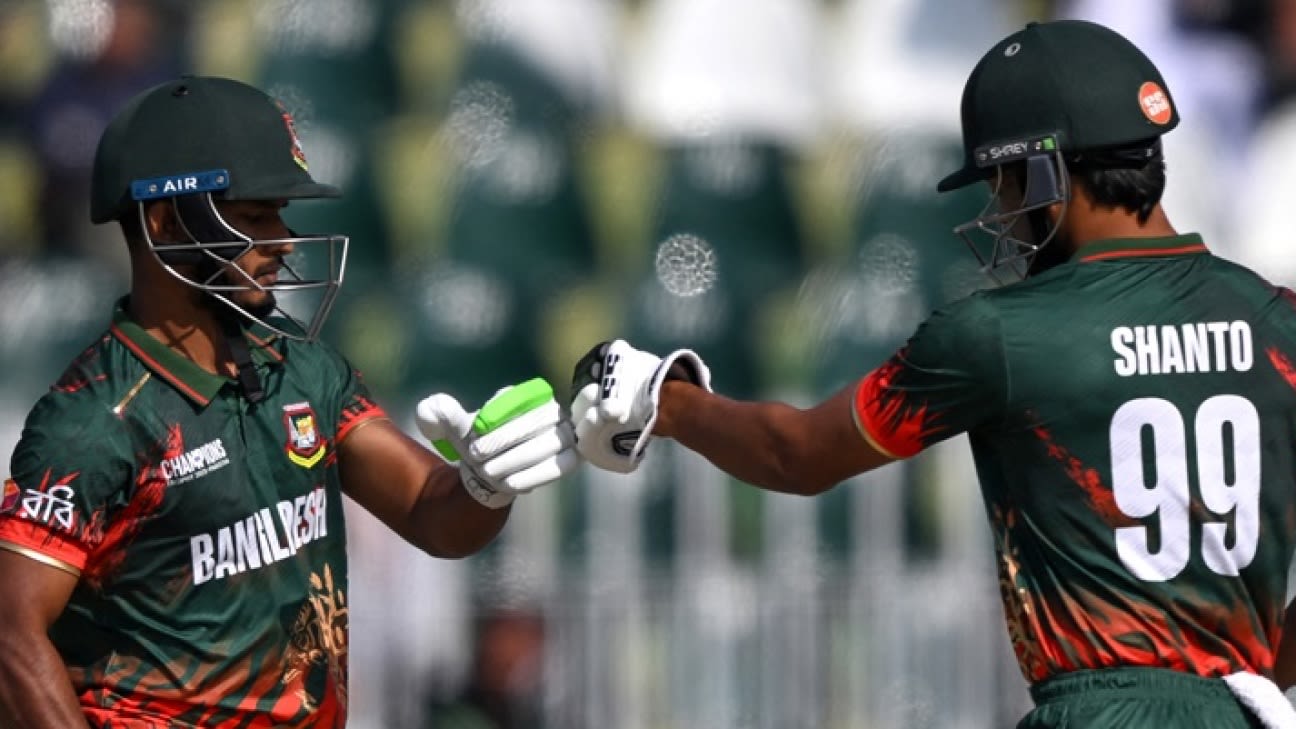
Shanto Calls for Changes, Emphasizes Responsibility
Shanto started the post-match press conference on Monday by highlighting the need for changes in the Bangladesh cricket team. "I have said it a lot of times in the past, but we [have] made the same mistakes over and over again," he said. "We have to focus on how we want to improve our batting. I hope after this tournament, we will make some changes as a batting unit, which will bring improvement in our batting." This statement put everyone on high alert, as Bangladesh has been in dire need of a fresh approach in One-Day Internationals (ODIs). There was a glimmer of hope that the captain himself was about to address the issue. However, Shanto later clarified that the changes he referred to were more about the mindset of the existing batting group, rather than a wholesale personnel change. "We have to be more responsible for the team when we go out to bat. We cannot keep chopping and changing [personnel]. We have to keep giving our existing resources more opportunities. I think we are taking it lightly. We have to be more responsible," he emphasized.
Strategic Adjustments and Clarifications
There were speculations about potential changes in the team lineup, particularly whether Mushfiqur Rahim could be replaced by the returning Mahmudullah, with Jaker Ali taking over the wicketkeeping duties. However, instead of making these swaps, Bangladesh opted to drop Soumya Sarkar from the top of the order and promoted Shanto one slot up. "There’s no auto-choice in this team," Shanto explained. "Soumya bats in the top order, Riyad [Mahmudullah] bhai plays in the lower-middle order. Keeping Soumya would have forced us to make a lot of changes in the lineup. We needed Riyad bhai given how he batted in the last four or five innings." Shanto also defended Mushfiqur Rahim, saying, "I wasn’t worried about Mushfiq [Mushfiqur] bhai’s last five innings. His wicketkeeping was very important. We have seen his contribution to the team over the years. He didn’t score runs in the last two or three matches but I am sure he can come back in the next game." Despite his recent poor form, Mushfiqur remains a crucial player for Bangladesh, and the team’s decision to retain him reflects their faith in his overall contribution.
Struggling in the Middle Overs
One of the most significant issues Bangladesh faced in their recent match was the offspinner Michael Bracewell, who claimed four wickets as the team lost their way in the middle overs. Their defensive approach, followed by attempts to hit their way out of pressure, proved costly. Shanto admitted that Bangladesh, who finished on 236 for 9, were well short of a par score. "It was a good wicket, worth at least 280 to 300 runs. I think (Bracewell) bowled well but we fell to some soft dismissals," he said. "We made the mistakes with the bat. We could have batted better against him on this wicket. There was some poor shot selection. We could have planned better, which wouldn’t have given him so many wickets. He bowled well but we made some poor executions." The accumulation of dot balls over 30 overs was largely due to the cluster of wickets they lost in the middle overs. Shanto acknowledged that the team needs to build the habit of scoring 300 runs regularly and improve their practice wickets to achieve this.
Reflecting on ICC Tournament Performance
Bangladesh’s sub-par batting in both the group-stage matches against India and New Zealand has sparked questions about their readiness for ICC tournaments. Shanto addressed these concerns, stating, "We only win at home. We don’t win regularly in overseas conditions. We have to find out how we can do well in ICC tournaments." He emphasized that the team needs a collective improvement to succeed against top teams in these high-stakes events. "There are days when the top order is doing well, another day only the middle order is doing well. There are days when we field well. It is a haphazard situation. I think only a collective performance can help us do well against big teams in these tournaments," he added. The inconsistency in performance across different aspects of the game highlights the need for a more cohesive and consistent approach to international cricket.
Dreaming Big but Needing Action
Despite the setbacks, Shanto stood by his pre-tournament declaration that Bangladesh were targeting to win the Champions Trophy. He reiterated that the team had the same desire but their collective efforts did not match the dream. "I think the whole team dreamt of winning the Champions Trophy. If we don’t dream big, how can we play?" he questioned. "We are here to win, not just to compete. We didn’t get the desired result. We can’t just be dreaming of a big result, we have to play accordingly too. Our focus is on the next match now." Shanto’s comments underscore the importance of aligning their aspirations with concrete actions on the field. The team’s ambition is clear, but they need to translate that into consistent performances to achieve their goals.
Moving Forward with Determination
Mohammad Isam, ESPNcricinfo’s Bangladesh correspondent, noted the challenges and the team’s determination to improve. The recent performances highlight the need for Bangladesh to address their batting issues, particularly in overseas conditions and ICC tournaments. Shanto’s call for changes in mindset and more responsible batting, along with strategic adjustments, signals a step in the right direction. While the road ahead is challenging, the team’s resilience and ambition offer a glimmer of hope for their future endeavors. The focus now is on the next match, where they will aim to put their plans into action and deliver the results they have been dreaming of.