
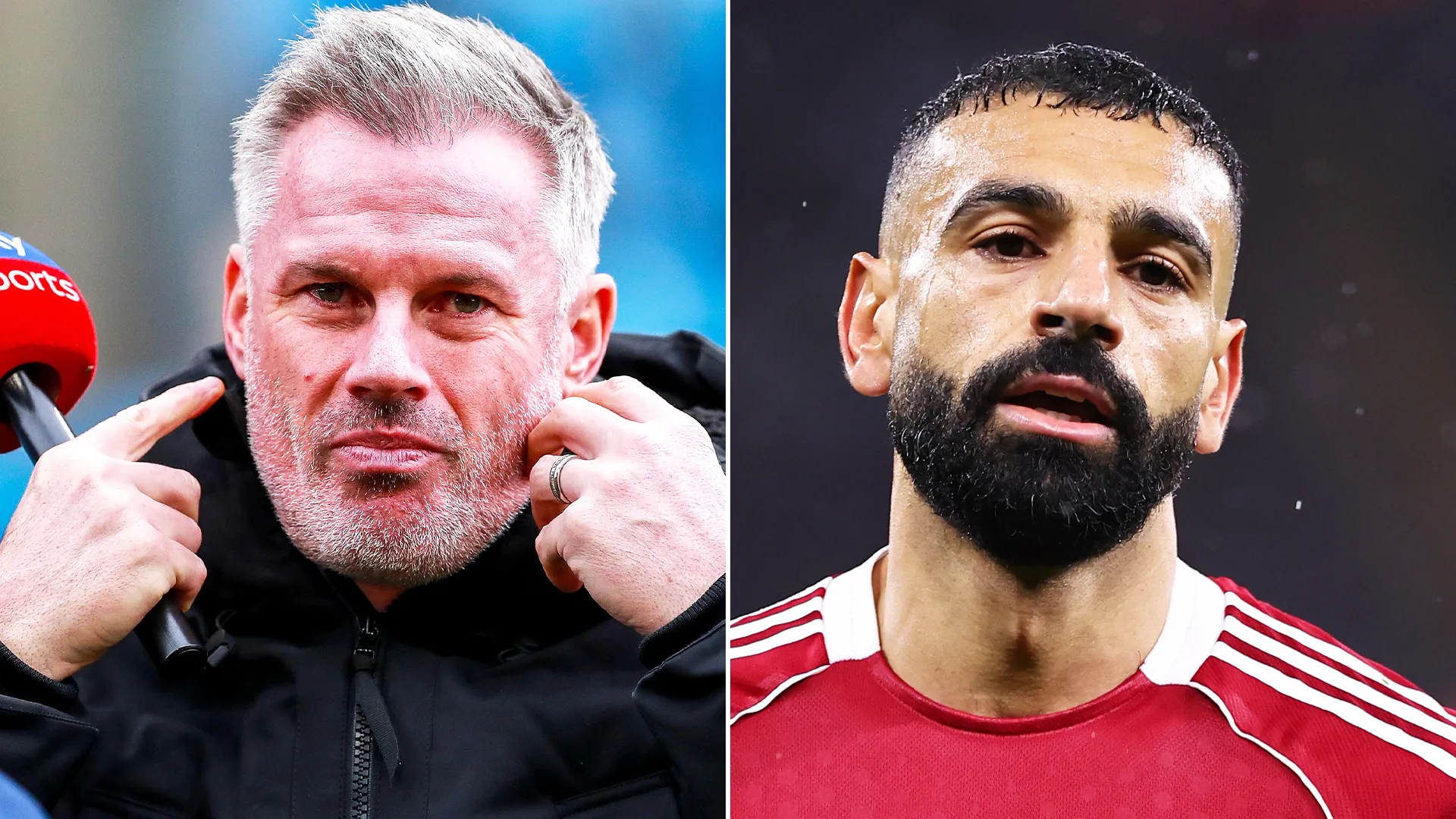
Allardyce Comes to Salah’s Defense
Sam Allardyce, the former Premier League manager with stints at Bolton, Newcastle, and West Ham, has firmly defended Mo Salah against criticism from Liverpool legend Jamie Carragher. The controversy erupted after Carragher suggested that Salah’s “legs have gone,” implying that the Egyptian star is no longer able to perform at the same high level as in previous seasons. Allardyce, known for his straightforward and sometimes blunt approach, was quick to rebut Carragher’s claims, calling them “pathetic” and suggesting that the pundit is merely seeking attention.
The Context of Carragher’s Comments
Carragher, who has been a prominent figure in football commentary since retiring from his playing career, made his remarks in the wake of Liverpool’s recent form and Salah’s benching during their match against West Ham. Liverpool, under the new management of Arne Slot, has faced some turbulent times, and Salah’s performance has been under scrutiny. Carragher, reflecting on the trio of Alisson, Virgil van Dijk, and Salah, who were instrumental in Liverpool’s success under Jurgen Klopp, suggested that these key players are not performing at their best. Specifically, Carragher pointed out that Alisson has been injury-prone, van Dijk does not seem to be the same player, and Salah’s legs, metaphorically speaking, seem to have given out.
Allardyce’s Rebuttal
In a passionate response on the No Tippy Tappy Football podcast, Allardyce expressed his strong disapproval of Carragher’s comments. He criticized Carragher for making such a statement without any substantial evidence, emphasizing that the pundit does not train with Salah or observe his day-to-day activities. Allardyce argued that the decline in performance, if any, is a result of broader team issues and not just a personal decline in Salah’s physical capabilities. He pointed out that many Liverpool players, including new signings like Alexander Isak, have not been performing well, yet Carragher chose to single out Salah. Allardyce’s fiery defense of Salah highlights the passionate nature of football debates and the often polarizing views of pundits and managers.
Salah’s Current Form
Despite Carragher’s critique, Mo Salah has still managed to contribute significantly to Liverpool’s efforts this season. In 18 appearances, the 33-year-old has netted five goals and provided three assists. While these numbers may not match his extraordinary performances in previous seasons, they are still respectable for a player of his caliber. Allardyce acknowledged that every player goes through periods of inconsistency, but he stressed that writing off Salah based on a few underwhelming performances is both unfair and premature. Salah’s track record, including his numerous accolades and consistent goal-scoring, speaks for itself, and Allardyce believes that with the right support, Salah can bounce back to his best form.
The Media and Punditry Landscape
The incident also sheds light on the complex relationship between media personalities and the players they comment on. Pundits like Carragher often find themselves in a delicate position, balancing the need to provide insightful analysis with the pressure to remain relevant and popular. Allardyce’s criticism suggests that sometimes, these comments are made more for shock value and attention rather than a genuine assessment of a player’s performance. This dynamic can sometimes lead to a backlash from within the football community, as seen in Allardyce’s forceful rebuttal.
Moving Forward
In the end, the debate over Salah’s form and Carragher’s comments serves as a microcosm of the broader discussions that often permeate football. While Allardyce’s defense of Salah is understandable given his long-standing respect for the player, it also highlights the need for a more nuanced and evidence-based approach to player evaluation. Football is a team sport, and individual performances are often heavily influenced by the collective effort of the team. As Liverpool continues to navigate its current challenges, the focus should remain on finding solutions that benefit the team as a whole, rather than singling out individuals for criticism.