
Faint Title Hopes Fade Away
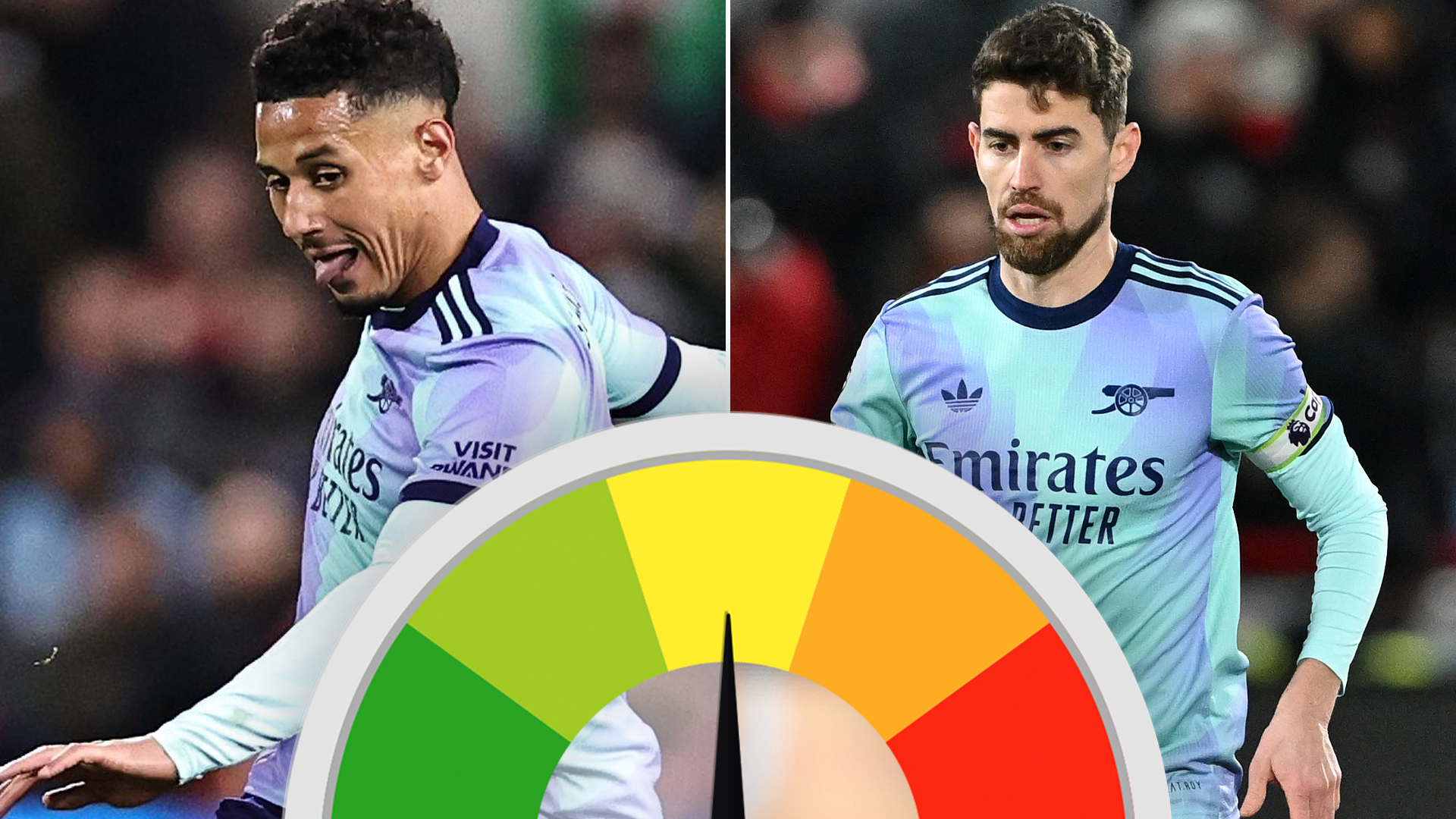
Mikel Arteta’s Arsenal watched their faint title hopes dissipate into thin air with a goalless draw against Nottingham Forest at the City Ground. The match, characterized by Arsenal’s well-organized defense and lethargic attack, highlighted both the team’s strengths and weaknesses. Despite the lack of a decisive goal, the Gunners’ backline, particularly the pairing of William Saliba and Gabriel, once again showcased their excellence, keeping a firm lid on Forest’s dangerman, Chris Wood. Wood, who had previously scored a hat-trick at this very ground, found it exceedingly difficult to penetrate Arsenal’s defensive wall. Arteta’s tactical adjustments, such as playing Declan Rice a bit further forward, did little to ignite the team’s offensive spark, and the veteran midfielder Jorginho, brought into the side, failed to provide the necessary intensity and control.
Saliba and Gabriel: Arsenal’s Steadiest Pairing
William Saliba and Gabriel were undoubtedly the standout performers for Arsenal. Saliba, in particular, was a model of composure and efficiency, often purring through the match like a Rolls Royce in third gear. His ability to read the game and intercept threats before they materialized was evident throughout. Though he slipped early on, allowing Wood to get a shot off, Saliba recovered brilliantly, executing a last-ditch block that epitomized his defensive prowess. Gabriel, on the other hand, was relentless in his physical battles with Wood, fist-pumping every time he won a tackle. While he was less effective after halftime, his presence and determination ensured that Arsenal’s defense remained solid. Together, this formidable duo has been a cornerstone of Arsenal’s defensive success this season, consistently stifling opposing attacks and providing a sense of stability that has been crucial in maintaining the team’s competitive edge.
The Struggles of the Midfield
The Arsenal midfield, however, was a mixed bag during the match. Martin Odegaard, the team’s captain, displayed his usual class and creativity, but he seemed to lack the spark needed to break through Forest’s disciplined defense. Odegaard had a couple of promising chances, including a shot that was brilliantly cleared off the line by Forest’s Murillo, but he couldn’t convert these opportunities into goals. Jorginho, brought into the side to provide experience and control, fell short of expectations. His performance was marked by sluggishness and a tendency to give away possession through stray passes and unnecessary fouls. Despite his efforts, Forest’s midfield managed to neutralize him, and he was eventually replaced by Oleksandr Zinchenko with 20 minutes to go. The lack of a cohesive and dynamic midfield performance was a significant factor in Arsenal’s inability to capitalize on their possession and create clear-cut chances.
Recalibrating the Right Flank
On the right flank, Riccardo Calafiori had a mixed but ultimately noteworthy performance. Deployed as a left-back, Calafiori often found himself in advanced positions, almost playing as a false No.9. His early booking for a cynical foul on Callum Hudson-Odoi in Forest’s first attack added an extra layer of caution to his game. However, he was arguably Arsenal’s best attacker, with a curling shot that struck the far post in the first half. Despite his promise, Calafiori was substituted at halftime, possibly due to Arteta’s concern about risking a sixth red card in the league. Kieran Tierney, who replaced him, provided a more assured defensive presence and came close to scoring with a header from a corner but was impeded by Mikel Merino’s collision.
The Energetic Contributions
Ethan Nwaneri, the young and energetic midfielder, contributed with plenty of crosses, though his accuracy was hit-and-miss. He had a decent scoring chance before halftime, which was blocked by Murillo, but he faded out of the game after the break and was replaced by Raheem Sterling with 13 minutes remaining. Mikel Merino, who worked tirelessly in a defensive capacity, may have been overextended in his striking duties, as he failed to get off a single shot in the first half. He did start the second half brightly, forcing Forest keeper Sven Sels to make a good save with a powerful header, but ultimately, his performance lacked the final punch needed to impact the game significantly.
Searching for the Cutting Edge
Leandro Trossard, another key figure in Arsenal’s attack, was tidy in possession but lacked the cutting edge required to breach Forest’s defense. He played in front of Forest’s backline, where the opposition could comfortably neutralize his threat. His performance was not nearly positive enough to sway the match in Arsenal’s favor. The substitutes, including Tierney, Zinchenko, Sterling, Ben White, and Thomas Partey, injected some energy but failed to break down Forest’s resilient defense. Zinchenko, in particular, almost made an instant impact with a shot that went wide, while Sterling, despite showing flashes of brilliance, couldn’t find the breakthrough. In the final four minutes, Ben White and Partey were introduced, but the match had already taken on a stalemate feel.
A Tough Lesson in Consistency
In the end, the goalless draw with Nottingham Forest was a tough lesson for Mikel Arteta and his Arsenal side. While the defensive performances of Saliba and Gabriel were commendable, the attack’s inability to capitalize on possession and create clear scoring opportunities was a glaring issue. Arteta’s tactical adjustments, though well-intentioned, didn’t yield the desired results. The match highlighted the need for Arsenal to find a more consistent and dynamic attacking presence to complement their stellar defense. As the season progresses, the challenge for Arteta will be to balance the team’s defensive solidity with a more potent offensive threat to remain competitive in the Premier League and other competitions.