
The Fallout from Milan’s Champions League Exit
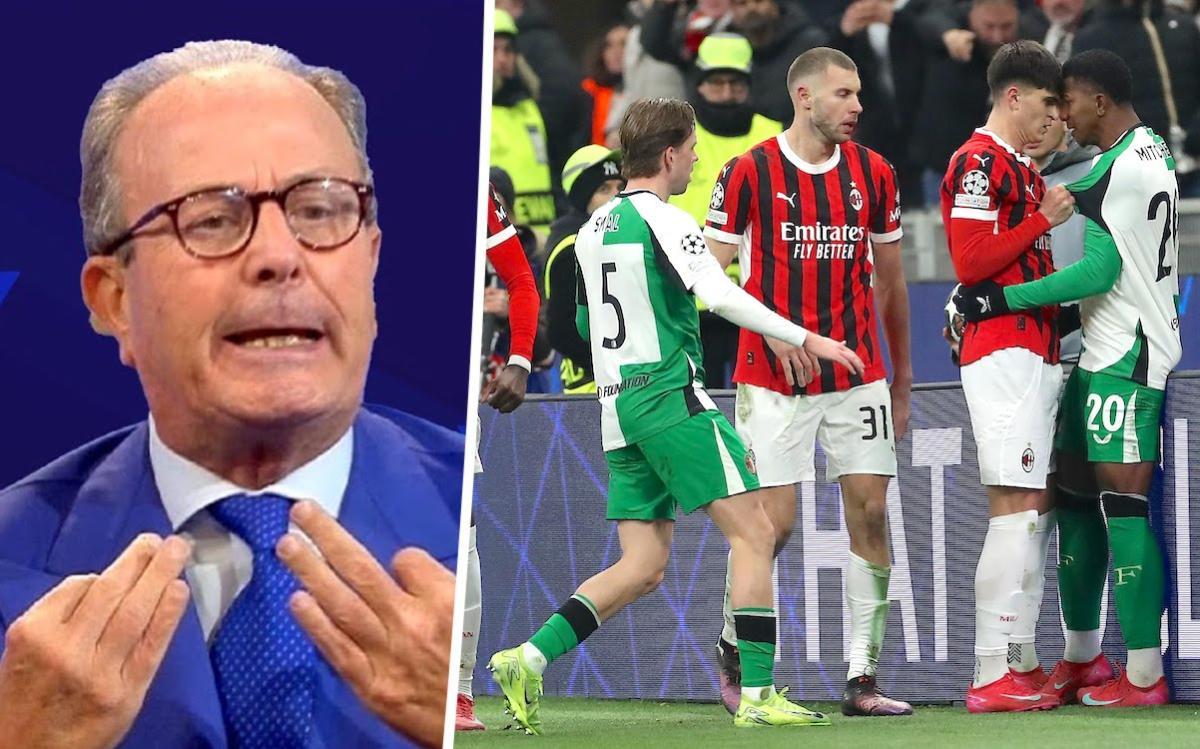
The aftermath of AC Milan’s shocking elimination from the Champions League by Feyenoord has been a maelstrom of scrutiny, critique, and speculation. Journalist Franco Ordine, in his latest column for MilanNews, offers a somber and comprehensive analysis of the myriad failures that have led the club to this point. Beyond the immediate reaction of fans and media, Ordine’s perspective delves into the systemic issues that have plagued Milan, emphasizing that the blame cannot be placed solely on one individual, such as Theo Hernandez.
A Collective Responsibility
Ordine begins by highlighting the critical moments following the match, where the true capabilities of the club, coach, and players are tested. "It is in these hours that the capabilities of the club, coach, and players are measured," he writes, underscoring the gravity of the situation. The club’s leadership, including the management team, has a responsibility to avoid hasty decisions and to take collective blame. This measured approach is essential in a crisis, as it allows for a thorough and objective analysis of the issues at hand.
Maturity and Leadership
One of the recurring themes in Ordine’s analysis is the lack of maturity in the team, a point repeatedly emphasized by Zlatan Ibrahimovic. "Ibra continues to repeat: ‘There was no maturity’. It’s true," Ordine notes. This lack of maturity is evident not just in Theo Hernandez’s actions but in the broader context of the team’s performance. The club’s management, from the top down, has failed to instill the necessary discipline and focus required to compete at the highest level. The evident rifts and inconsistencies, such as the team’s skepticism towards new coach Rui Faria and the subsequent return of Sergio Conceicao, have only exacerbated the problem.
Technical Misjudgments and Inconsistencies
Ordine also points to a series of technical misjudgments that have contributed to Milan’s troubles. The summer transfer of Emerson Royal, followed by the acquisition of Matt Doherty, and the handling of Fikayo Tomori and Andriy Lunin, are cited as critical errors. The club’s indecision and inconsistent strategy in these moves have left the team without a solid foundation. Additionally, the acquisition of Gimenez in January, after initially targeting Alvaro Morata, further illustrates the club’s lack of a clear and coherent plan.
Theo Hernandez: A Symptom, Not the Cause
Theo Hernandez has become the focal point of criticism, with fans and media alike vilifying him for his performance. However, Ordine argues that this is a mistake. "But we must ask ourselves: what has been done to try to cure the dark disease that has affected Theo since the beginning of the season," he writes. Hernandez’s struggles are symptomatic of a deeper issue within the club. His performance, which has been below his usual standards, and his recent disciplinary issues, highlight a disconnect between the player, the coach, and the team. The club’s failure to address these issues proactively has resulted in a situation where a single player bears the brunt of the blame.
Coach Conceicao: Not Entirely Blameless
Sergio Conceicao, despite his precarious position and limited time with the team, is not entirely exempt from criticism. Ordine points out specific tactical decisions during the Feyenoord match, such as the immobility in lineup changes and the management of injuries. The coach’s decision to leave Joao Felix on the pitch despite his poor form in the first half, and the subsequent failure to bring on Tammy Abraham, are seen as significant errors. These mistakes, while understandable given the pressure, contributed to the team’s downfall.
The Need for a Strong Leader
In the end, Ordine concludes that the primary issue facing AC Milan is not a lack of quality or talent, but the absence of a strong, capable leader. "If the key errors bear the signature of Gabbia, plus Musah, Maignan and Theo Hernandez, that is, the main exponents of the Scudetto season, can we say that what Milan lacked was not quality but the man capable of eliminating the limits and exalting the virtues of the squad? The answer is obviously yes," he writes. The club needs a leader who can bring cohesion, discipline, and a clear vision to the team. Only with such a leader can Milan hope to overcome the current crisis and return to its former glory.