
Feyenoord’s Steady Performance Secures Champions League Progress
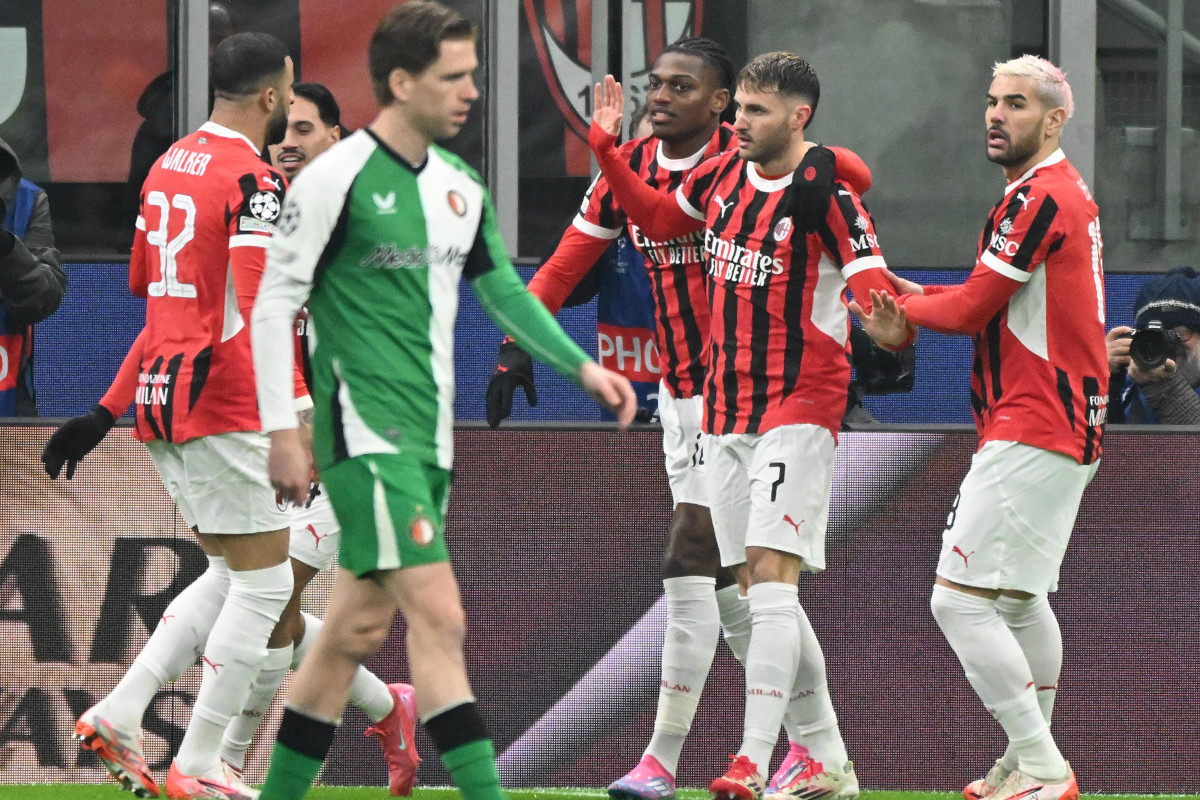
Feyenoord emerged victorious in their quest to secure qualification for the Champions League last-16 by securing a 1-1 draw against AC Milan at the San Siro. The Rotterdam-based club’s resilience was evident, as they managed to equalize through Julian Carranza with their only shot on target in the second half. Despite being under pressure from a dominant first-half performance by the Rossoneri, Feyenoord’s defensive solidarity and tactical discipline paid off, allowing them to clinch a crucial result in a high-stakes match.
Milan’s Goalkeeper and Defensive Trio Shine
AC Milan’s goalkeeper, Mike Maignan, had a relatively uneventful night, maintaining a steady presence between the posts. The visitors’ only shot on target came late in the second half, and Maignan’s concentration was rewarded with a solid performance. The right-back, Anthony Walker, stood out as a leader, bringing confidence and calm to the defensive line. His speed and concentration made him a formidable obstacle for Feyenoord’s attackers, contributing significantly to Milan’s overall defensive stability. On the left side, Simon Thiaw provided a solid defensive display, assisting in the opening goal scored by Santiago Gimenez. Thiaw’s reliability and positional sense were crucial in maintaining Milan’s defensive structure throughout the match.
Theo Hernandez’s Night of Mistakes
Theo Hernandez’s performance, however, was a stark contrast to the rest of the defensive lineup. After a quiet and uneventful first half, the left-back made two critical mistakes that ultimately cost his team the game. These errors not only allowed Feyenoord to equalize but also dented the morale of the Rossoneri. Given the high stakes of the match, Hernandez’s lapses in concentration will likely not be easily forgiven by the coaching staff. His inability to maintain the same level of composure and focus as his defensive colleagues highlighted a significant weakness in Milan’s otherwise solid backline.
Midfield Struggles and Tactical Adjustments
In the midfield, Milan’s players grappled with the challenge of breaking down Feyenoord’s compact defense. Sam Reijnders, who was tasked with adding precision to the build-up play, struggled to find the accuracy needed in the final third. This lack of precision was a recurring issue for the Rossoneri, who dominated possession but failed to translate it into clear-cut chances. Brent Musah started the game strongly, bringing physicality and composure to the midfield, but his effectiveness waned as the team became more disjointed. On the flanks, Christian Pulisic and João Félix faced their own challenges. Pulisic, while energetic, lacked the creativity to breach Feyenoord’s well-organized backline. Félix, on the other hand, seemed to struggle with finding his ideal position, often appearing slow and predictable. Neither player managed to make a significant impact, which was crucial given the importance of the match.
Rafael Leao: A Mixed Bag
Rafael Leao, Milan’s star forward, was a mixed bag of potential and missed opportunities. While he remains the main threat for Milan, his inconsistency within the same game is a cause for concern. Leao created multiple potential scoring chances, but his finishing touch was lacking, failing to capitalize on the opportunities presented to him. This inconsistency was particularly evident during Milan’s final assault, where Leao fell short when it mattered most. Despite his talent, Leao’s inability to deliver when the team needed him the most underscores the need for greater reliability and composure in the final third.
Coach Conceição: A Tale of Two Halves
Coach Rui Conceição’s tactics and team selection initially bore fruit, with Milan taking an early lead through Gimenez’s goal. However, as the match progressed, the team’s performance became unbalanced and disjointed, especially with the presence of multiple forwards on the pitch. Conceição’s decision to rely on a creative and attacking lineup was bold but ultimately backfired, as Feyenoord’s counter-pressing and defensive organization nullified Milan’s offensive threats. The coach’s inability to adjust and maintain focus in the second half will be a topic of discussion and reflection, as Milan once again faltered at a crucial moment. While the individual mistakes were costly, the team’s overall performance in the second half revealed deeper tactical issues that need to be addressed moving forward.
Feyenoord’s Strong Defensive Effort
Feyenoord’s goalkeeper, Kenneth Wellenreuther, kept his team in the game with a series of crucial saves and a commanding presence in the box. His performance was a key factor in Feyenoord’s ability to stay competitive. The defensive line, led by Givairo Read, Marc Hancko, and Mitchell van Beelen, was organized and disciplined, effectively neutralizing Milan’s attacking threats. Marc Hancko, in particular, stood out for his leadership and defensive positioning. Feyenoord’s midfield, although not always dominant in possession, was effective in disrupting Milan’s rhythm and providing a solid foundation for the team’s counter-attacking strategy. Julian Carranza, who came on as a substitute, was the hero of the night, scoring the equalizing goal with Feyenoord’s only shot on target. His performance highlighted the team’s ability to capitalize on their limited opportunities, a trait that will serve them well in the knockout stages of the Champions League. Coach Arne Slot’s tactical acumen and ability to make impactful substitutions were instrumental in Feyenoord’s successful night, earning him a well-deserved high rating.