
Manchester City’s Rise to Dominance
Manchester City has transformed from a modest club to one of European football’s dominant forces over the past 15 years. The Etihad Stadium, their current home, has been the setting for numerous historic moments, including six Premier League titles out of the last seven and a European championship. These achievements have cemented Man City’s status in the English game and solidified their legacy. Despite its current glory, the Etihad has undergone extensive renovations to match the club’s on-pitch success. The club’s billionaire owners, the City Group, continue to invest heavily in the stadium to ensure it remains one of the best in the country.
From Hyde Road to the Etihad
Manchester City was founded in 1880 and initially played at Hyde Road, a humble ground where players had to change in a local pub. The club’s "real home," Maine Road, hosted City for 80 years, witnessing nine relegations, nine promotions, and six league titles. City even shared the ground with fierce rivals Manchester United for a few years after Old Trafford suffered bombing damage during World War II. However, in 2003, the decision was made to close Maine Road, and the 35,150-seat stadium was eventually demolished, making way for a housing estate with over 400 properties. This marked the end of an era and the beginning of a new chapter at the Etihad Stadium.
The Etihad’s Transformation
The Etihad Stadium, now synonymous with Manchester City, was originally built as an athletics arena for the 2002 Commonwealth Games. The ground, initially costing £112m, underwent a year-long renovation to convert the single-tiered 38,000-seat athletics stadium into a two-tiered 48,000-seat football stadium. When City first moved in, the stadium was still called the City of Manchester Stadium, and the club was struggling, finishing 16th in their first season there. The transformation truly began in 2008 with the arrival of Sheikh Mansour and the City Football Group, who had grand plans for the stadium. They quickly began upgrading the facilities, adding a 7,000-seat third tier to the South Stand in 2015, increasing the capacity to 55,000. Further investments have been made to improve hospitality areas, concourse food and drink stands, and the addition of statues of club legends like Colin Bell, Francis Lee, David Silva, Sergio Aguero, and Vincent Kompany.
The Drive for Improvement
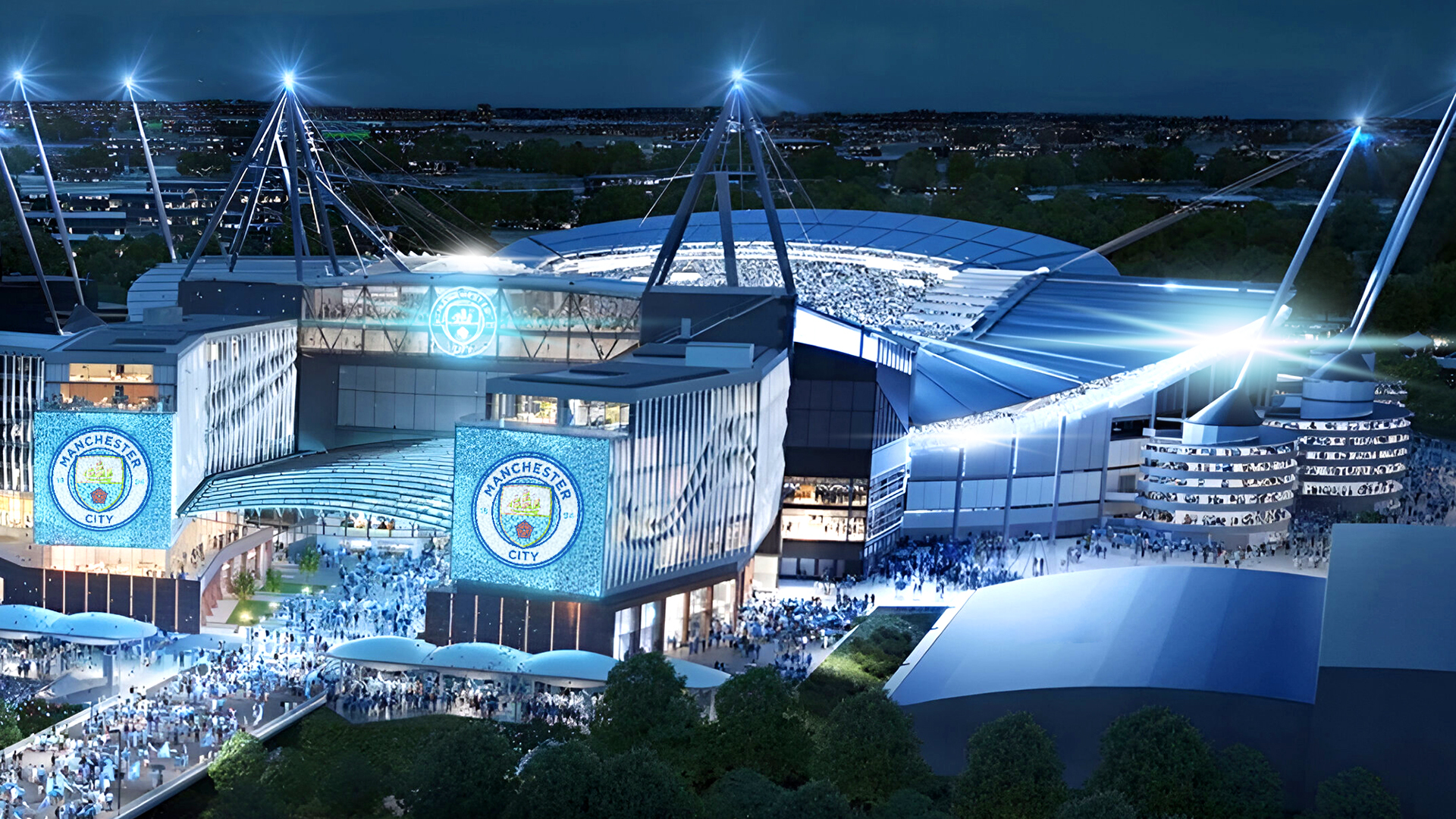
For Manchester City, the goal is not just to catch up but to be the best. At its current reduced capacity of 52,900, due to ongoing work, the Etihad is only the seventh largest capacity football stadium in England. The club’s ambitious plans aim to increase the capacity to around 62,000, making it the fifth largest in the country. This is not just about adding more seats; it’s about enhancing the overall experience for fans. City aims to create an unforgettable matchday atmosphere by adding a 3,000-seat safe-standing area, the largest in the Premier League. The expansion also includes new pathways for younger fans, breakout spaces, religious rooms, and alcohol-free zones. A new hospitality area with a 500-seat food hall and a premium bar, as well as a Sky Bar with views overlooking the pitch, will further elevate the fan experience. Additionally, the club is developing a 3,000-capacity fan zone, a new club shop, and a museum to improve the matchday environment.
The Financial Implications
The expansion project, set to cost an eye-watering £300MILLION, is almost three times the original cost of the stadium and £90MILLION more than Sheikh Mansour paid to buy the club in 2008. While this is a significant investment, the potential return is substantial. City earned £76.5MILLION in matchday revenue last season, and this figure could rise to £86.4MILLION with the addition of the proposed 7,000 new seats. The fan park and hotel are expected to generate additional revenue, helping City to compete with rivals like Arsenal, Tottenham, and Manchester United in terms of matchday income. The improved facilities and increased capacity will also enhance the club’s appeal, contributing to its reputation as one of the elite clubs in European football.
The Future of the Etihad
The immediate future holds extensive construction as City works towards completing the North Stand expansion by the 2025/26 season. The City Square fan zone, hotel, and other surrounding developments are expected to be completed by late 2026. Beyond 2026, the club’s ambitions remain high, and further enhancements may be on the horizon. As Manchester City continues to grow in stature, the stadium will need to evolve to match the club’s increasing global presence. The Etihad will not only be a place for football but also a destination for entertainment, hosting major music events and providing a comprehensive matchday experience. With the club’s relentless drive for excellence, the Etihad will remain at the forefront of modern stadium development, ensuring that fans have a venue that matches the club’s achievements on the pitch.