
The Moment of Truth in Rotterdam
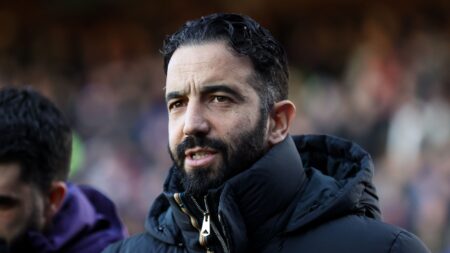
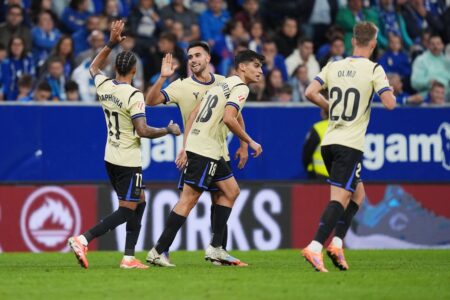
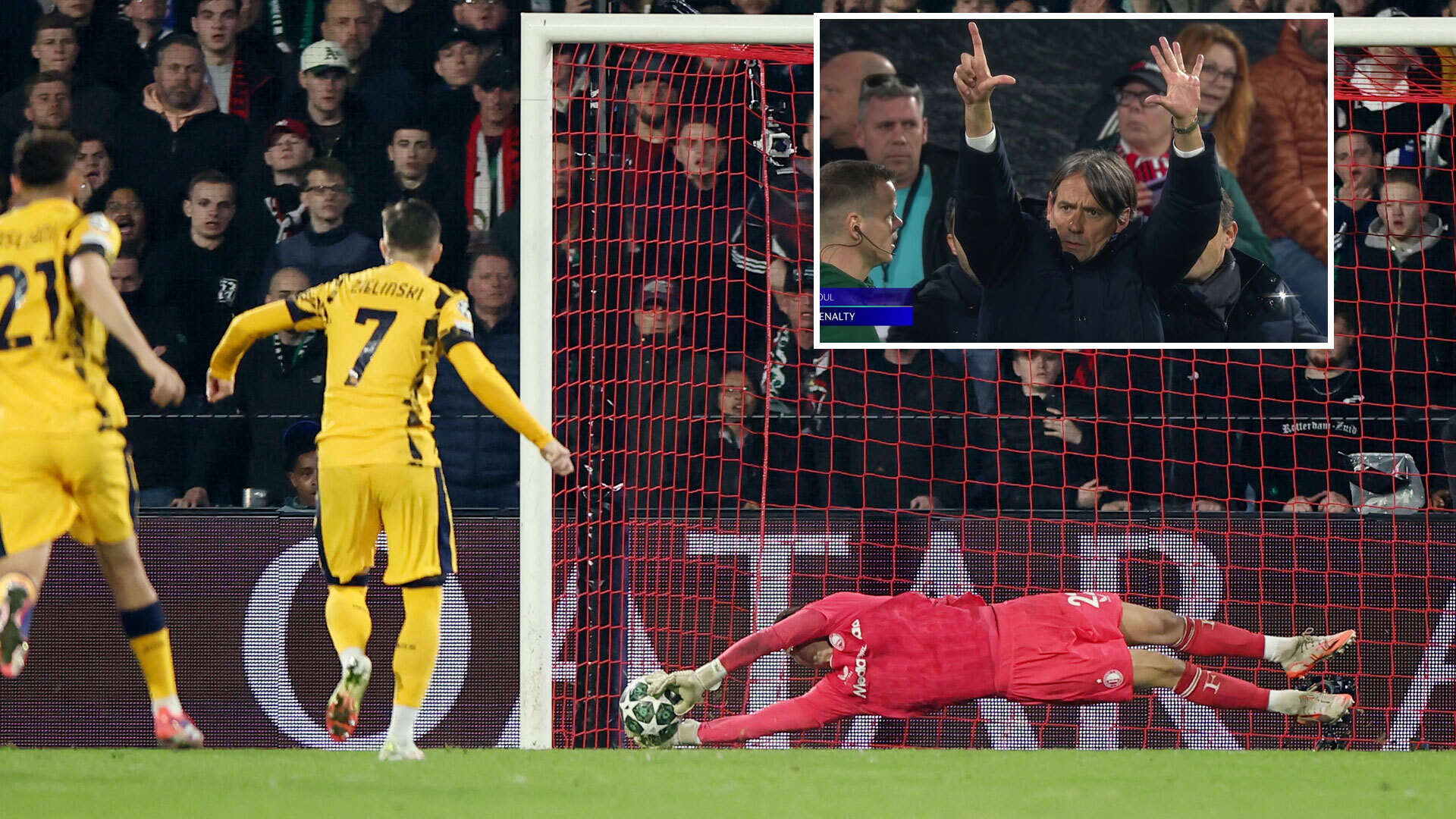
On a charged evening in Rotterdam, Inter Milan found themselves comfortably leading Feyenoord 2-0 in the first leg of their Champions League last-16 clash. The Italian giants had been dominating the game, and when Marcus Thuram was brought down in the box by Jeyland Mitchell in the 63rd minute, it seemed like the perfect opportunity to extend their advantage. Initially, the referee Espen Eskas waved play on, but after a quick glance at the monitor, he overturned his decision, awarding Inter a penalty. As the drama unfolded, the camera panned to Inter’s bench, capturing a moment that would become a talking point for days to come. Inter coach Simone Inzaghi, known for his passionate and often dramatic gestures, held up seven fingers to his players waiting near the penalty spot. In a move that seemed well-intentioned, he was signaling that Piotr Zielinski, who wears the No.7 shirt, should step up to take the kick.
A Gesture of Confidence or a Mistimed Decision?
Inzaghi’s gesture was more than just a casual point; it was a clear directive. By holding up seven fingers, the former Lazio boss was not only indicating his choice but also showing his confidence in Zielinski’s ability to convert the penalty. However, this seemingly straightforward decision quickly turned into a moment of tension. Zielinski, who had just reentered the starting lineup, replacing Henrikh Mkhitaryan, approached the spot with a mix of anticipation and pressure. The Polish midfielder, who had previously scored two penalties against Juventus in October, was expected to deliver once again. But as he lined up his shot, the weight of the moment became apparent.
The Missed Opportunity
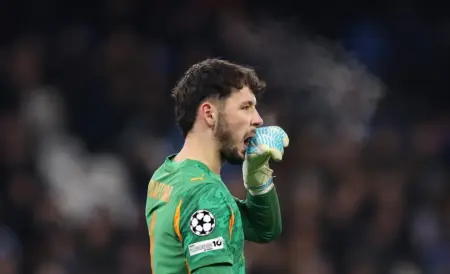
Zielinski’s penalty was a limp, underwhelming effort that sailed easily into the hands of Feyenoord’s goalkeeper, Timon Wellenreuther. The missed opportunity was a stark contrast to Inter’s dominant performance up to that point. Zielinski’s inability to capitalize on the chance left the score at 2-0, and the immediate aftermath saw a mix of disappointment and frustration on the faces of his teammates and the Inter coaching staff. Inzaghi’s gesture, which was meant to be a show of faith in his player, inadvertently added to the pressure and may have contributed to the miss.
Inter’s Penalty Conundrum
The situation was further complicated by the absence of the team’s usual penalty taker, Hakan Calhanoglu, who was sitting on the bench. Calhanoglu, who had been instrumental in Inter’s recent games, had come off injured during their 1-1 draw against title rivals Napoli. His poor form in penalties in 2025 and the recent injury led Inzaghi to make a calculated decision to choose Zielinski instead. This shift in responsibility highlighted the coach’s trust in Zielinski, but it also brought to the forefront the delicate balance of managing player confidence and team dynamics in high-stakes matches.
Lautaro Martinez: The Reliable Penalty Taker
In contrast to Zielinski’s miss, Lautaro Martinez, who was still on the pitch, had a successful track record with penalties. Martinez had famously converted a penalty in Argentina’s shootout victory over the Netherlands in the semi-final of the 2022 Qatar World Cup. He was also set to take the fifth spot-kick for Argentina in the final against France, but his team had already secured a 4-2 win, rendering his potential fifth kick moot. Martinez’s reliability in such situations was evident, and his recent form, including doubling Inter’s lead in the 50th minute, made his absence from the penalty situation all the more noticeable.
Lessons from the Incident
The incident serves as a poignant reminder of the pressure that penalty situations bring and the importance of clear communication and player selection in such moments. Inzaghi’s gesture, while intended to boost Zielinski’s confidence, might have had the opposite effect. The coach’s decision to bench Calhanoglu due to his poor form and injury was understandable, but the responsibility placed on Zielinski may have been too much at such a critical juncture. Moving forward, Inzaghi and his team will need to reassess their penalty-taking strategy and perhaps prioritize players who have a proven track record and can handle the pressure. The missed penalty, while disappointing, does not overshadow the team’s overall performance, but it does highlight the need for greater caution and communication in high-pressure situations.