
A New Adventure in London
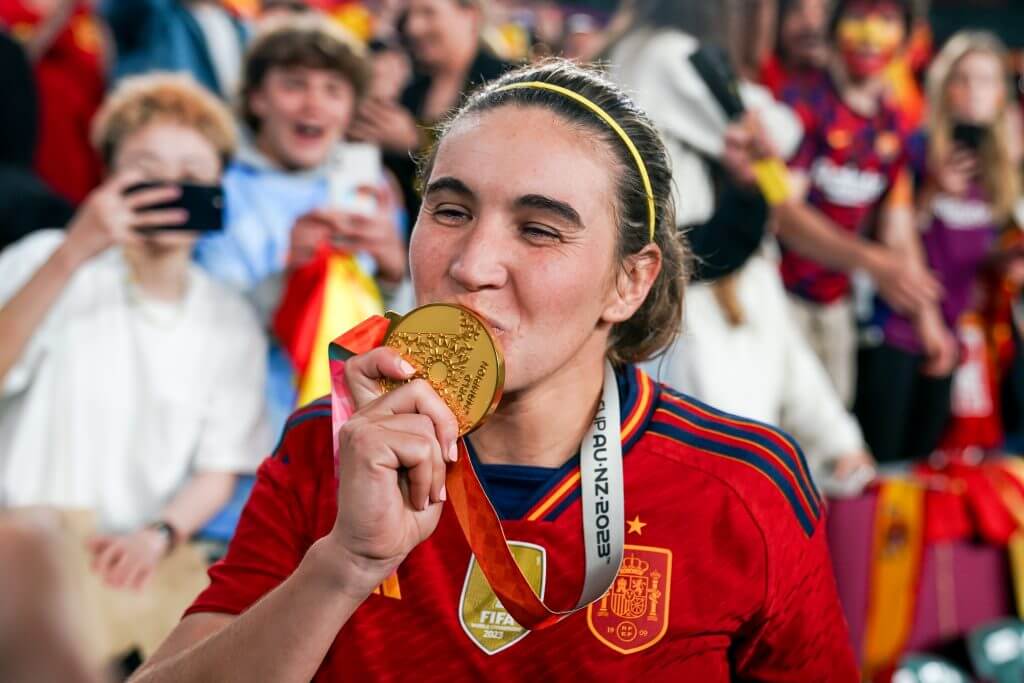
Mariona Caldentey, the 28-year-old forward for Arsenal and the Spain national team, greets her video call from her home in St Albans, north of London, on a Friday in February. It’s a significant moment for her as her family is visiting that weekend, marking a pivotal point in her new life. Caldentey left her hometown of Felanitx, Mallorca, at 18 to move to Barcelona, where she spent a decade winning numerous titles. Now, six months into her new life in the UK, she reflects on the challenges of being a newcomer in a different city. “Having the sea nearby is something I miss the most,” she says, alongside the absence of life outside football. Despite these adjustments, Caldentey remains focused on her new journey with Arsenal and the upcoming match against England at Wembley, a rematch of the 2023 Women’s World Cup final in Sydney.
Confronting the Aftermath of the World Cup
The World Cup final in Sydney was a landmark moment, but the subsequent events cast a long shadow over the team. The unconsented kiss by then-Spanish football federation (RFEF) president Luis Rubiales on Spain player Jenni Hermoso led to a court case that concluded last week. Rubiales was found guilty of sexual assault and fined over €10,000, though he plans to appeal. Despite the emotional toll, Caldentey and her team are determined to focus on football. The game against England is a chance for them to showcase their resilience and strength. Caldentey’s journey to adapt to English football, including language barriers and new social dynamics, has been both challenging and rewarding. She has scored 12 goals in 27 games for Arsenal, but the initial period was marked by difficulties. “When I arrived, I thought my English was decent, but it was pretty low level,” she admits. “Social situations were tough, and I felt overwhelmed at times.”
A Legacy of Passion and Love for Football
Caldentey’s passion for football is deeply rooted in her family. Her father, Miguel Angel, known as Morete, was a nurse and a passionate football coach in Mallorca. He founded an official supporters’ group for Barcelona in the Balearic Islands, instilling a lifelong love for the club in Mariona. She joined Barcelona Femeni from Mallorcan side UD Collerense in 2014, going on to win six league titles, three Champions Leagues, and six Copas de la Reina. However, the joy was tinged with sorrow when her father passed away suddenly in November 2018, just before a match in Valencia. “My father’s love for Barca was non-negotiable,” she recalls. “It weighed on me during my contract renewals, but I felt the need for new challenges.” Her decision to join Arsenal was a mix of emotions and a step towards personal growth. “It’s difficult to leave Barca, but it’s what I felt I had to do,” she says.
Adjusting to New Realities
Adjusting to life in England has been a steep learning curve for Caldentey. She has had to adapt to the culture, language, and the high standards of the Women’s Super League (WSL). Her international team-mate Laia Codina, who is also part of the Arsenal squad, has been a valuable support. However, the team’s underwhelming start to the season, with Arsenal currently third in the WSL, 10 points behind leaders Chelsea, has been a sobering experience. “When you’re used to winning, it’s difficult to see yourself in these positions,” she admits. “But it’s my first season here, and I’m taking it easy, focusing on adaptation and not getting overwhelmed.” The poor state of the Spanish women’s top-flight Liga F was another factor in her move abroad. “It’s a danger,” she says. “Everyone wants to sign Spanish players because there is a lot of talent, but you have to look after that talent.”
The Cultural and Facility Differences
Caldentey notices significant differences in how fans experience football in England compared to Spain. “In Spain, they have to take the plane for most trips; here, they can take the train, bus, or car,” she says. “This means people can always be closer to the team.” Arsenal’s facilities are also markedly different from those at Barcelona. “You have the whole building just for the women’s team,” she explains. “At Barca, we shared the space with La Masia and the youth teams. Here, it’s a more private space, just for us. We even have our own chef who travels with us when we play away.” These differences highlight the progress being made in women’s football in England, which Caldentey hopes will inspire improvements in other leagues.
Pushing for Better Conditions
Caldentey and her Spain team-mates are no strangers to pushing for better conditions. After Spain’s Euro 2022 exit against England, 15 players, including Caldentey, sent an email to the RFEF demanding changes to the women’s football setup. Despite the challenges, they returned to help Spain lift the World Cup in Australia and New Zealand. The emotional toll of these struggles led Caldentey to seek psychological help for the first time in her career. “Football is sometimes so capricious,” she reflects. “We all knew that when we were on the field, it was work, and we all wanted to win. Leaving aside what could happen outside helped us stay united.” The ongoing struggles, including the Rubiales saga, have been emotionally draining, but Caldentey remains committed to leaving football better for future generations. “We have to try to leave football better for the next generations than it is now,” she says, a sentiment that encapsulates her journey and her enduring passion for the sport.