

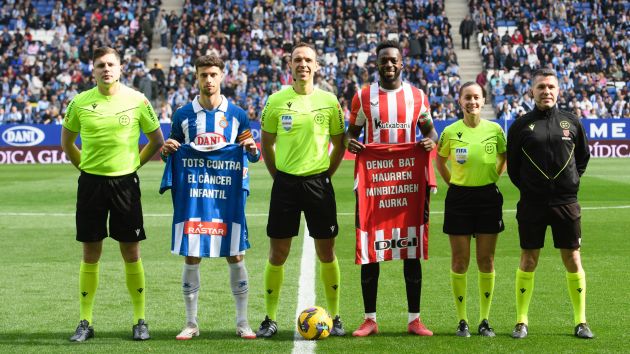
Espanyol and Athletic Club Match Halted Due to Racist Abuse
On Sunday, the highly anticipated match between Espanyol and Athletic Club at the RCDE Stadium was marred by a deeply troubling incident of racial abuse directed at Athletic forward Inaki Williams. The match, which was part of La Liga, had to be temporarily halted in the 18th minute when the on-field referee, Guillermo Cuadra Fernandez, was alerted to the allegations. According to Relevo, a small section of Espanyol supporters was responsible for the racist remarks, forcing the referee and match officials to take immediate action. The ordeal lasted approximately three minutes, during which a stern message was broadcast over the stadium’s speakers, emphasizing the zero-tolerance policy towards racism and the potential consequences of any further incidents.
A Recurring Issue for Athletic Club
Sadly, this is not the first time Athletic Club players have been subjected to racist abuse on the pitch. Just two weeks prior, during a 2-2 draw against Real Betis at the Benito Villamarin, a trio of Athletic players—Adama Boiro, Maroan Sannadi, and Alvaro Djalo—faced similar treatment from a small faction of Real Betis supporters. These incidents highlight a disturbing trend in Spanish football, where racial abuse continues to plague the sport despite ongoing efforts to address and eradicate it. The repeated targeting of Athletic players is particularly concerning, as it suggests a systemic issue that extends beyond individual matches or stadiums.
The Broader Context of Racism in Spanish Football
Racism has been a constant and distressing theme in Spanish football over the past few years. A plethora of players, including Vinicius Junior, Lamine Yamal, and Raphinha, have been victims of racial abuse, both in La Liga and during other footballing events. Each incident strips the sport of its inclusivity and integrity, undermining the principles of fair play and sportsmanship. The frequency of these occurrences underscores a broader societal problem that the football community must confront head-on. Despite increased awareness and stringent punishments, the persistence of such behaviors is a stark reminder of the work still needed to create a safe and welcoming environment for all players and fans.
Escalating Punishments and Enforcement
In response to the growing number of racist incidents, the Spanish football authorities and the broader football community have been working to enforce stricter penalties. The punishments for individuals found guilty of racially abusing players have become more severe, reflecting a recognition of the seriousness of the issue. However, the continued incidents suggest that these measures, while necessary, are not yet sufficient. The challenge lies in creating a culture where such behavior is not only penalized but also widely condemned and understood to be completely unacceptable. The recent halt in the Espanyol-Athletic Club match is a powerful demonstration of the commitment to take immediate action, but it is clear that more sustained efforts are required.
The Impact on Players and the Sport
The impact of racial abuse on players is profound and multifaceted. Beyond the immediate distress and emotional trauma, it can affect a player’s performance, confidence, and mental health. For Inaki Williams and other players who have faced such abuse, the experience can be isolating and demoralizing, making it difficult to focus on the game and enjoy the sport they love. Moreover, these incidents tarnish the reputation of Spanish football and set a negative precedent for young players and fans. The sport, which should be a unifying and inclusive force, becomes a space of fear and hostility. It is crucial for all stakeholders, from club management to fans, to recognize the detrimental effects of racism and work together to foster a more positive and inclusive atmosphere.
Moving Forward: Collective Responsibility and Action
To combat racial abuse effectively, a collective effort from all corners of the football community is essential. Clubs must take proactive steps to educate their fans and create an environment where such behavior is not tolerated. Referees and match officials play a critical role in enforcing rules and ensuring that any incidents are promptly addressed. Additionally, the broader societal context cannot be ignored; addressing racism in football is part of a larger struggle against discrimination in all its forms. Initiatives such as anti-racism campaigns, fan engagement programs, and community outreach can help change the narrative and promote a more inclusive and respectful culture. The recent incidents serve as a stark reminder that while progress has been made, there is still much to be done. Together, the football community can and must work to ensure that every player, regardless of their background, is treated with the respect and dignity they deserve.