

La Liga Takes Action Against Manchester City
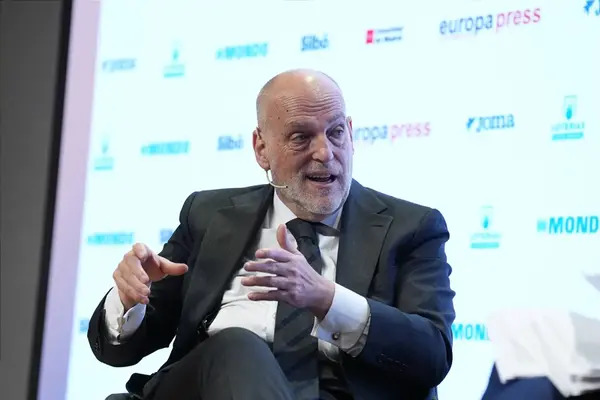
La Liga, the iconic Spanish football league, has made a significant move by formally reporting Manchester City to the European Commission, citing "deception" and financial irregularities. President Javier Tebas, who has long been a vocal critic of the Premier League champions, confirmed this development during his recent appearance at the Financial Times’ Business of Football Summit. The summit, a platform for discussing the financial and operational aspects of football, provided Tebas with an opportunity to highlight his concerns about the financial practices of Manchester City, which he believes are distorting the international market within the European Union. This bold step underscores the growing tensions in European football and the increasing scrutiny of financial operations among top clubs.
The Accusations and the Implications
Tebas’s allegations against Manchester City are multifaceted and center around the club’s financial structures. He claims that City has a network of companies outside City Football Group (CFG) that shoulder significant expenses, such as scouting and marketing, and then invoice Manchester City for much lower amounts. This practice, according to Tebas, allows the club to circumvent financial regulations and gain an unfair competitive advantage. The president of La Liga argues that this is not just a concern for English football but has broader implications for the European market, given City’s extensive commercial activities across the continent. Despite being an English team, the club’s financial maneuvers are suspected to violate EU market rules, which is why La Liga has taken the unprecedented step of involving the European Commission in this dispute.
Manchester City’s Response
In response to these allegations, Manchester City has declined to comment publicly. However, sources close to the club are strongly refuting Tebas’s claims and emphasizing that the club’s financial practices are entirely transparent and in line with the regulations. They point out that the club’s accounts are a matter of public record and undergo rigorous audits. The club’s supporters and some industry experts argue that the financial structure criticized by Tebas is a common practice in modern business and does not necessarily indicate foul play. The stance taken by Manchester City and its sources suggests that the club is confident in its financial governance and is prepared to defend its practices against these accusations.
The Case Details and Legal Context
Javier Tebas elaborated on the specifics of the case during his media interviews. The complaint filed with the European Commission in July 2023 focuses on two primary areas: the alleged misuse of external companies to cheat the financial system and a broader effort to prevent state-owned entities from gaining undue influence in football without proper regulation. Tebas questions the legitimacy of some of the financial transactions, particularly the prices paid by the club and the allocation of losses to related companies outside CFG. The legal context is significant, as new regulations allow the EU to investigate companies like CFG, which have substantial commercial presences in Europe. This marks a new chapter in the ongoing debate over financial fairness and transparency in football, with potentially far-reaching consequences for clubs and their operations.
The Broader Battle for Financial Fairness
Beyond the specific allegations against Manchester City, Tebas’s complaint reflects a larger concern in European football. The president of La Liga is part of a growing movement that seeks to ensure financial fairness and prevent the sport from being dominated by clubs with state-owned backing. He believes that such entities can manipulate financial rules to their advantage, creating an uneven playing field that undermines the integrity of the sport. Tebas’s efforts are not just about penalizing one club but about setting a precedent for the entire industry. The case against Manchester City could serve as a testing ground for these new regulations and could lead to more rigorous oversight and enforcement of financial practices in football.
The Future of Football and Regulatory Changes
This developing story highlights the increasing complexity and international nature of football finance. The involvement of the European Commission in a complaint against a non-EU club is a novel approach that could signal a shift in how financial regulations are enforced across the continent. If the Commission finds merit in La Liga’s complaint, it could result in significant penalties for Manchester City and set a precedent for similar actions against other clubs. The outcome of this case will be closely watched by football stakeholders, as it could lead to more stringent financial regulations and greater transparency in the sport. As the case progresses, the football community will be keen to see how it unfolds and what it means for the future of financial governance in European football.