
The Conflict: Real Madrid and La Liga
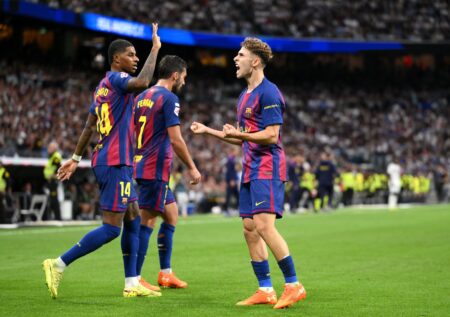
Real Madrid currently reigns as the king of both European and Spanish football, but the grand ambitions of the club’s president, Florentino Perez, extend far beyond these achievements. Unhappy with the distribution of television revenue in domestic leagues and the limited freedom clubs have, Perez has envisioned a bold move: the creation of an independent competition called the UEFA Super League. This ambitious project saw initial support from several clubs but faltered when UEFA mounted a strong opposition. Despite the setbacks, Perez remains steadfast in his vision of severing Real Madrid’s ties with the Spanish league and participating in a competition free from the constraints of governing bodies.
La Liga’s Stance: A Firm Rejection
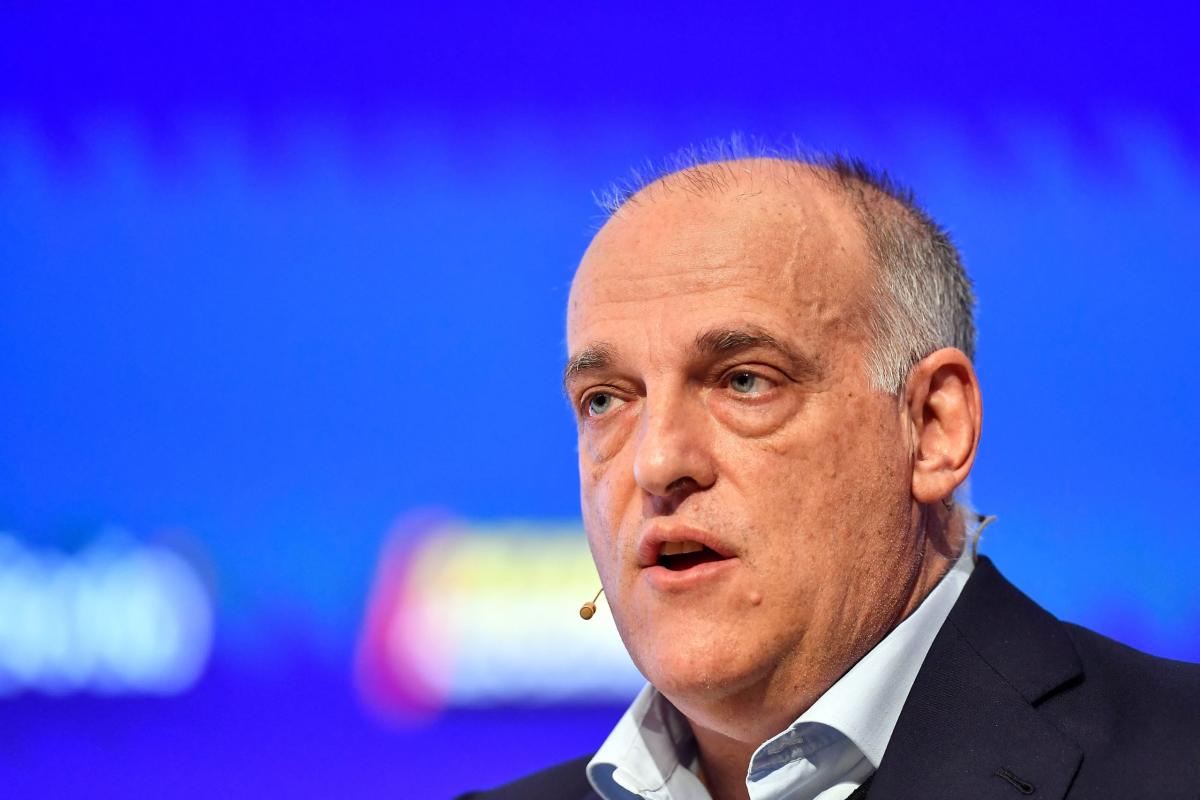
At a recent media appearance (h/t AS), La Liga president Javier Tebas offered his thoughts on Real Madrid’s UEFA Super League project and Florentino Perez’s broader objectives. Tebas was unequivocal in his rejection of the idea, stating categorically that it was "impossible" for Real Madrid to leave La Liga. He emphasized that Spanish sports law mandates that Spanish clubs must participate in national competitions, a requirement that cannot be circumvented. "It’s a trick, it’s impossible and they know it themselves," he asserted.
The Strategic Narrative: Destroying National Leagues
Tebas went on to elaborate on the broader implications of Perez’s plan. He characterized the UEFA Super League project as part of a larger narrative aimed at "destroying national leagues." This narrative, according to Tebas, poses a significant threat to the structure and integrity of football. He warned that if all clubs were to have their own television broadcasts, it would lead to chaos, undermining the collective value and coherence of the sport. "There is a narrative here to destroy the national league," he noted, adding that such a scenario would be detrimental to the overall health of football.
The Refereeing System: Room for Improvement
While Tebas was resolute in his opposition to the UEFA Super League, he did acknowledge that the current refereeing system in Spain has room for improvement. "The refereeing system can be improved, but the Spanish league is not rigged," he stated. This admission reflects a willingness to address the valid concerns about refereeing, while maintaining the integrity of the league. He also touched on the Negreira controversy, a case that raised questions about the impartiality of refereeing in Spain. When the Negreira case came to light, a meeting was held with the clubs to consider changes in the system to ensure it did not depend on a single organization. Tebas pointed out that Real Madrid did not attend this meeting, a detail that adds another layer of complexity to the ongoing tensions.
The Broader Impact: Football’s Ecosystem
The potential impact of Perez’s vision on the broader football ecosystem cannot be overstated. The UEFA Super League, if realized, would drastically alter the landscape of European football, potentially marginalizing smaller clubs and national leagues. Tebas’s warning about the "hell" that would ensue if all clubs managed their own broadcasts underscores the importance of maintaining a structured and regulated environment. The president’s stance highlights the need for a balanced approach that ensures the sustainability and fairness of the sport for all stakeholders.
Conclusion: A Battle for the Future of Football
The ongoing conflict between Florentino Perez and Javier Tebas represents a pivotal battle over the future of football. While Perez envisions a world where top clubs have greater control and financial autonomy, Tebas remains committed to preserving the integrity and structure of national leagues. The stakes are high, with the potential to reshape the entire football ecosystem. As this saga unfolds, the football community will be closely watching to see which vision prevails and what the future holds for this beloved sport.