
Manchester United’s Struggles Highlighted by Gary Neville
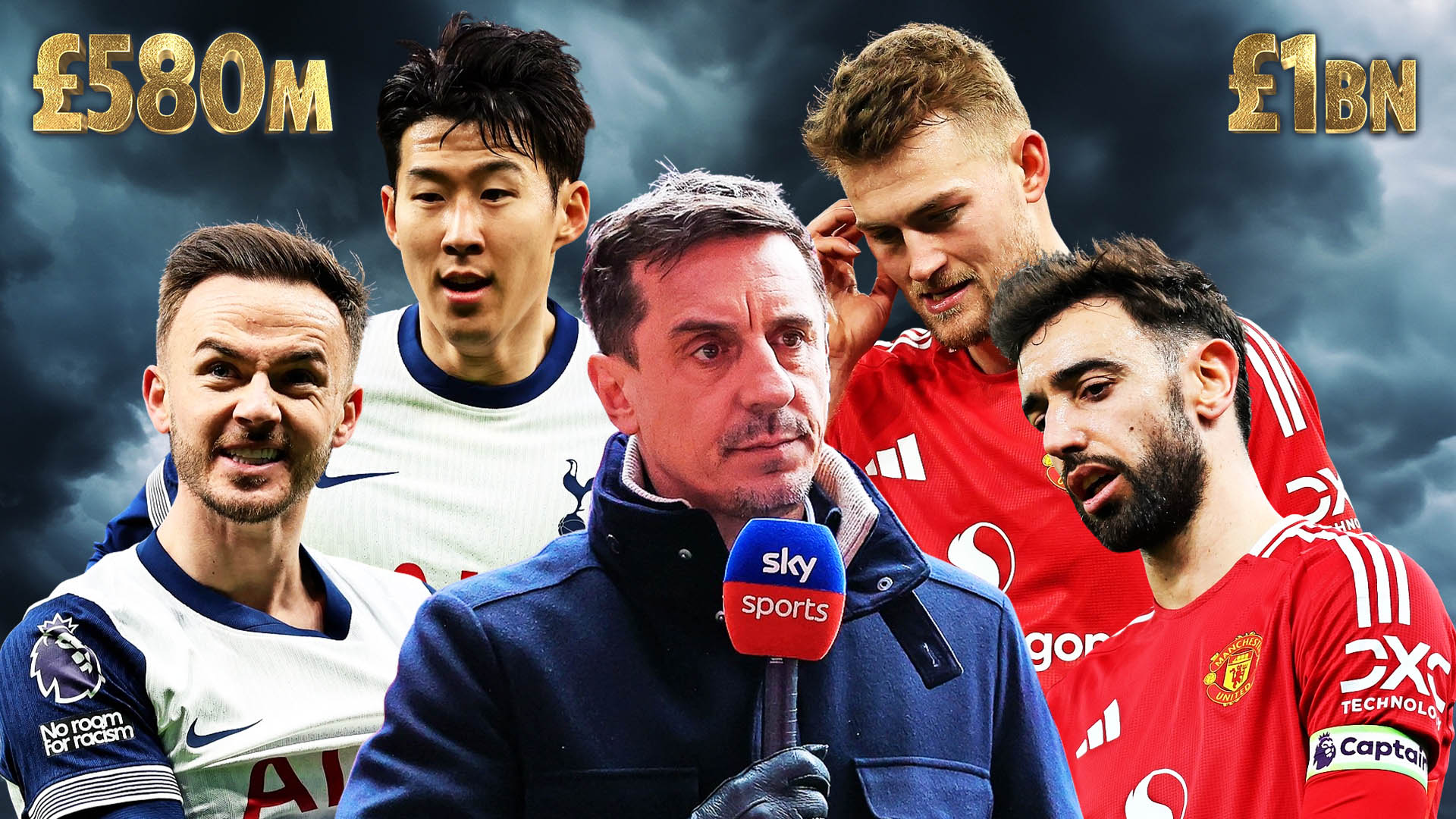
Manchester United suffered yet another setback on Sunday, falling to a narrow 1-0 defeat against Tottenham Hotspur in North London. The match, which saw James Maddison scoring the only goal, further deepened the club’s woes. Maddison’s celebration after the goal appeared to be a cheeky response to Roy Keane’s previous criticisms of his form. The challenge for Manchester United was compounded by a series of injuries, leading to the team naming eight teenagers on the bench alongside the renowned but isolated figure of Victor Lindelof. Despite these immediate difficulties, Gary Neville, a former Manchester United right-back, has voiced a harsh and critical assessment of the Red Devils’ squad, suggesting that they are inferior to Tottenham’s team, even after spending nearly half a billion pounds more over the past decade.
Neville’s Harsh Reality Check
Speaking during the post-match debrief on Sky Sports Super Sunday, Neville provided a stark but thought-provoking comparison between the two teams. "If you take Tottenham’s best players—Porro, Udogie, Van de Ven, Romero, Bissouma, Sarr, Maddison, Kulusevski, Solanke, Son, Johnson, Tel—how many Manchester United players would get into that Tottenham team if everyone was fit?" he asked. Neville pointed out that Bruno Fernandes is the only Manchester United player who might stand a chance in Spurs’ lineup. "Maybe Amad Diallo, but if you’ve got Kulusevski or Amad, to be honest, I’ll probably go Kulusevski," he added. Neville’s critique is not fueled by emotion or a mere rant but is a reflection of the sad state Manchester United finds itself in. The significant investment in the squad has not translated into comparable on-field performance, a disheartening reality for a club with such a rich history.
The Financial Discrepancy
Since 2016, Manchester United’s net spend on transfers amounts to an astounding £1 billion. This includes major acquisitions like Paul Pogba (£89m), Antony (£85.5m), Harry Maguire (£85m), Romelu Lukaku (£75m), Jadon Sancho (£73m), and Rasmus Hojlund (£72m). The club’s largest signing this season, Leny Yoro, came at a cost of up to £52m. United has sold players worth a total of £371m since 2016, which is the lowest among the ‘Big Six’ English clubs, contributing to the substantial net expenditure of £1 billion. In contrast, Tottenham’s net spend over the same period is £580m. This includes significant outlays on players like Dominic Solanke (£65m), Archie Gray (£40m), Wilson Odobert (£25m), and Brennan Johnson (£47.5m). Harry Kane’s departure to Bayern Munich for an initial £86m and Kyle Walker’s move to Manchester City for £50m in 2017 also highlight the financial dynamics at play.
A Decade of Disparity
When the financial figures are extended back to the 2015-16 season, the disparity becomes even more significant. Tottenham made a small £13m profit in that season, while Manchester United was down around £45m. This means that over the past ten years, the cumulative difference in spending between the two clubs is approximately £478m. Despite this massive financial gap, Manchester United has only managed to secure five trophies—two FA Cups, two League Cups, and a Europa League—while Tottenham has not won any major silverware in the same period. Neville’s assessment, therefore, is not just about the current form but a long-term trend of underperformance and inefficiency in player recruitment and development.
Player Ratings and Individual Performance
The SunSport rating for Manchester United players against Tottenham paints a grim picture. Andre Onana, the goalkeeper, received a meager 3, with his inability to handle a relatively weak bouncing shot leading to Maddison’s goal. Noussair Mazraoui, who played right-back, managed a 5, showing some clever link-up play but failing to contain Ben Davies. Harry Maguire, often a subject of criticism, earned a 5, his mixed performance highlighted by both defensive and attacking efforts, but also a notable mistake in stopping a cross. Diogo Dalot, another defender, scored a 6, dealing with a challenging afternoon against Son and Spence. Patrick Dorgu, making his Premier League debut, was largely invisible and received a 4. Bruno Fernandes, the captain, also rated 5, struggled with interceptions and breaking up play, though he showed some improved form in the final 20 minutes. Alejandro Garnacho, rated 4, had a particularly frustrating game, missing a sitter from 10 yards. Joshua Zirkzee, rated 6, was the best of a poor front three, showing flashes of skill but ultimately failing to capitalize on his opportunities. Rasmus Hojlund, the young Danish striker, received a 3, a rating that Neville might argue points to him being one of the worst No 9s in Manchester United’s recent history.
The Broader Context
Manchester United’s current struggles are not just a matter of recent form but a reflection of deeper issues within the club. Neville’s comments highlight the inefficiency in the club’s transfer strategy and the lack of a coherent long-term plan. Despite the vast financial resources at their disposal, the Red Devils have failed to build a squad that can consistently compete at the highest level. The contrast with Tottenham, a club known for its prudent financial management and strong youth development, is stark. Tottenham’s ability to field a competitive team with a smaller net spend and without any major trophies in the past decade is a testament to their strategic acumen. For Manchester United, the road to recovery will require more than just financial investment; it will necessitate a fundamental overhaul of their scouting, player development, and tactical approaches to regain their former glory and competitive edge.