
The Controversial Incident at Molineux
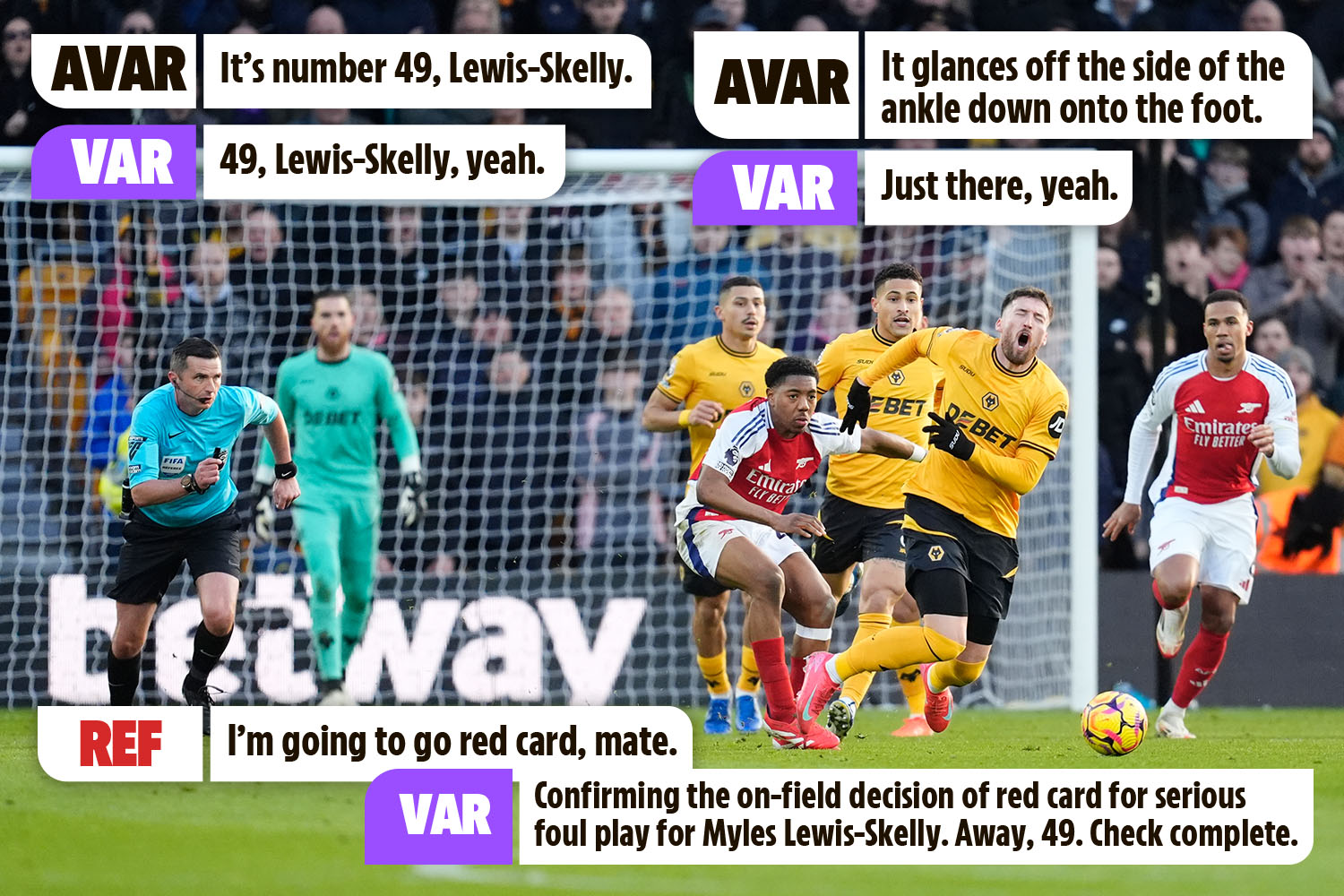
In a highly charged moment during Arsenal’s 1-0 win over Wolves at Molineux, teenage Arsenal player Myles Lewis-Skelly was shown a red card by referee Michael Oliver. The decision, which came in the first half, sent shockwaves through the stadium and sparked immediate controversy. Lewis-Skelly was penalized for a foul on Matt Doherty, which Oliver deemed serious foul play. However, the red card was later overturned following a successful appeal by the Gunners. This incident has raised numerous questions about the role of the Video Assistant Referee (VAR) in such crucial moments of the game.
The Referee’s Decision and VAR’s Role
Michael Oliver’s initial decision to issue a red card was based on his perspective of the incident. In a conversation with VAR Darren England and his assistant, Oliver was unequivocal about his judgment: "I’m going to go red card, mate. Red card on the ankle. Red card, serious foul play." England responded by confirming that it was indeed for serious foul play, specifying that the first impact was on the Achilles area before moving to the foot. The assistant VAR added that there was no chance of Lewis-Skelly playing the ball, further supporting the red card decision. Oliver then confirmed the red card for serious foul play, identifying Lewis-Skelly as the culprit.
Criticism and Questioning the Decision
The controversy did not end with the match. Ex-Premier League referee Howard Webb, a respected voice in the world of football officiating, criticized the decision in the latest episode of Match Official’s Mic’d Up. Webb acknowledged that there were aspects of the incident that could support a red card, but he also pointed out several factors that suggested a yellow card would have been more appropriate. He stated, "There are some considerations that might support a red card, but there are a whole host of others that say it is not quite there, so on balance we would rather this had been a yellow card."
The Role of VAR and On-Field Decisions
One of the key criticisms of the incident was the role of the VAR. Webb noted that the VAR did not encourage Oliver to review the incident on the monitor, which he believes would have been the right course of action. He explained, "The VAR didn’t want to re-referee the situation, they were mindful of the referee’s call standing unless it is clearly and obviously wrong. They felt it wasn’t at that level on the day and decided to leave it as a red card on the field." While Webb understands why the referee made the decision in the heat of the moment, he feels that the VAR should have been more proactive in ensuring the correctness of the call.
The Impact on the Team and the Match
Arsenal’s reaction to the red card was intense, with players visibly upset and protesting the decision. The club was subsequently fined £65,000 for their players’ reaction, underscoring the severity of the incident. Mikel Arteta’s team had to navigate the remainder of the match with one player down, which could have had a significant impact on the game’s outcome. Despite the red card, Arsenal managed to secure a 1-0 win, but the incident remains a point of contention and debate among fans, players, and officials alike.
The Backlash and the Importance of Professionalism
The fallout from the incident extended beyond the pitch, with Michael Oliver facing a barrage of criticism and even threats on social media. Howard Webb was deeply critical of the abuse Oliver received, emphasizing the importance of maintaining professionalism and respect in the sport. He stated, "Really disappointing. We know criticism comes our way, it’s part and parcel of the job. But there’s a line, isn’t there? Nobody should be subject to threats, their families shouldn’t be subject to threats – whether that be officials or players. We have seen all participants being exposed to those sorts of things." Webb’s comments highlight the need for a more measured and respectful approach to criticism in football, ensuring that the safety and well-being of all involved are protected.
Looking Forward
As Arsenal prepare to face West Ham at the Emirates on Saturday, the incident at Molineux serves as a stark reminder of the high stakes and emotions involved in professional football. The club and its players will need to channel their energy and focus to secure another important win. Meanwhile, the debate over the role of VAR and the decision-making process in crucial moments will likely continue, with the hope that future incidents will be handled with greater clarity and transparency.