
The End of the Away Goals Tiebreaker: A Watershed Moment in European Football
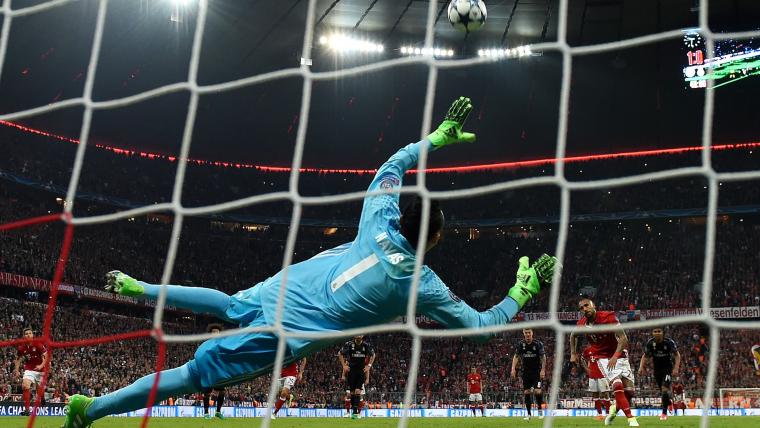
In June 2021, UEFA, the European governing body of football, made a monumental decision to abolish the away goals tiebreaker rule, effective from the 2021/22 season. This rule, which had been in place for over five decades, was a significant aspect of European club competitions, particularly those played over two legs. The rule stipulated that if the aggregate score was level after 180 minutes (two 90-minute matches), the team that scored more goals away from home would advance. However, UEFA’s decision to eliminate this tiebreaker has brought about a profound change in the way coaches and players approach these crucial matches. Instead of the away goals rule, if teams are level on aggregate, the match will go into 30 minutes of extra time (two 15-minute halves). If no goals are scored during extra time, the teams will engage in a penalty shootout to determine the winner.
The First Qualifying Rounds: A New Era Begins
The first Champions League match to be directly affected by this rule change was a 2021/22 first qualifying round match between Welsh club Connah’s Quay Nomads and Armenian side Alashkert. Despite Alashkert having scored more away goals, the match went to extra time. Alashkert eventually advanced after scoring the decisive goal during the extra time period. This match marked the beginning of a new era in European football, where the emphasis on away goals as a tiebreaker was no longer a factor. Since then, the rule change has led to several dramatic moments, including three penalty shootouts in the 2023/24 tournament. Notably, Arsenal edged past Porto and Atletico Madrid beat Inter Milan in the Round of 16, while Real Madrid knocked out Manchester City in the quarterfinals.
The Impact on Team Strategies
The abolition of the away goals rule has had a significant impact on team strategies and game plans. In the past, away goals counted as a tiebreaker, which often encouraged road teams to adopt a more attacking approach, knowing that any goal scored away from home could be crucial. However, with the new rule, every goal, whether scored at home or away, carries the same weight. This has led to a more balanced and strategic approach to two-legged ties. Coaches and players no longer need to do complex calculations about away goals; instead, they focus on the overall aggregate score. This change has also led to more open and exciting matches, as teams are less likely to play conservatively, knowing that a single away goal no longer carries the same weight.
The Rationale Behind the Change
The decision to abolish the away goals rule was not made lightly. It came after extensive discussions and feedback from the football community, including former and current coaches, players, and administrators. One of the primary arguments against the away goals rule was that it often discouraged home teams from playing attacking football, especially in the first leg of a knockout series. Conceding a goal at home could significantly set a team back in the overall series, making it harder for them to advance. UEFA president Aleksander Ceferin, who supported the change, highlighted that the away goals tiebreaker had run "counter to its original purpose" and was now "dissuading home teams from attacking." He also noted that home advantage is no longer as significant as it once was, making the rule obsolete.
The Broader Impact on UEFA Competitions
The rule change by UEFA applies to all of its club tournaments, including the men’s and women’s Champions League, Europa League, Women’s Champions League, UEFA Youth League, UEFA Super Cup, and the relatively new Europa Conference League. This means that the away goals tiebreaker is no longer used in any of these competitions. The impact of this change has been felt across the board, as teams in these tournaments have had to adapt their strategies to the new rule. For instance, during the 2024 quarterfinal first legs, teams on the road, such as Manchester City, Bayern Munich, Barcelona, and Borussia Dortmund, scored a total of nine goals, demonstrating that away teams can still be highly effective and aggressive without the added incentive of the away goals rule.
Influence on Global Football
While UEFA’s decision does not directly impact other international competitions organized by different regions or FIFA, it has set a precedent that has been followed by other football associations. For example, South America’s Copa Libertadores and Copa Sudamericana have also adopted a penalty-kick shootout in lieu of the away goals tiebreaker for their knockout rounds. However, the CONCACAF Champions Cup in North America still maintains away goals as a tiebreaker for the Round of 16 through to the semifinals. This divergence in rules highlights the ongoing debate about the fairness and effectiveness of the away goals rule, but UEFA’s decision has undoubtedly influenced the global conversation on this issue.
Conclusion
The abolition of the away goals tiebreaker by UEFA marks a significant shift in the way European club competitions are played. The new rule has led to more balanced and strategic approaches to two-legged ties, with every goal now carrying the same weight. This change has also made matches more open and exciting, as teams are less likely to play conservatively. While the rule change has not been universally adopted by all football associations, it has certainly set a new standard in the world of football, one that emphasizes fairness and sporting justice. As the game continues to evolve, it will be interesting to see how other competitions follow in UEFA’s footsteps.