
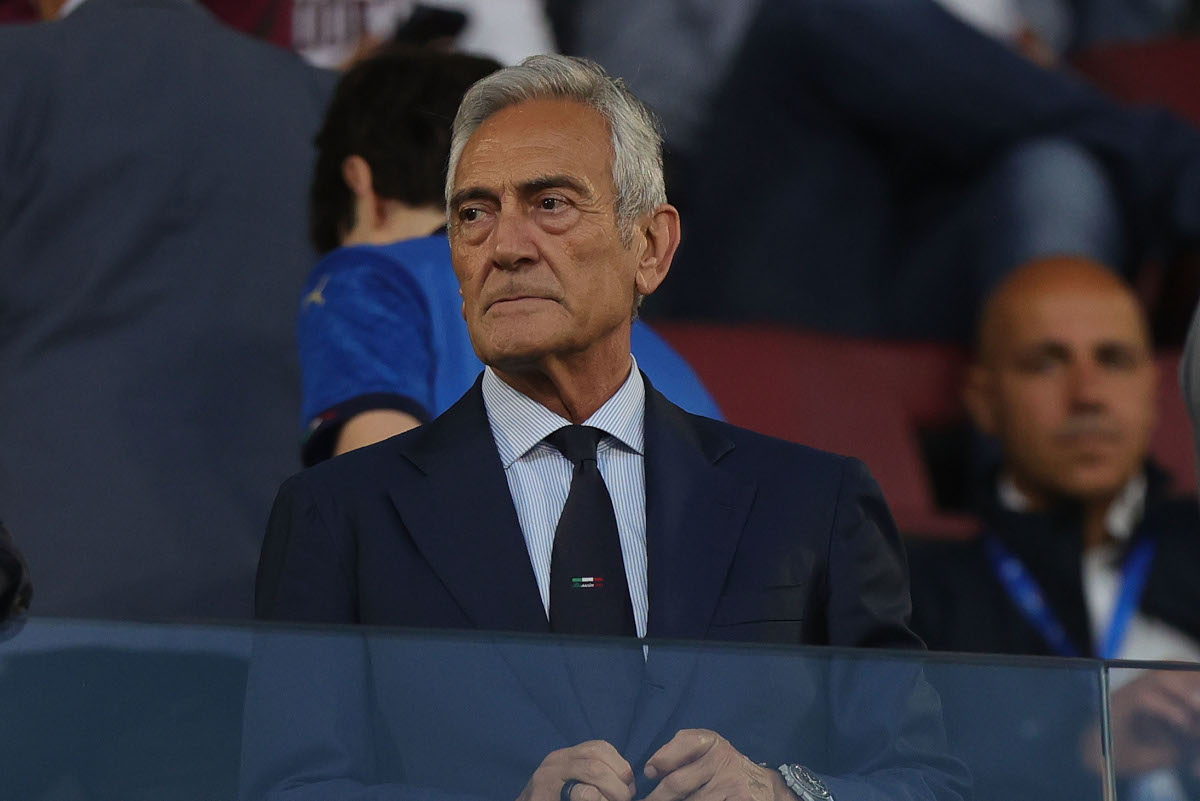
Gabriele Gravina: Resignation Not on the Table
Gabriele Gravina, the President of the Italian Football Federation (FIGC), has made it clear that he will not resign if Italy fails to qualify for the 2026 World Cup. The Azzurri are set to face Northern Ireland in the semifinal play-off in March 2024, with the potential to meet either Wales or Bosnia and Herzegovina in the final. When asked by Corriere dello Sport whether he would step down if the team doesn’t qualify, Gravina firmly stated, “No rule forces me to step aside.” He added, “I’d certainly do some personal soul-searching, but to those who tell me ‘get a real job’, I reply: If I leave, does football restart, and do we win the World Cup? If I had that certainty, I’d be the first to step down.”
Confidence and Commitment
Despite the challenges, Gravina remains confident in Italy’s chances. “Yes, I base that on concrete, real, objective elements, like the path that brought us here, setting aside the second half against Norway,” he noted. Gravina emphasized the importance of maintaining a positive outlook, stating, “Pessimism makes us waste energy; spreading it doesn’t help. The goal is within reach. Let’s roll up our sleeves and commit together, I mean, everyone.” His words reflect a determination to rally the entire football community, from players and coaches to fans and officials, around a common goal.
The Struggle for Italian Talent in Serie A
Italian football faces a significant issue with the limited number of Italian players in Serie A. Gravina highlighted this problem, noting, “We have 97 eligible players, 25% of the total, 97 across 20 Serie A clubs. Do you realise what it means?” The low number of Italian players in the top flight is a concern that affects the national team’s talent pool. Gravina explained that it is not possible to legally mandate a minimum number of Italian players on the roster. “It’s impossible, the federation can only intervene regarding non-EU players, as it already has, respecting the quotes set by the Bossi-Fini law,” he said. “Limiting the number of players coming from the EU violates European rules that, since the Bosman ruling, guarantee free movement for footballers.”
Long-Term Planning and Youth Development
To address these issues, the FIGC has been focusing on long-term planning and youth development. Gravina mentioned that their efforts have been underway since 2018, with notable successes at the U17 and U19 European levels and a runner-up finish at the U20 World Cup. “Now we are launching a project for basic activities from 5 to 13 years old with two World Cup winners, Perrotta and Zambrotta, together in a master with Prandelli,” he revealed. The aim of this project is to shift the focus from tactics to technique, fostering creativity and enjoyment in young players. “We need to free creativity. Kids get bored, they want to play, and the coaches tend to trap them in tactical schemes at a very young age,” Gravina said. He stressed the importance of creating educators rather than results-oriented coaches in grassroots football.
The Need for a Paradigm Shift
Gravina further elaborated on the need for a cultural shift in the approach to youth football. “Anyone who’s focused on results only can’t work in grassroots football. It would be different if the kids were entrusted to training specialists,” he emphasized. This perspective highlights the importance of nurturing young talents in a supportive and development-focused environment, rather than pushing them into rigid tactical structures. The FIGC’s project aims to instill a love for the game and develop technical skills, ensuring that future generations of Italian players are well-rounded and adaptable.
The Club-National Team Divide
Finally, Gravina addressed the often-contentious relationship between Serie A clubs and the national team. He acknowledged, “Objectively, they are, even if unintentionally. Every club looks out for its own interest.” This statement reflects the inherent tension between the short-term goals of clubs and the long-term interests of the national team. Gravina’s comments suggest a need for greater collaboration and alignment of interests to benefit both the clubs and the nation’s football ecosystem. By working together, Italian football can address its challenges and build a stronger future.