
Serie A Referees Admit VAR Errors in Week 26
This past weekend in Serie A, the Italian Referees’ Association (AIA) acknowledged two significant VAR (Video Assistant Referee) errors that could have significant implications for the ongoing relegation battle. Antonio Damato, a representative of the AIA, appeared on DAZN’s "Open VAR" show to review the footage and explain the refereeing decisions. Despite the controversies, the AIA remains committed to maintaining transparency and learning from these mistakes to improve the quality of officiating in the league.
Controversial Penalty in Lecce 0-1 Udinese
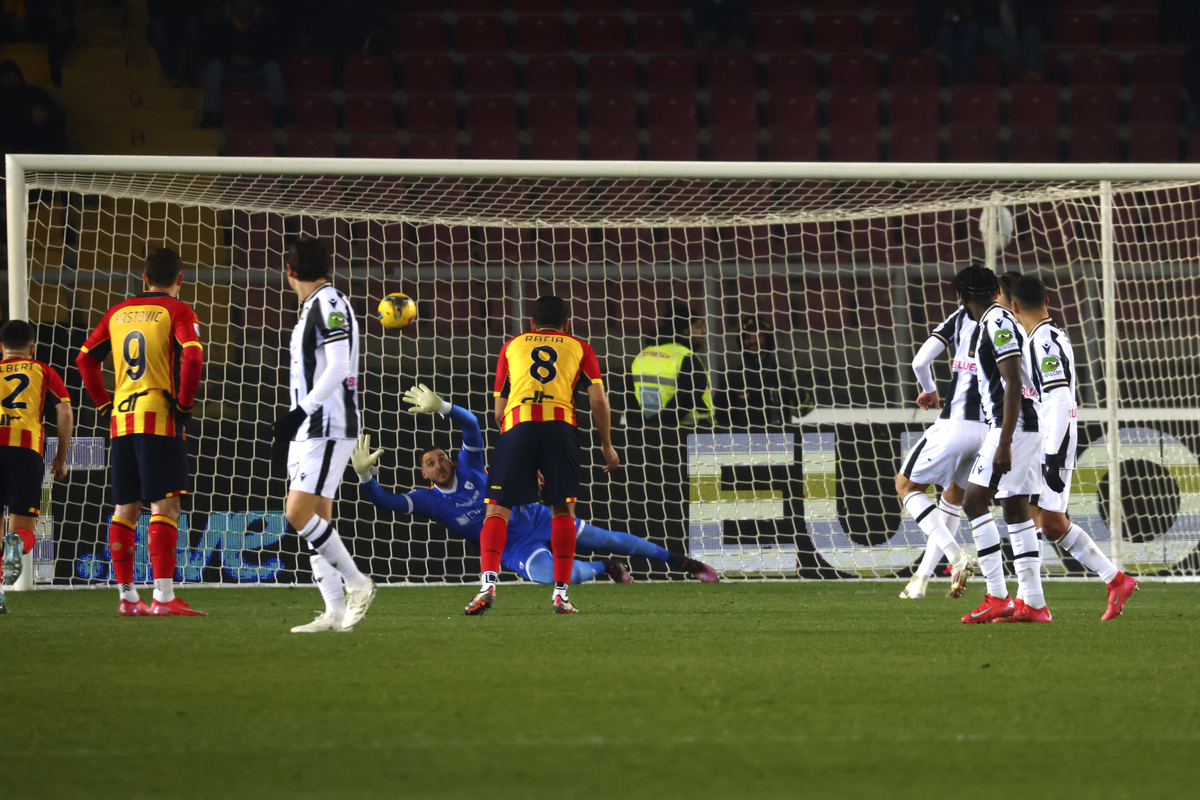
The first major error occurred during the Lecce versus Udinese match at the Stadio Via del Mare. The pivotal moment came when Gaby Jean, a Lecce player, moved across Sandi Lovric of Udinese and struck him on the face with his arm. The VAR, after reviewing the incident, deemed it a penalty, which ultimately led to Udinese’s 1-0 victory. However, Damato and the AIA firmly believe that the original decision to award a penalty was incorrect.
"It is not a penalty for us, so we consider the original decision to have been correct," Damato explained. "Both players are going for the ball, the defender is trying to take a position and raises his arm slightly, but not enough for a foul." The issue, according to Damato, lies in the VAR’s interpretation of the contact. The VAR was perhaps misled by the striking of Lovric’s face and the resulting injury, but they should have considered the broader context of the players’ movements.
The Role of Camera Angles in Decision-Making
One of the key points of contention is the use of camera angles in the VAR review. "The VAR provides the images to give greater clarity, but the referee can also request another camera angle to get a different view," Damato stated. In this case, the referee was only shown the footage of the final contact, which led him to conclude that a foul had occurred. However, had the referee been shown the full sequence of movements, it might have provided a more comprehensive understanding of the situation, potentially changing the decision. The AIA is reflecting on whether better communication between the referee and VAR could have prevented this mistake.
Controversial Penalty in Parma 2-0 Bologna
Another significant error was the penalty awarded to Parma in their 2-0 victory over Bologna. The incident involved Sam Beukema, a Bologna defender, who was deemed to have handled the ball. "As far as we are concerned, this too is not a penalty that should be given, as the movement, positioning, and posture are natural, while there is a very small distance for him to react when the ball strikes him," Damato noted. The VAR’s decision to uphold the penalty has sparked widespread debate, with many critics arguing that the call was harsh and unjustified.
Missed Red Card for Cancellieri
The Parma-Bologna match also saw another critical error, this time related to a yellow card. Matteo Cancellieri, already on a yellow card, lunged sideways into Niccolò Cambiaghi’s ankle, resulting in a free kick. However, the referee failed to issue a second yellow card, which would have resulted in Cancellieri’s immediate dismissal. Damato confirmed, "This was an error from the referee" and should have led to Cancellieri being sent off. Unfortunately, the VAR protocol does not allow for intervention in cases of missed yellow card bookings, even if they are clearly visible on the video footage.
Impact on the Relegation Battle
These errors are particularly significant as they could have a direct impact on the relegation battle. Lecce, who were defeated by Udinese, are currently fighting to stay in Serie A, and the incorrect penalty call could potentially cost them valuable points. Similarly, Bologna’s loss to Parma, influenced by the disputed penalty and the missed red card, could also affect their standings as the season progresses. The AIA is acutely aware of the high stakes involved in these decisions and is working to ensure such mistakes are minimized in the future.
A Commitment to Continuous Improvement
In the wake of these revelations, the AIA has reaffirmed its commitment to transparency and continuous improvement in refereeing. "We are human, and we make mistakes," Damato admitted. "However, it’s crucial that we learn from these errors and take steps to prevent them from recurring." The AIA is reviewing its protocols and training procedures to enhance the effectiveness of VAR and to better equip referees with the tools they need to make accurate decisions. The goal is to maintain the integrity of the league and ensure that all teams have a fair chance to achieve their objectives, whether that’s avoiding relegation or securing a higher position in the table.