

A Unique World Cup in the Making
The 2026 FIFA World Cup is poised to become a landmark event in the history of international football. As the first tournament to feature 48 participating teams, it will bring an unprecedented level of excitement and inclusivity to the sport. Hosted jointly by the United States, Canada, and Mexico, this World Cup is generating anticipation across the globe, not just for the matches but for the cultural exchange and unity it promises to foster. One of the key elements contributing to this excitement is the selection of mascots, a tradition that has been a staple of World Cup events since 1966. Each host nation has chosen a mascot that embodies its unique character and heritage, making the 2026 World Cup a celebration of diversity and national pride.
Clutch the Bald Eagle: A Soaring Symbol of the United States
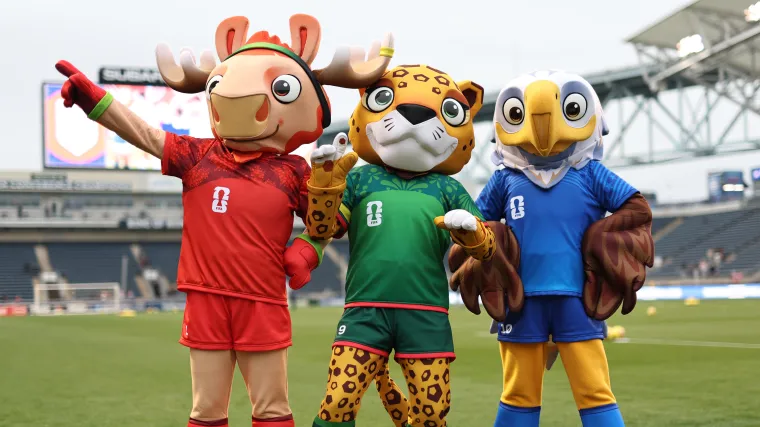
At the heart of the American representation is Clutch the Bald Eagle, a mascot that encapsulates the spirit of adventure and unity. According to FIFA, Clutch is a midfielder who “possesses an unquenchable thirst for adventure, soaring across the United States and embracing every culture, game, and moment with boundless curiosity and optimism.” The choice of a bald eagle, a national symbol of the United States, is a fitting tribute to the country’s rich history and diverse landscapes. Clutch is depicted in a blue jersey, emblazoned with the U.S. emblem, and his dynamic, soaring figure reflects the aggressive and adventurous nature of American football. Naming a sports mascot “Clutch” might seem a bit on the nose, but FIFA maintains that he “leads by action,” a trait that could inspire the co-hosts to achieve greatness.
Maple the Moose: A Guardian of Canadian Culture
Canada’s contribution to the 2026 World Cup mascot lineup is Maple the Moose, a character that is as whimsical as it is symbolic. According to FIFA, Maple is a goalkeeper who “was born to roam, journeying across all of Canada’s provinces and territories while connecting with people and embracing the country’s rich culture.” Maple, named after the maple syrup that is synonymous with Canada, is portrayed as a “street style-loving artist” who “combines endless stories and unstoppable flair.” This description aligns well with Canada’s growing reputation as a hub for creative and talented footballers. Maple’s red jersey and moose form serve as a playful yet proud representation of Canadian identity, reflecting the country’s natural beauty and cultural richness.
Zayu the Jaguar: Embodiment of Mexican Heritage
Representing Mexico is Zayu the Jaguar, a mascot whose name and spirit are deeply rooted in the country’s rich cultural heritage. The origin of the name “Zayu” is somewhat mysterious, with various suggestions that it is an approximation of indigenous Mexican languages. FIFA has not specified the exact linguistic roots but confirms that the name is “inspired by unity, strength, and joy.” Zayu is a striker who “embodies the rich heritage and vibrant spirit of the country” and is “a symbol of cultural celebration and connection.” Adorned in a green jersey, Zayu’s jaguar form is a powerful and elegant representation of Mexico’s ancient traditions and modern aspirations. His presence on the field is intended to inspire pride and a sense of unity among Mexican fans and players alike.
A Walk Through World Cup Mascot History
The tradition of World Cup mascots dates back to the 1966 tournament in England, where Willie, a lion wearing a Union flag, became the first official mascot. Since then, each host nation has created a unique mascot to represent their culture and add a touch of whimsy to the event. The 1970 Mexico World Cup featured Juanito, a boy in a sombrero and the national kit, while the 1974 West Germany tournament introduced Tip and Tap, two boys in matching kits. Argentina’s Gauchito in 1978 and Spain’s Naranjito, a soccer-playing orange, in 1982 continued the trend of anthropomorphic characters. The United States debuted Striker, a soccer-playing dog, in 1994, and France’s Footix, a rooster, in 1998, further cemented the tradition. The 2002 World Cup in South Korea and Japan brought Ato, Kaz, and Nik, futuristic creatures with colorful designs, while Germany’s Goleo VI and Pille in 2006 and South Africa’s Zakumi in 2010 added even more creativity to the lineup. Brazil’s Fuleco, a three-banded armadillo, and Russia’s Zabivaka, a wolf, in 2014 and 2018, respectively, continued to push the boundaries of mascot design. Most recently, Qatar’s La’eeb, a floating ghutrah, added a touch of Middle Eastern flair to the 2022 tournament.
The Role of Mascots in Fostering Unity and Excitement
Mascots play a crucial role in building excitement and fostering a sense of unity among fans and players. They serve as ambassadors of the host nation’s culture, embodying the spirit and values that define the country. For the 2026 World Cup, Clutch, Maple, and Zayu are not just charming characters but powerful symbols of the diverse and inclusive nature of the event. Clutch’s adventurous spirit, Maple’s creative flair, and Zayu’s vibrant heritage collectively represent the best of North America. These mascots will not only entertain and engage the global audience but also help to create a memorable and unified experience for all. As the 2026 World Cup approaches, these mascots will be at the forefront of the celebration, serving as a reminder of the shared passion and joy that football brings to people around the world.