
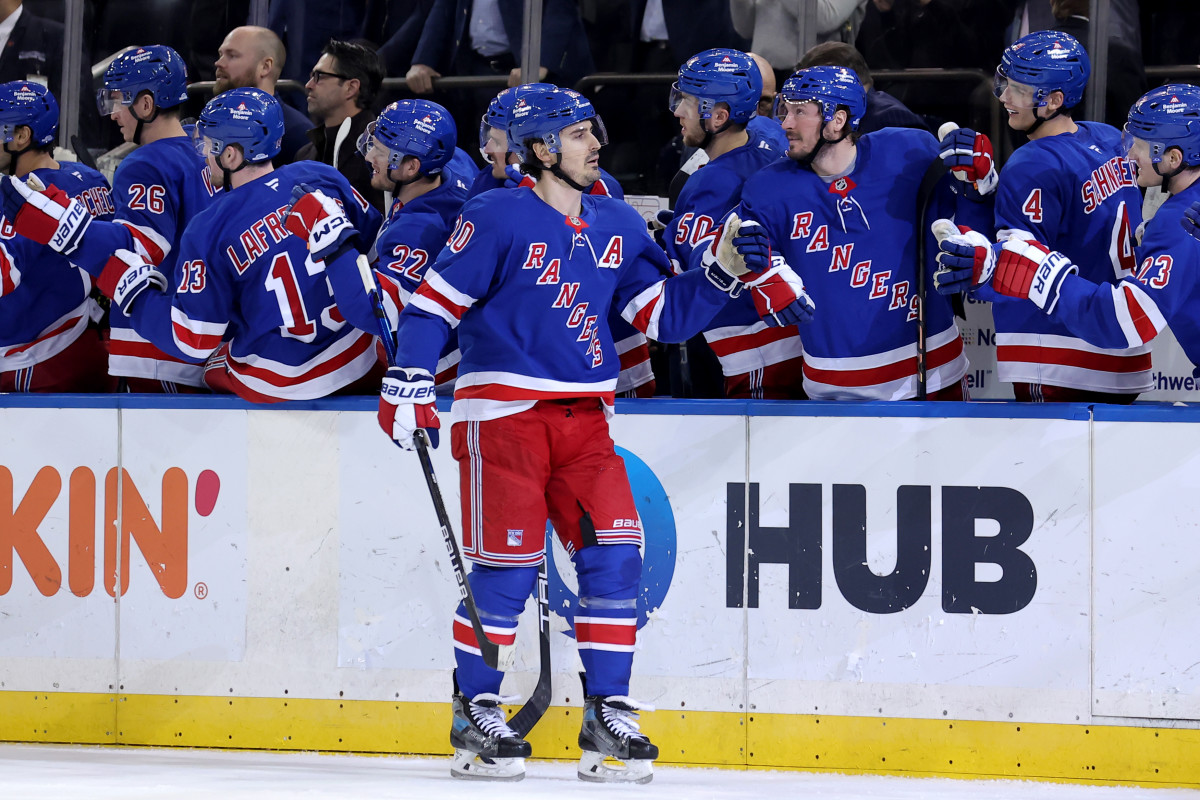
Chris Kreider’s Stellar Performance
Chris Kreider’s exceptional play in last night’s 2-1 loss to Sweden in Boston has not only extended his hockey career but also showcased why he remains a valuable asset for any team. It wasn’t just his goal that stood out; Kreider’s all-around performance—his speed, physicality, and contributions on special teams—demonstrated his continued relevance in the league. Despite the Rangers potentially parting ways with him if they miss the playoffs, Kreider’s performance has undoubtedly caught the attention of other teams, including the Pittsburgh Penguins. Team USA coach and Penguins bench boss Mike Sullivan was effusive in his praise, highlighting Kreider’s skating ability, size, penalty-killing skills, and power-play work. Sullivan’s comments almost made it sound like he was advocating for Kreider to join the Penguins, underscoring the veteran’s market value.
The Rangers’ Missed Opportunity
A year ago, my friend Mark Linde began a pre-trade deadline campaign, urging the Rangers to acquire Jake Guentzel. The rallying cry evolved into "The Rangers should have gotten Jake Guentzel for their playoff run." While the Rangers did not heed this advice, Guentzel has continued to prove his worth as a winner. His performance in the recent USA-Canada matchup was a testament to his skills, and he is expected to shine again in the upcoming clash in Boston. The Rangers’ decision to pass on Guentzel may come back to haunt them, especially as they face potential elimination and the need for a significant roster overhaul.
The Success of the Four Nations Tournament
NHL Commissioner Gary Bettman and Deputy Commissioner Bill Daly have outdone themselves with the success of the Four Nations tournament. Just a week before it began, the fan appeal and media response were beyond what any promoter could have hoped for. The choice of venues, timing, and players has been spot-on, and the best is yet to come with the highly anticipated USA-Canada game on Thursday. The tournament has not only garnered strong ratings and critical acclaim but also highlighted the growing popularity of hockey in non-traditional markets. This success story is a testament to the strategic vision of Bettman and Daly.
Preparing for a Potential Rangers’ Elimination
If the Rangers fail to make the playoffs, General Manager Chris Drury will need to make some tough decisions. My trusted superscout Jess Rubenstein has identified a few prospects who could be called up from the Hartford Wolf Pack. Dylan Garand, a promising young goalie, should be given a chance to prove his NHL potential, especially with both Jonathan Quick and Louis Domingue becoming unrestricted free agents. Adam Sykora, known for his strong defensive play, is ready to step into a bottom-six role. Brett Berard, another forward, faces a different challenge. While he is skilled, Gabe Perreault, who can do everything Berard does and more, might be the preferred choice. If the Rangers are not planning to carry two 5-8 forwards, Berard could be a valuable trade asset.
The Growth of Hockey in Non-Traditional Markets
Mike Sullivan, a native of New England, is particularly thrilled about the success of the Four Nations tournament and the broader growth of hockey in the United States. Sullivan emphasizes the development of hockey in non-traditional markets, which were once mocked by Canadian critics. "We’re now developing big-leaguers in places nobody would have dreamed of 30 years ago," Sullivan notes, pointing to states like Florida, Arizona, Tennessee, and California. This expansion is a significant milestone for the sport, and it’s only a matter of time before other states, like Utah, join the hockey landscape.
Looking Ahead
The upcoming USA-Canada game in Boston is sure to be a highlight of the Four Nations tournament, further cementing its success and the growing appeal of international hockey. For Chris Kreider and the Rangers, the future remains uncertain, but Kreider’s performance has certainly opened doors for him in the league. As the Rangers consider their next moves, the success of the Four Nations tournament and the growth of hockey in non-traditional markets provide a hopeful outlook for the sport’s future.