
The NHL Trade Season is Upon Us
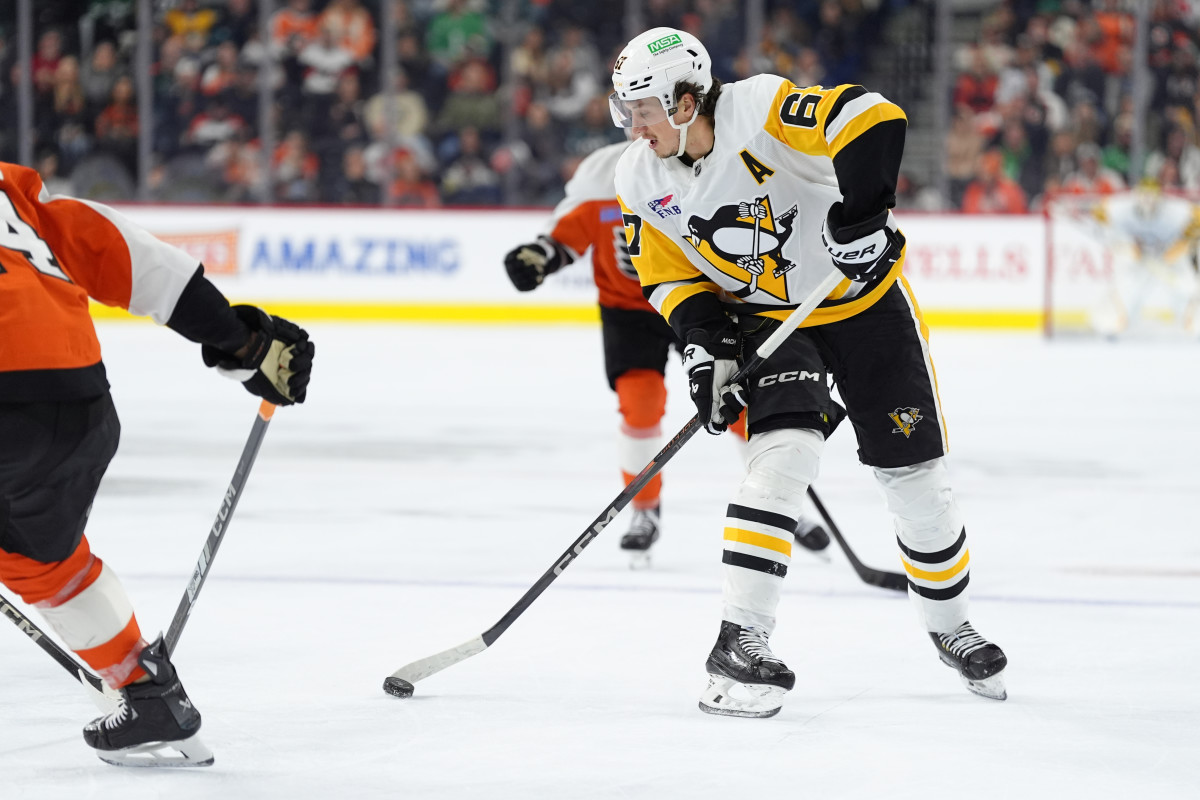
It’s that time of year again, folks! The NHL trade floodgates have officially opened, and with that, rumors and movement will be abound. For the Pittsburgh Penguins, this period is particularly crucial as they navigate their strategy of competing and rebuilding their prospect pool simultaneously. Given the team’s current roster, it’s likely that they will be looking to move some of their pending unrestricted free agent contracts, as well as some high-value contracts, to secure assets for the future. One of the key players under scrutiny is forward Rickard Rakell. Let’s dive into the case for and against trading him, and what his potential value might be.
Rakell’s Career Year and Market Value
The 31-year-old Rickard Rakell is on pace for a career year in terms of numbers. He currently has 25 goals and 48 points, and he is projected to finish the season with 37 goals and 70 points, surpassing his previous career-highs of 34 and 69, respectively, set with the Anaheim Ducks in 2017-18. Rakell’s inclusion on Sweden’s first line in the 4 Nations Face-off, despite being a late injury replacement, underscores his importance and current form. With the salary cap rising significantly, Rakell’s contract, which carries an average annual value of $5 million for three more seasons, is a bargain in today’s market. His power play prowess, evident from his five power play goals and 12 power play points, makes him an attractive option for contending teams looking to bolster their offensive capabilities.
Rakell’s trajectory over the years further supports his value. During his prime in Anaheim, where he played alongside elite centers like Ryan Getzlaf, he registered his best seasons from 2016-18. However, injuries and nutrition issues derailed his production in the following years. When he was traded to Pittsburgh at the 2022 trade deadline, he found his form again, scoring 28 goals and 60 points in his first full season. Although he had a slow start and struggled with injuries in 2023-24, this season sees him once again playing at his peak, often alongside Sidney Crosby. Given his current production and relatively affordable contract, the Penguins could potentially fetch a first-round pick or other valuable assets for Rakell, making him a prime candidate for trade discussions.
The Hesitation: Penguins’ Rebuild Plan
Despite the clear market value, the Penguins appear hesitant to part ways with Rakell. According to Josh Yohe of The Athletic, the team is cautious about dealing him. This hesitation aligns with GM Kyle Dubas’s approach of rebuilding on-the-fly. Since the 2022 trade deadline, when Jake Guentzel was dealt to the Carolina Hurricanes for Michael Bunting, a package of NHL-ready prospects, and a pick that would become top defensive prospect Harrison Brunicke, Dubas has consistently aimed to balance immediate competitiveness with future growth. Recently, he traded defenseman Marcus Pettersson and forward Drew O’Connor to the Vancouver Canucks, securing two NHLers in Danton Heinen and Vincent Desharnais, along with a Swedish forward prospect, Melvin Fernstrom, and a conditional first-round pick from the Canucks (originally from the New York Rangers in the J.T. Miller trade).
The extra first-round pick gives the Penguins flexibility. They can either use it to draft an elite talent or trade it for a high-caliber player. Given this additional asset, the Penguins might not feel the immediate need to sacrifice their best scoring winger, especially when they have Rakell under contract for three more seasons. His consistent production and ability to play alongside elite centers like Crosby make him a valuable asset both now and in the near future. If the Penguins can find a young player or a top, near NHL-ready prospect to replace Rakell, they might reconsider. However, Dubas’s reported high asking price makes such a return unlikely at the trade deadline.
Balancing Competition and Rebuild
The Penguins are in a unique position as they attempt to compete and rebuild simultaneously. They already have an abundance of draft picks, with more than any team in hockey over the next three drafts, and 15 picks in the top-three rounds. Additionally, they have a growing pool of NHL-ready prospects and more talent on the way. Dealing Rakell, while potentially lucrative in terms of future assets, would significantly hamper their chances of competing in the next one to two seasons. This is crucial because the team is already in Year Three of missing the playoffs and has been actively rebuilding for a year.
Rakell’s ability to score goals and create offensive opportunities alongside Crosby is a key factor in the Penguins’ on-the-fly rebuild strategy. If they can use their conditional first-round pick to acquire a young player and keep Rakell, it would strengthen the roster and improve their chances of returning to the playoffs while Crosby is still in his prime. Trading Rakell now might yield a good return, but it could also signal a shift in the team’s approach, potentially alienating the fan base and making the rebuild less fluid.
Strategic Considerations
Trading Rakell for a high premium is a logical move if the Penguins want to accelerate their rebuild. However, finding a suitable return that meets their demands is challenging. Teams interested in Rakell’s services, particularly those in a playoff chase, may not be willing to pay the steep price Dubas is asking. This is especially true given the high value of top prospects and draft picks in today’s market.
Moreover, Rakell’s contract, while a bargain now, is unlikely to lose significant value over the next year. Keeping him for another season could provide the Penguins with the offensive firepower they need to compete, while also giving them more time to identify and develop their younger talent. The team’s goal is to remain competitive while rebuilding, and Rakell’s presence is essential to achieving that balance. His familiarity with the system and chemistry with Crosby make him an irreplaceable asset in the short term.
The Verdict: Keep for Now
While the Penguins are in a strong position to trade Rakell, doing so right now would be a significant blow to their immediate competitiveness. The team’s strategy of rebuilding on-the-fly is predicated on maintaining a competitive roster while developing younger talent. Rakell’s elite goal-scoring ability and affordable contract make him a crucial piece for the Penguins’ plans in the next one to two seasons.
Waiting until at least the summer to consider trading him could be a better approach. It would give the Penguins time to assess their prospects’ development and the trade market’s dynamics. If they decide to keep him into the next season, it would not diminish his value too much and would provide the team with a solid offensive foundation. Any trade involving Rakell should bring a high-caliber young player or a top, near NHL-ready prospect to the Penguins. Expecting such a return at the trade deadline is unrealistic, but a summer trade might yield more favorable terms.
Conclusion
In conclusion, while the Penguins have a compelling case to trade Rickard Rakell, the more prudent approach would be to keep him for now. His current form, affordable contract, and ability to play alongside Sidney Crosby are invaluable assets for a team trying to rebuild on-the-fly while remaining competitive. The extra first-round pick and the growing pool of prospects give the Penguins the flexibility to make a strategic move in the summer, where they might find a better return. For now, maintaining Rakell in the lineup will help bridge the gap in the rebuild and give the team the offensive firepower they need to stay in the playoff race.