
The Prevalence of Left-Shot Defensemen on the Ducks Roster
The Anaheim Ducks, known for their strategic approach to team building, have a notable abundance of left-shot defensemen. On opening night of the 2024-25 season, the Ducks fielded a blue line consisting of eight defensemen, six of whom were left-handed. This imbalance is not unique to the Ducks, as it reflects a broader trend in the NHL where teams often find themselves with an uneven distribution of left- and right-shot players. Despite this, the Ducks’ coaching staff and management have generally been cautious about deploying more than three left-shots in any given lineup, unless absolutely necessary. This reluctance is understandable, given the potential challenges that can arise when players are asked to play their off-side.
General Manager Pat Verbeek’s Perspective
In September, during the Ducks’ training camp, General Manager Pat Verbeek addressed the topic of uneven pairs in terms of handedness. "Am I comfortable? Yeah, I’m comfortable with it," Verbeek said. "Do I like it? It’s easier for lefties to play on their side, but it is what it is, and these guys will adjust." Verbeek’s comments highlight a practical and flexible approach to roster management. He recognizes that while playing on the off-side may pose some challenges, it is a viable option that can be managed with the right strategies and player development. This mindset is crucial in a league where adaptability and versatility are increasingly valued.
Successful Precedents in the NHL
Recent Stanley Cup winners, such as the 2023 Vegas Golden Knights and the 2024 Florida Panthers, have demonstrated the effectiveness of deploying four left-shots and two right-shots on their blue line. These teams were able to leverage the unique strengths of their left-handed defensemen to create dynamic and versatile lineups. This precedent suggests that the Ducks could benefit from a similar approach, especially given the talent they have at their disposal. The successful strategies of these championship teams provide a roadmap for the Ducks to consider as they navigate the current imbalance on their blue line.
Olen Zellweger: The First Choice for Adaptation
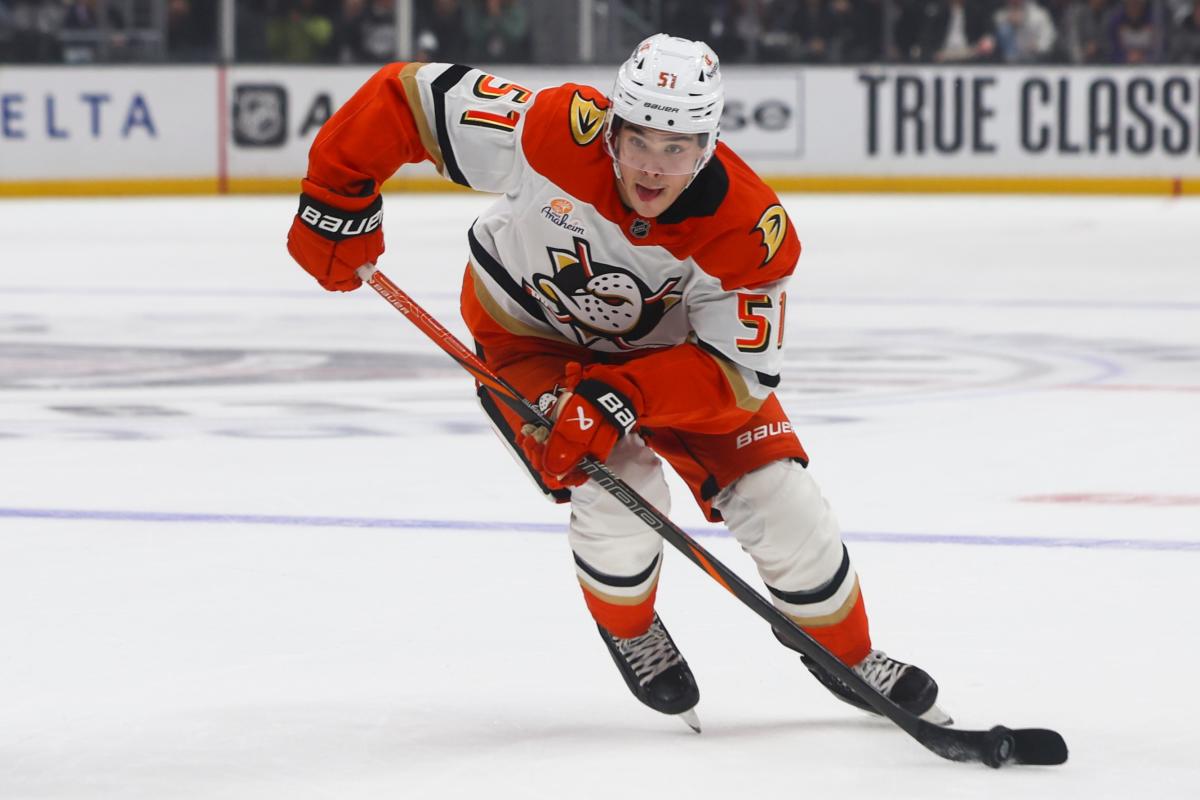
When faced with the need to adjust their lineup, the Ducks coaching staff has often turned to sophomore defenseman Olen Zellweger. Zellweger, one of the most talented skaters in the NHL, possesses exceptional hands and a natural ability to handle the puck. Among the three young left-shot defensemen on the Ducks roster—Jackson LaCombe, Pavel Mintyukov, and Zellweger—Zellweger seems the most suited to rise to the occasion and make the necessary adjustments. His skills and adaptability were put to the test in a recent shootout victory over the Los Angeles Kings, where he played on the right side of Brian Dumoulin due to Radko Gudas’s illness. Zellweger’s performance in this role not only highlighted his potential but also provided valuable insights for the coaching staff on how to manage similar situations in the future.
Pros and Cons of Playing the Off Side
Playing the off side, while challenging, can also present opportunities for a defenseman to excel in new ways. In the Ducks’ man-to-man defensive zone coverage, the primary responsibility is to shadow assignments, which means players end up in various parts of the defensive zone regardless of their handedness. However, the real obstacles arise when moving pucks up the strong side boards on outlets or pulling pucks off the glass at the point. A defenseman must have confidence and capability in backhand play to effectively manage these situations. On the positive side, embracing the off side can open up new lanes and angles for a defenseman. They have an easier time retrieving pucks off the wall that are heading toward their goal line and can take a step to the middle, providing them with the entire ice ahead of them while on their forehand. If a player like Zellweger can master the skill of pulling pucks off the wall at the point, akin to Shea Theodore in Vegas or Miro Heiskanen in Dallas, they can significantly enhance their team’s offensive and defensive dynamics.
Future Prospects and Long-Term Benefits
The Ducks have a wealth of talent in their pipeline, with more left-shot defensemen on the horizon. The 2024 first-round pick Stian Solberg, 2021 third-round pick Tyson Hinds, and 2024 third-round pick Tarin Smith all show promise and could potentially join the NHL roster in the coming years. There is even an outside chance that the Ducks could win the Draft Lottery and secure the rights to select Matthew Schaefer, further bolstering their defensive depth. For the long-term success of the franchise, it may be beneficial for one of these young lefties to commit to the transition to the right side. By embracing this challenge, a player can develop new skills and angles that can make them more versatile and valuable. The coaching staff can play a crucial role by providing the necessary support and patience, ensuring that the player has the runway to grow and adapt. Whether it is Zellweger, LaCombe, or Mintyukov, the potential benefits of such a transition are significant and could help the Ducks build a more balanced and competitive blue line.