

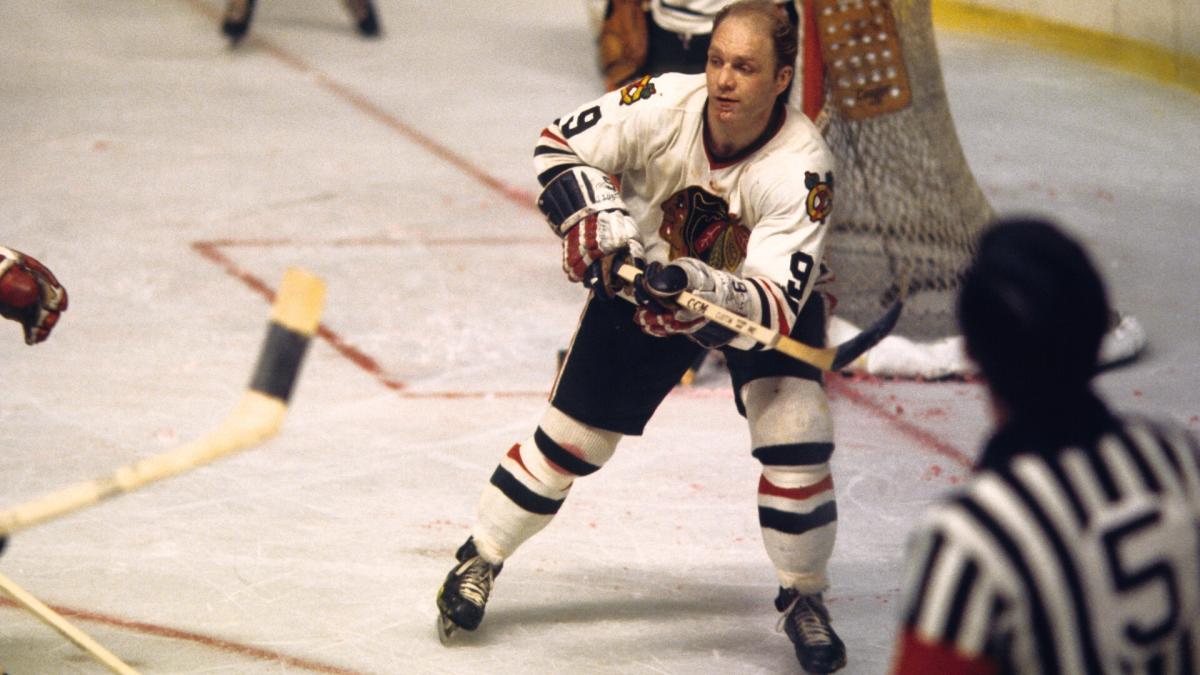
A Hockey Legend’s Lasting Legacy
Bobby Hull, the legendary forward who left an indelible mark on the Chicago Blackhawks and the National Hockey League (NHL), was posthumously diagnosed with chronic traumatic encephalopathy (CTE) by researchers at Boston University’s CTE Center. Known affectionately as “The Golden Jet,” Hull’s career was defined by his incredible speed, blond hair, and exceptional skill. His widow, Deborah Hull, released a statement on Wednesday, revealing that Hull had stage 2 CTE when he died in 2023 at the age of 84. This diagnosis not only underscores the long-term risks of repeated head trauma in professional sports but also highlights Hull’s dedication to advancing medical research.
A Career of Brilliance
Bobby Hull’s 16-season career was a testament to his extraordinary talent. He scored 610 goals in the NHL, with 604 of those goals coming during his tenure with the Chicago Blackhawks. His shooting and skating skills captivated fans and earned him the nickname “The Golden Jet.” Hull’s prowess extended beyond the NHL, as he also played for the Jets in the World Hockey Association, where he scored an additional 303 goals over seven seasons. His contributions to the Blackhawks were so significant that he remains the franchise’s all-time leading goal scorer.
The Struggle with CTE
In his final decade, Hull faced significant challenges, including short-term memory loss and impaired judgment. These difficulties were indicative of the CTE that would later be confirmed. His decision to donate his brain for research was influenced by the heartbreaking decline of his long-time friend and fellow Hall of Famer, Stan Mikita. Deborah Hull emphasized that Bobby was deeply committed to helping other families avoid the pain and suffering his and Mikita’s families experienced. “Bobby felt strongly no other family should have to endure CTE,” she said. His act of donation was a selfless gesture aimed at advancing the understanding and treatment of this debilitating disease.
The Impact of CTE Research
Dr. Ann McKee, director of the Boston University CTE Center, expressed gratitude for the contributions of Bobby Hull and others in the hockey community. “We are grateful to Bobby Hull and all of the NHL players and families who are helping us learn how to prevent, diagnose, and treat CTE,” she stated. The research being conducted at Boston University is crucial for developing effective treatments and preventive measures. Dr. McKee also encouraged retired players and their families to seek help and care if they suspect CTE, emphasizing that early intervention can significantly improve quality of life.
The NHLPA’s Response
In response to the growing awareness of CTE and its impact on athletes, the National Hockey League Players’ Association (NHLPA) announced in November the formation of an advisory committee. This committee is dedicated to educating hockey players about the risks of CTE and the damage that concussions can inflict on the brain. The initiative aims to provide players with the knowledge and resources needed to protect their health and well-being. This proactive approach is a significant step forward in addressing the long-term health issues facing professional athletes.
A Collective Effort for Change
The study published by Boston University researchers in December 2023 further solidified the link between CTE and professional hockey. Of the 19 NHL players examined, 18 were found to have CTE, including Bobby Hull, Stan Mikita, Ralph Backstrom, Bob Probert, and Derek Boogaard. The research also revealed that the odds of developing CTE increase by 34% for each year of hockey played. This stark finding underscores the urgency of developing better protective measures and treatment options. As the hockey community and medical researchers continue to work together, the hope is to create a safer and more sustainable future for all athletes.