
The Warrior Mentality: Playing Through Pain
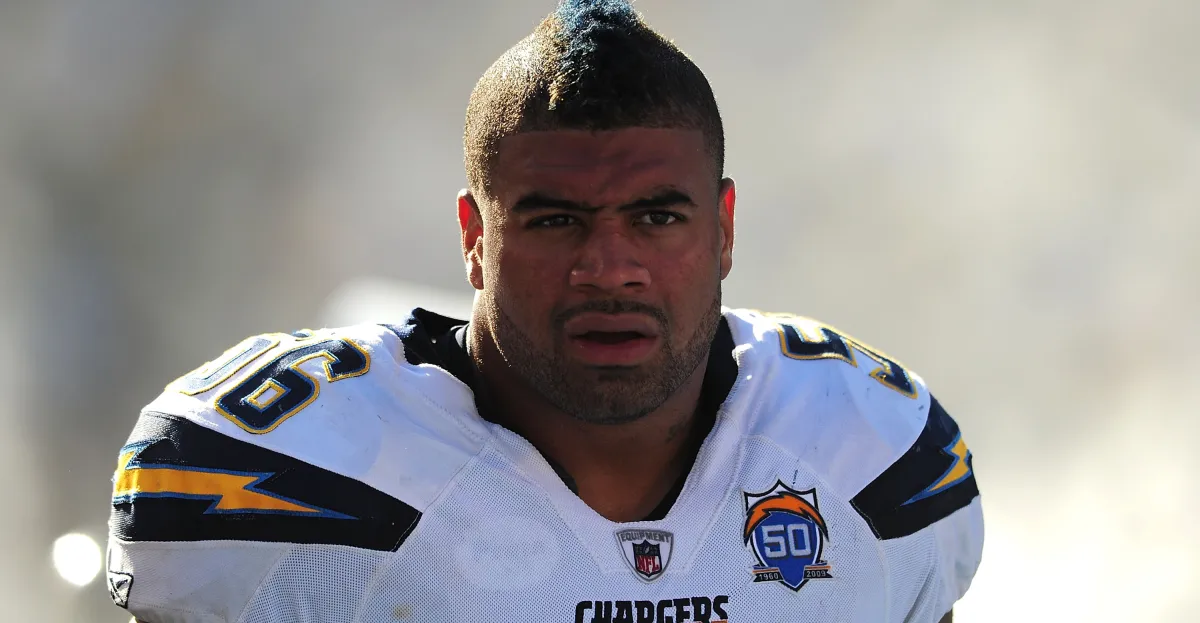
Shawne Merriman, the ex-NFL All-Pro who spent eight seasons with the San Diego Chargers and the Buffalo Bills, has a deep understanding of what it means to play through pain. His career was riddled with injuries, from pulled muscles and strained ligaments to broken bones. Despite these challenges, Merriman rarely missed a game, often competing at less than 100 percent. This resilience has given him a unique perspective on the mentality of athletes who push through injuries, particularly in the world of mixed martial arts (MMA).
The Question of Hurt vs. Injured
In football, there’s a common saying: “Are you hurt or are you injured?” This distinction is crucial because during training camp, players often deal with various aches and pains. The real question is whether these issues prevent them from playing or merely hinder their performance. “Nobody’s 100 percent,” Merriman notes, emphasizing that the key is to assess whether the injury is severe enough to keep you off the field entirely. This same principle applies to MMA, where fighters often spar or compete despite not being in peak condition. As Merriman explains, “We know they’re not 100 percent, but we cater to it and find a way to make it work.”
The Financial and Career Implications
Merriman, who retired from football in 2013 and now runs an MMA promotion called Lights Out MMA, understands the financial and career pressures that drive fighters to compete through injuries. Unlike NFL players who can miss a few games and still have a season, MMA fighters typically only get a few opportunities to fight each year. Dropping out of a fight due to an injury can mean a significant loss of income and a prolonged absence from the sport. “If you’ve got a fight, or you’ve got to sit out for the next two to four months to then go take the next offer you can get, you’ve got to fight,” Merriman says. The stakes are high, and the lack of a consistent schedule means fighters must seize every opportunity.
The Importance of Secrecy
In the NFL, teams are required to release injury reports leading up to games, detailing the nature and extent of player injuries. However, in combat sports, fighters often go to great lengths to hide their injuries from promoters and athletic commissions. Merriman understands this mindset, especially given the competitive advantage an opponent might gain if they know about an injury. “There’s a huge advantage if a guy knows you’re injured in fighting,” he explains. “I don’t think they can ever disclose that information going into it.” This secrecy is a necessary part of the sport, and fighters often balance the need to recover with the pressure to compete.
The Impact on Performance
The decision to fight through an injury can have significant consequences on performance. Merriman recalls times in his NFL career where he played through injuries and felt far from his best. “I’ve done that where I wasn’t 100 percent and I played through injuries and I wasn’t even half of what I was,” he admits. The results were often poor, and the blame ultimately fell on him. “No one pats you on the back and says ‘way to be tough, way to be a warrior, way to play through it!’ They’re going to say you played like shit,” he adds. The warrior mentality, while admirable, can sometimes lead to subpar performances and criticism from fans and peers.
Balancing Resilience and Caution
Merriman’s experience highlights the delicate balance between resilience and caution in both football and MMA. While the warrior mentality can drive athletes to perform under challenging conditions, it also carries risks. The pressure to compete and the financial implications of injury are significant, but so are the long-term health consequences. As Merriman reflects, “The difference is with football and fighting, you’ve got to get ready — when training camp starts and that season starts, there’s no time off.” This constant pressure to perform, regardless of physical condition, is a universal challenge for athletes in both sports. However, the unique nature of MMA, with its limited fight opportunities, adds an extra layer of complexity. Merriman’s insights underscore the importance of making informed decisions and finding a balance between competition and well-being.