
A Moment of Reflection
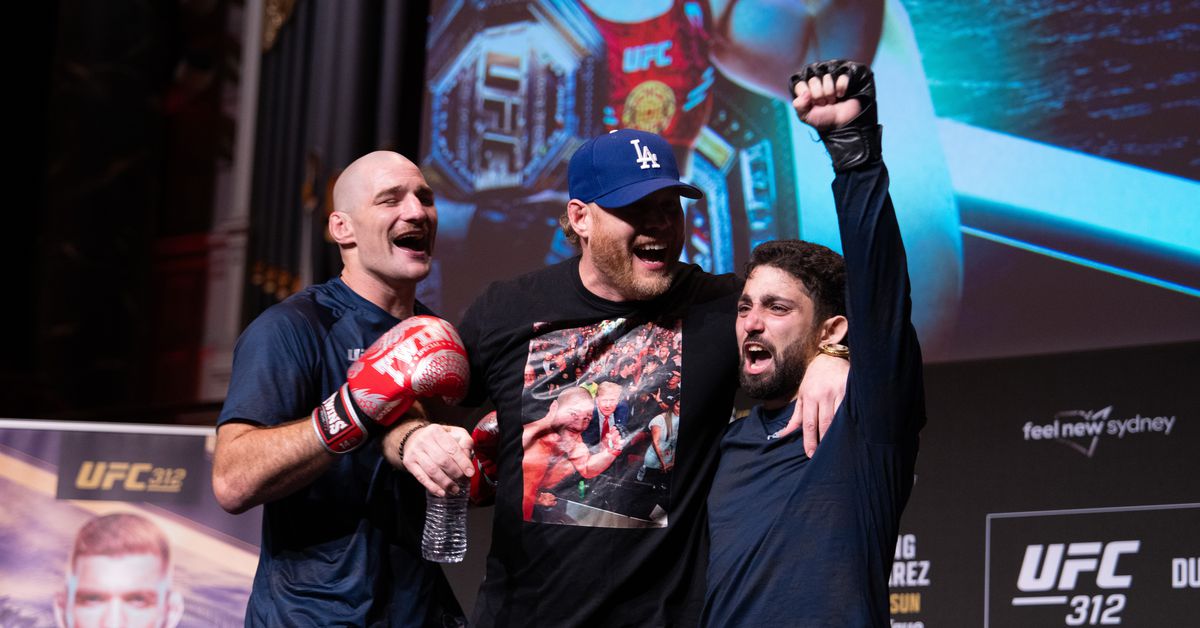
Eric Nicksick is no stranger to high-pressure moments in the world of mixed martial arts. As the head coach and cornerman for Sean Strickland, he’s been a crucial part of the fighter’s journey. However, after Strickland’s recent loss to Dricus du Plessis at UFC 312, Nicksick found himself in the midst of a surprising and public fallout. The coach, known for his straightforward and often blunt approach, admitted during an interview that Strickland’s performance was “uninspired.” His comments about the fighter’s motivations created a rift, and Strickland responded by saying he would “probably not” want Nicksick in his corner moving forward. Nicksick addressed the situation on his Verse Us podcast, offering a candid look into his thoughts and the lessons he’s learned from this difficult chapter.
Timing and Judgement
The original comments from Nicksick came shortly after the team’s return from Sydney, where they had spent 25 hours traveling and were dealing with a 19-hour time difference. Nicksick, who was only half awake and still processing the loss, made what he now calls a “calculated mistake” by accepting an interview invitation. He explains, “I made a mistake by accepting the invitation to go on at the timing of where I was at. I should’ve just said, ‘Hey man, not a good time.’ That’s where I f*cked up. I should’ve never done it.” The fatigue and the emotional aftermath of the fight clouded his judgment, leading to a less-than-ideal response that resonated poorly with Strickland and the public.
The Root of the Issue
Nicksick’s candid comments were rooted in a conversation he had with Strickland just before the interview. “About 30 minutes before going on with Ariel [Helwani], Sean is at practice with us, and Sean tells me all these things about how he felt in the weeks leading up to the fight, yada yada yada, his headspace. And it was very disappointing to hear what his headspace was and what his thought process was about being a champion, all these things,” Nicksick shared. He acknowledges that while his comments were factually accurate—Strickland’s performance was indeed uninspired—he should have handled the situation with more sensitivity. “I took that energy and had to process that while I go on Ariel. I fcked up. I fcked up.”
Intentions and Impact
Despite the misstep, Nicksick stands by the underlying message of his comments. He believes in being honest and direct, even when it’s difficult. “What I said was accurate: the fight was uninspiring. We all know Sean. That is not how Sean fights,” he stated. However, he admits to the poor wording and timing of his remarks. “I made a miscalculation in that moment in every accepting to go on the show. Number two, my wording was piss-poor.” Nicksick’s goal was to challenge Strickland to perform better, much like Strickland himself does when he speaks trash about opponents. “I know what Sean’s trying to do, and I defended him about what he’s said and how he’s said it because he wants what’s best for his guys in the room,” Nicksick explained. “So I tried to do a little of what Sean does and give him a taste of his own medicine and try to get a fcking response out of him going, ‘I’m going to prove this motherfcker wrong.’”
Seeking Growth
The fallout has given Nicksick a chance to reflect on his role as a coach and mentor. “I think it was something I needed. It showed me a lot about people. It made me learn about what I need to do better. There was a lot, bro. I came out of this going, OK, here’s where I can be a better person, a better coach, a better friend, a better mentor, all these other things,” he said. Nicksick is committed to growing from this experience, recognizing that there’s always room for improvement. He also emphasized that while he regrets the way his comments were phrased, he doesn’t regret the intention behind them. “I don’t regret what I said. I regret the timing of it and the wording of it,” he clarified.
Moving Forward
Ultimately, Nicksick’s priority is Strickland’s well-being and future success. He doesn’t care if Strickland wants him back in his corner, as long as the fighter is inspired to achieve greatness. “Since he beat Izzy, I’ve seen a change,” Nicksick noted, referring to Strickland’s victory over Izzy Silva. “So I said what I said, hoping to get him back. If that makes me a shitty person or a bad coach or whatever, I don’t know. But I don’t regret what I said. I regret the timing of it and the wording of it.” Nicksick is confident that regardless of their future relationship, Strickland will fight harder and better in his next bout. The coach’s genuine hope is that his friend and fighter finds the motivation and support needed to reach his full potential.
A Lesson in Honesty and Grace
In the world of mixed martial arts, honesty and constructive criticism are often seen as essential tools for improvement. Nicksick’s admission of his mistake and his willingness to learn from it are commendable. While the public and private conversations can sometimes diverge, Nicksick’s intent was always to push Strickland to be his best. This experience has not only highlighted the importance of careful timing and thoughtful wording in public discourse but has also given Nicksick and Strickland the opportunity to reassess their relationship and what they need from each other moving forward. Nicksick’s reflection on this incident serves as a reminder that even in moments of failure, there is the potential for growth and betterment.