
The Spreadsheet That Stunned F1
In the 2024 Formula 1 season, a revelation from Williams team boss James Vowles left many in the paddock speechless. Vowles disclosed that the team, which he had recently taken over, was using a single, colossal Microsoft Excel spreadsheet to manage its entire car build package. The spreadsheet, which ran to thousands of cell entries—approximately 20,000 at one point—was a stark contrast to the state-of-the-art, purpose-built systems he was accustomed to at Mercedes, a team that had consistently clinched championships over the previous decade. This discovery was not only a shock to Vowles but also a pivotal moment in his strategy to turn Williams’s fortunes around. The revelation came at the Bahrain season opener, where Vowles openly discussed the challenges the team faced, including a significant drop in performance and a parts production bottleneck.
The Struggles of 2024
The 2024 season was particularly tough for Williams. The FW46, the team’s new car, did not undergo pre-pre-season testing, a crucial phase for any F1 team to fine-tune and validate their designs. This lack of testing was compounded by the car’s initial weight issues; it was overweight by 0.45 seconds per lap. The heavy metal components used in place of the more common and lightweight carbon fiber parts were a direct result of the time-consuming and inefficient spreadsheet system. The added weight not only hampered performance but also led to increased incidents of crashes, particularly for drivers Alex Albon and Logan Sargeant in Australia and Japan. These crashes were not just about losing time; the heavy parts often broke the chassis tubs during impacts, necessitating costly repairs and replacements, further straining the team’s budget under the F1 cost cap.
A New Dawn with the FW47
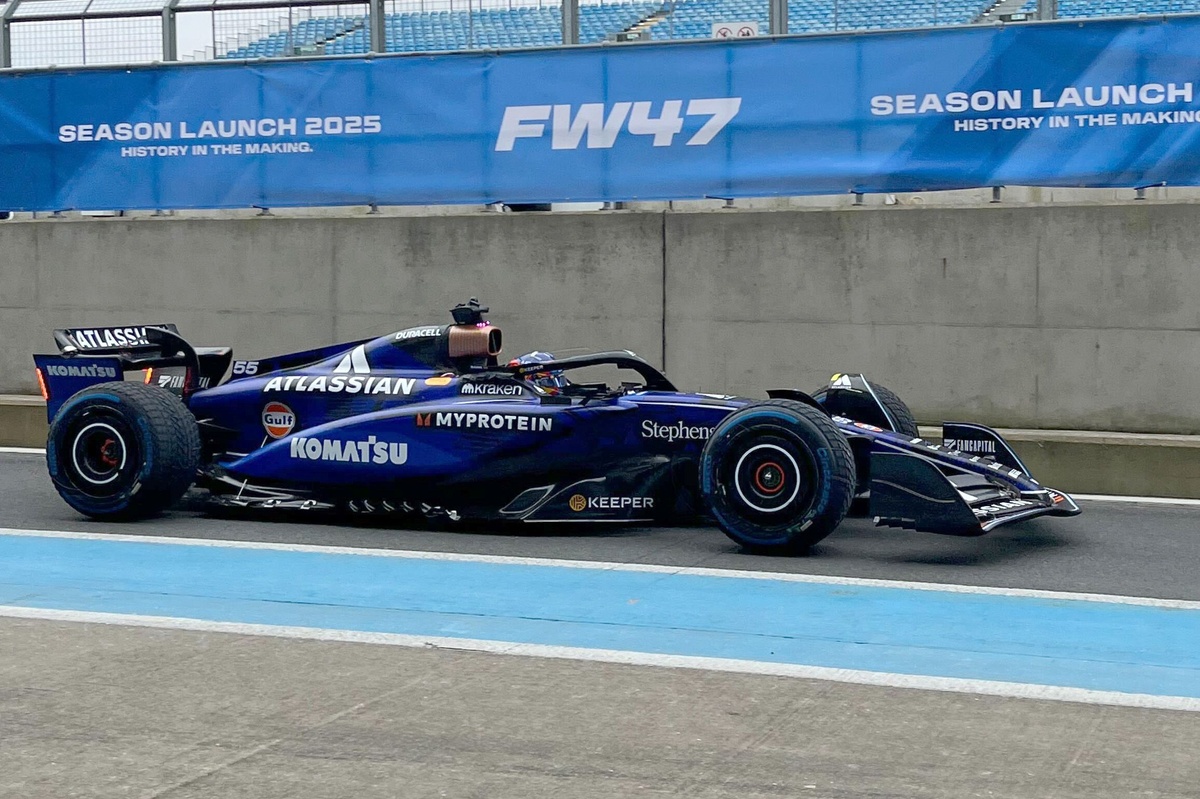
For the 2025 season, Williams has unveiled a new challenger, the FW47, and the team’s preparation is a world apart from the previous year. The FW47 has been built in time for a pre-season shakedown at Silverstone, a significant milestone that was missing in 2024. More importantly, the car meets the minimum weight requirement of 798kg from the outset, eliminating the performance penalties that plagued the FW46. When asked about the current car build compared to 2024, new Williams driver Carlos Sainz described it as "night and day" different and decidedly better. This transformation is a testament to the team’s commitment to modernizing its production and management systems.
Modernizing the Infrastructure
The shift from the Excel spreadsheet to modern production systems has been a central pillar of Vowles’s strategy. The team is now utilizing Enterprise Resource Planning (ERP), Material Requirements Planning (MRP), and Product Lifecycle Management (PLM) systems. These tools provide a digital map of the FW47’s entire architecture, allowing for quick and efficient access to detailed information about each part. The hierarchical system ensures that every component is visualized individually and fully represented on screen, contributing to better design and production processes. The PLM element is particularly crucial as it logs the usage time of each part, ensuring that the team can maintain the car’s safety and reliability throughout the season. Vowles is quick to acknowledge that there is still more work to be done, but the progress is evident and promising.
Early Impressions and Confidence
The early impressions of the FW47 have been overwhelmingly positive. Alex Albon, who has been with the team since 2024, described the new car as a "good car" and an evolution from the previous model. He highlighted the team’s improved packaging and the overall quality of the parts, noting that there has been a significant step up from the factory. Albon’s comments reflect a growing confidence within the team, driven by the modern tools and systems that are now in place. The quality and precision of the FW47’s design and construction are clear indicators of the team’s progress and its readiness to compete more effectively in the upcoming season.
Looking Forward to 2025
As the 2025 pre-season testing approaches, Williams’s focus is on leveraging the advancements in its infrastructure to deliver a competitive car. The team’s transition from a manual, spreadsheet-based system to a digital, modernized approach has been arduous but necessary. The FW47 shakedown at Silverstone, attended by team partners, fans, and the F1 press corps, is a symbolic moment marking the team’s renewed ambition and capability. The improvements in the car’s weight, build process, and overall quality suggest that Williams is on the right path. With a solid foundation now in place, the team is poised to make a significant impact in the 2025 Formula 1 season, aiming to return to the form that once made it a regular points scorer.