
The Challenges of Modern F1 Aerodynamics
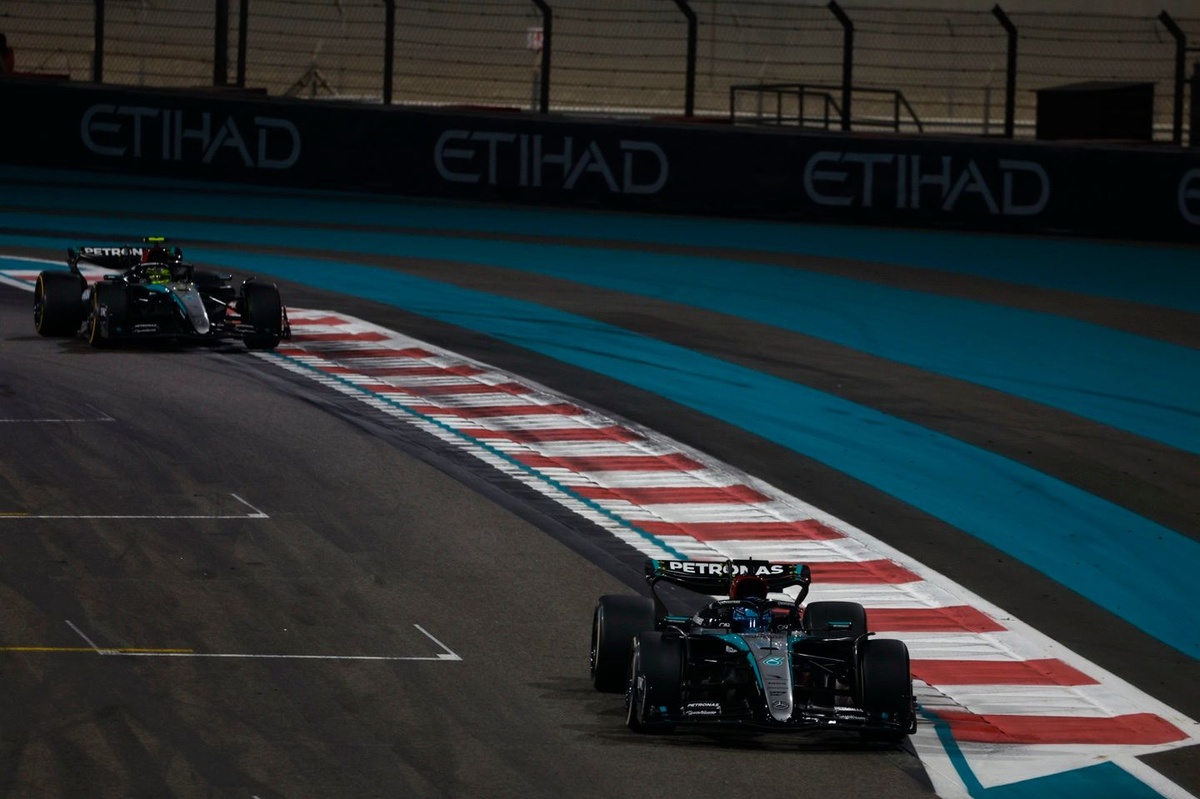
Since Formula 1 reintroduced ground-effect underbody aerodynamics into its ruleset, Mercedes has faced a series of unexpected challenges. The Brackley-based team has struggled with inconsistencies in car characteristics over the past three years, despite several attempts to refine their design direction. Each new car brought glimmers of hope, but also new problems. George Russell, one of Mercedes’ star drivers, believes that the team is due for a change in fortune. He hopes that the upcoming W16, set to debut before the Bahrain pre-season test, will finally help the team overcome the "traps" it has fallen into in the past.
The W13: A Case Study in Complexity
At F1’s 75th anniversary launch event, Russell reflected on the team’s journey, starting with the W13, the first iteration of their machinery for the current generation of cars. The W13 was plagued by issues, particularly its tendency to unlock its natural heave frequency, causing a spine-shattering effect. The team struggled to diagnose and address these problems, often finding it difficult to distinguish between the car’s bouncing and its inherent poor characteristics. This led to a prolonged battle against the 2022 car’s instability, which was a significant setback for the team.
Shifting Strategies: From Slimline to Conventional
In 2023, Mercedes decided to pivot from their slimline sidepods to a more conventional design for the W14. While this change seemed to bring some stability, it revealed new issues. The team found that their suspension layout was not optimal for the underbody aerodynamics, leading them to run the car slightly higher than their competitors. Despite this, the team felt they had made significant progress and were confident in their ability to run the car lower in 2024. However, this adjustment introduced inconsistent balance, another hurdle the team had to overcome.
The Domino Effect: Solving One Problem Creates Another
Russell acknowledged that the team had been too focused on solving immediate problems, often without considering the broader implications. He likened this approach to playing Whack-A-Mole—addressing one issue only to see another emerge. This is a common challenge in F1, where short lead times and high expectations often lead to quick fixes without a thorough understanding of their side effects. The team’s simulation tools, while powerful, can sometimes miss the full picture. Restrictions in wind tunnel scales and air speeds mean that certain flaws only become apparent when the car is on the track.
Preparing for 2025: A Broader Perspective
For 2025, Mercedes is taking a more holistic approach. The team is focusing on understanding how changes in one area, such as suspension characteristics, can affect other aspects of the car, including chassis response and aerodynamic balance. This requires a more thorough and forward-looking strategy. Russell emphasized the importance of considering the potential consequences of each design change and developing contingency plans to address any new issues that may arise. The goal is to create a more balanced and predictable car that can perform consistently across different circuits.
Looking Forward: The W16 and Beyond
Mercedes is optimistic that the W16 will be a more amenable and less capricious chassis. For Russell, this means a car that is easier to master, reducing the high-wire act of driving a sensitive machine. For new teammate Andrea Kimi Antonelli, a neutral car will provide the best platform to learn and showcase his skills. While the team may pivot their focus to 2026 early, depending on the results of the early rounds, they are determined to close 2025 with a better understanding of the "traps" they have fallen into and a clear strategy to avoid them. The Silver Arrows aim to emerge from this rules cycle stronger and more competitive than ever.