
The Porsche 963: A Bittersweet Exit from Endurance Racing
The Porsche 963 LMDh, which made its World Endurance Championship (WEC) debut in 2023, was initially conceived for a much longer tenure than the three seasons it ultimately managed. However, the German manufacturer’s financial struggles, particularly due to slowing electric vehicle (EV) growth and weakening demand in China, led to cuts in its endurance racing program. Despite the premature end, the 963’s journey through the WEC can be seen as a success, especially when considering the significant progress made from its challenging beginnings.
Early Troubles and Development Challenges
Porsche announced its return to the top echelon of endurance racing in late 2020, aiming to compete in both the WEC and IMSA under the new LMDh regulations. This ambitious plan required the manufacturer to rebuild its top-class operation from scratch, commit to two series simultaneously, and be the first to navigate a brand-new hybrid package. The in-house team that ran the 919 Hybridhad been absorbed by other parts of Porsche Motorsport, so the company partnered with Roger Penske’s legendary outfit, reviving a successful partnership from the RS Spyder era.
Choosing the LMDh platform over the more flexible LMH format added further complexity, as Porsche had to integrate major external partners like Multimatic for the chassis and Bosch, Williams Advanced Engineering, and Xtrac for the hybrid system. This meant that many performance-critical parts were out of Porsche’s direct control, making the development process more challenging. Despite these hurdles, Porsche was the first manufacturer to have an LMDh car up and running, with the 963 hitting the Weissach test track in January 2022, a full year before its debut.
Le Mans Setback and Resilience
The 963’s competition debut came at the Daytona 24 Hours in 2023, followed by its first appearance in the WEC at the 1000 Miles of Sebring. Porsche’s return to Le Mans in 2023, however, was a major letdown. The best of the three factory 963s, driven by Dane Cameron, Frederic Makowiecki, and Michael Christensen, finished ninth in class (16th overall), with a series of accidents and reliability issues derailing their efforts. This result was a stark contrast to Porsche’s historical success at Le Mans and a reflection of the “brutal reality” the team faced.
Porsche took the setback on the chin and set about fixing every aspect of the project. The team came together to address the issues, and by the end of the 2023 season, the results began to improve. At the Fuji 6 Hours, the two factory Porsches qualified third and fourth, with Laurens Vanthoor making a brilliant start to put the #6 entry in the lead early in the race. In North America, Porsche scored two consecutive wins at Road America and Indianapolis, following an earlier victory at Long Beach.
The Turning Point
The real breakthrough for the 963 program came at the 2024 Daytona 24 Hours. Cameron, Matt Campbell, Felipe Nasr, and Josef Newgarden secured victory in a tense final duel with the #31 Action Express Racing Cadillac. This was Porsche’s 19th outright victory at Daytona and its first since 2003. The momentum continued with the team’s first Hypercar win in Qatar, setting the stage for championship success.
Urs Kuratle, Porsche’s LMDh project leader, reflected on this period, saying, “The difference between Le Mans ’23 and Daytona ’24 was that the team grew together. We went through every single point and managed to solve the problems. The Daytona 2024 race was a game changer, and it made us stronger.” Porsche’s performance remained strong throughout the 2024 season, with the team securing the drivers’ title and a clean sweep of titles in IMSA.
Adjusting to a New Reality in 2025
The 2025 season saw Porsche update the front suspension of the 963, marking the second time the company had used evolution jokers on its LMDh prototype. The revised 963 dominated in IMSA, winning the first four races of the season. However, the reality in the WEC was starkly different. The Balance of Performance (BoP) system became a major obstacle, reducing Porsche to an also-ran. In the three races leading up to Le Mans, the team failed to finish higher than eighth.
Kuratle acknowledged the challenges, saying, “If you compete in endurance racing with all the constraints involved, you cannot expect to win every race. The governance bodies do have to react one way or another. It’s always hard to accept not winning, but sometimes you have to make compromises.”
Third Crack at Le Mans and Late Title Tilt
Porsche’s third attempt at Le Mans in 2025 was a mix of success and heartbreak. The 963 was fast and reliable, and the team made all the right calls. However, a narrow 14-second defeat to the #83 AF Corse Ferrari 499P left the team in second place. Despite the setback, the near-miss boosted morale and became a catalyst for a stronger showing in the second half of the season.
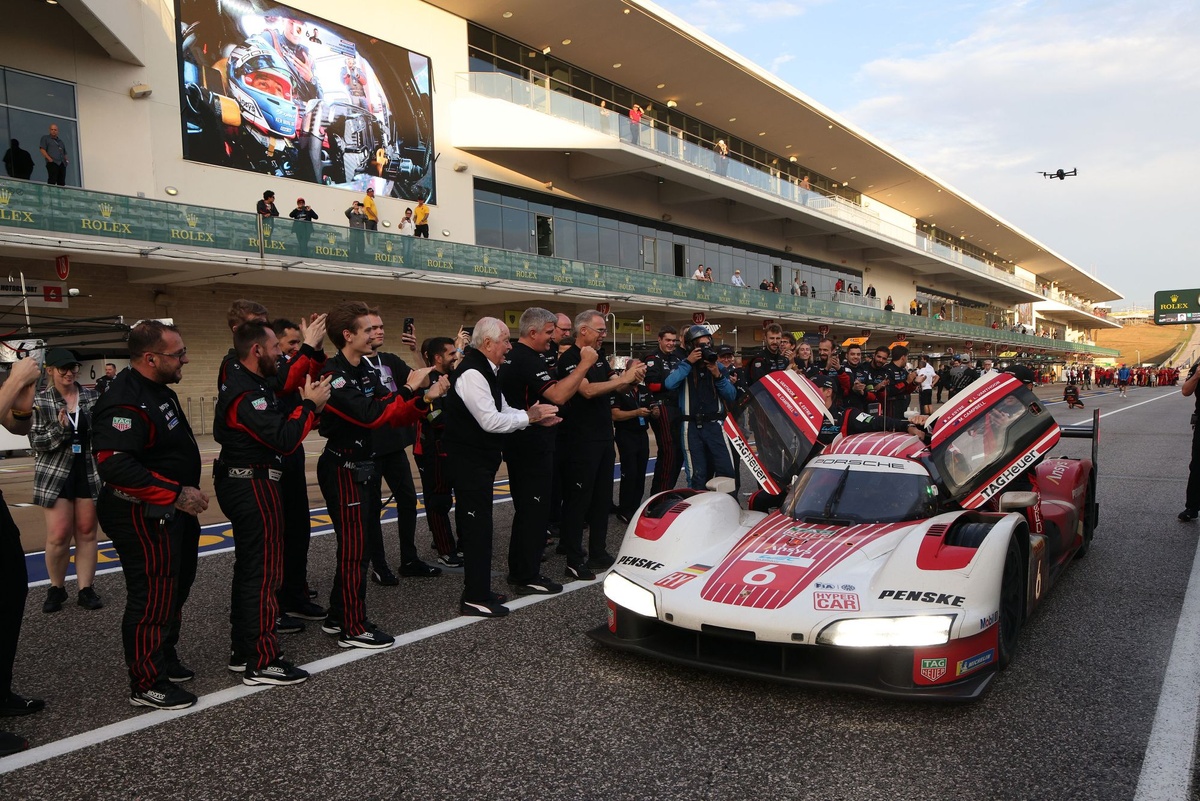
A rejuvenated Porsche Penske Motorsport (PPM) team claimed victory at Austin in September, surprising everyone by becoming contenders for the championship in the final leg of the season. Unfortunately, the points gap to Ferrari was too large to overcome, and the team endured a disastrous race in the Bahrain finale. Nevertheless, Porsche ended the season a solid third in the manufacturers’ race, only behind Ferrari and Toyota.
Legacy and Pride
Despite the lack of a Le Mans win and a manufacturers’ championship, Porsche leaves the WEC with its head held high. The 963 transformed from a shaky start into a championship-winning package in IMSA, earning the title of the most successful LMDh car in both championships. Kuratle summed up the team’s achievements, saying, “Everybody can be proud—every single team member can be proud of what we have achieved. We had a lot of success, and now we can proudly say that the Porsche 963 is the most successful LMDh car in both of the championships.”
The end of the Porsche 963’s WEC campaign is a bittersweet moment, but it is a testament to the team’s resilience and dedication to excellence.