
Mercedes’ Cold Weather Conundrum
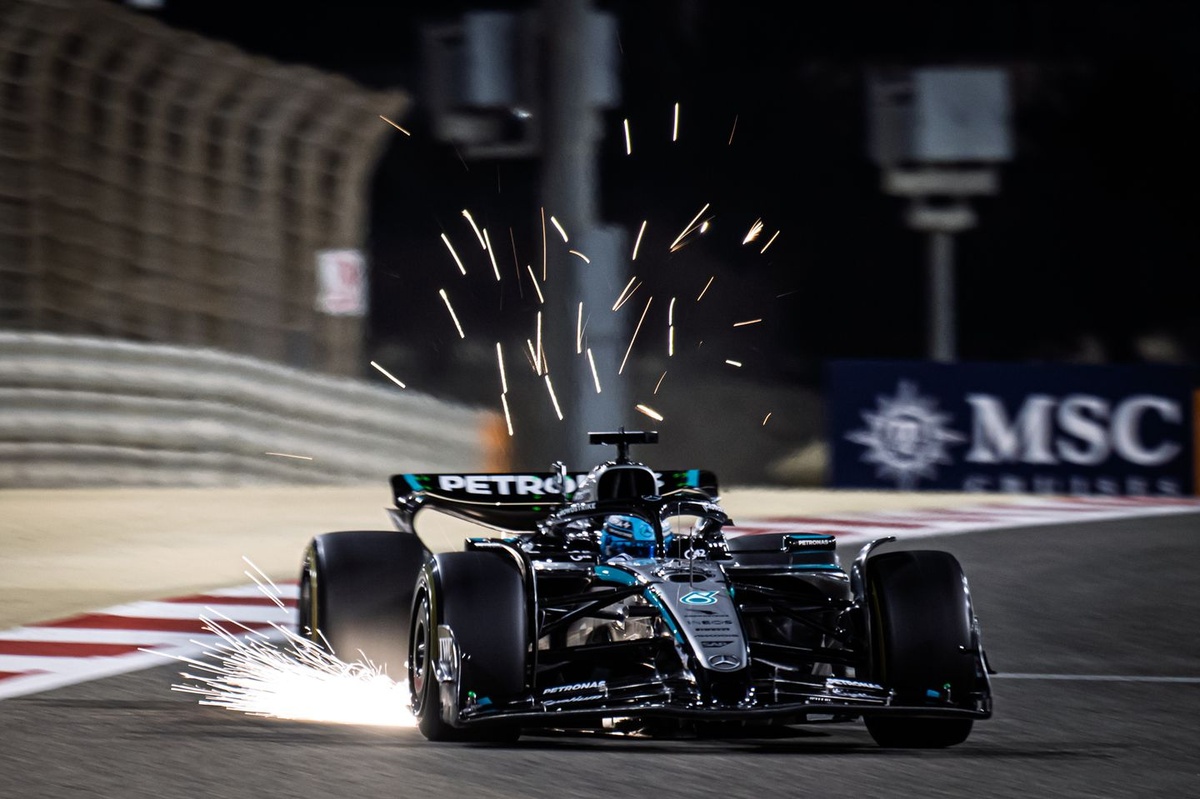
Toto Wolff, Mercedes’ Team Principal, has revealed that the team is still uncertain about whether it has resolved its Formula 1 car’s tendency to perform significantly better in cold conditions. This issue has been a recurring theme over the past year, with the team’s car often struggling in hotter conditions, particularly in terms of tire performance. Despite the team’s best efforts to address this inconsistency during the off-season, the unusual cold and wet conditions in Bahrain during pre-season testing have made it difficult for Mercedes to gauge their progress. When asked about the team’s findings, Wolff joked, "Well, I’m a bit worried at the moment because that should be conditions where we should be two seconds quicker than everybody else! [That] was the only highlight last year in terms of performance in Las Vegas and we are not [that far ahead]. So, either we’ve remedied the problem and we are more balanced through all the climate conditions or not. We’ve had a laugh about it, whether we lost some of that USP. We shall see. I don’t know."
The Impact of Weather Conditions
Mercedes’ struggle with temperature-dependent performance has been a critical issue, especially after the team secured three of its last four wins in 2024 under notably cooler conditions at Silverstone, Spa, and Las Vegas. The team’s car last season struggled to get its tires to work effectively in hotter temperatures, leading to significant performance drops. The current weather in Bahrain, with temperatures barely rising above 15°C, has made it challenging for the team to assess whether their efforts to mitigate this issue have been successful. These cold and wet conditions are precisely the kind where Mercedes expects to see a significant performance advantage, but so far, the results have been mixed, leaving the team with more questions than answers.
The Role of Simulators
Despite the challenging conditions, Mercedes has access to sophisticated simulators that can help correct and extrapolate the data gathered during pre-season testing. These tools can simulate various weather conditions and provide the team with a better understanding of how their car will perform in different environments. George Russell, one of Mercedes’ drivers, emphasized the importance of considering different scenarios, saying, "you’ve also got to try and think what it could have been if the temperature was 20 degrees hotter, if the wind was 180 degrees different." However, the simulators cannot account for random gusts of wind that can significantly impact handling and driver performance, making the team’s task even more complex.
First-Day Performance: A Mixed Bag
On the opening day of pre-season testing in Bahrain, George Russell managed to finish second, marking Mercedes’ best first day in the current rules era. While this is a positive start, it does not provide a clear indication of whether the team can consistently achieve the top results it has been missing in recent seasons. The strong winds and low temperatures have combined to make the test conditions particularly challenging, and the team remains cautious about drawing definitive conclusions from the data collected so far. The mixed performance on the first day has left the team with a sense of optimism tempered by uncertainty.
The Off-Season Efforts
Addressing the performance inconsistency in different weather conditions has been one of Mercedes’ primary focuses during the off-season. The team has invested heavily in understanding the root causes of the problem and developing solutions to ensure more balanced performance across a range of conditions. This effort includes extensive testing, simulation, and data analysis to identify and address any weaknesses in the car’s design and setup. While the results so far are not definitive, the team remains committed to finding a solution that will allow them to compete at the highest level, regardless of the weather.
Looking Ahead
As Mercedes continues its pre-season testing in Bahrain, the team will use the data collected to refine its approach and prepare for the upcoming season. The unusual weather conditions have presented a unique challenge, but they have also provided valuable insights that can be used to improve the car’s performance in various conditions. Toto Wolff and the rest of the Mercedes team are determined to find a solution that will ensure consistent performance throughout the season. The coming weeks and months will be crucial in determining whether the team’s efforts have paid off and whether they can regain their position at the top of the Formula 1 grid.