
The Critical Balance of F1 Development
Every year, Formula 1 teams face a crucial decision: when to shift their focus from the current season to designing the next car. This timing is critical, as teams that overdevelop their current cars can start the next season poorly, while those that switch too early can sacrifice immediate success with little to show for it. This year, with the 2026 rule changes on the horizon, the stakes are even higher. Teams like McLaren must walk a fine line between defending their titles and preparing for the new regulations, all while adhering to budget constraints and limited resources.
McLaren’s Confidence and Strategy
McLaren, under the leadership of Team Principal Andrea Stella, is confident in its ability to balance both the present and the future. The team, which recently won its first constructors’ championship since 1998, believes it can defend its title and compete in 2026. Stella emphasized that their approach to 2025 would not have differed even without the looming 2026 changes. The team’s focus remains on aggressive development to maintain and improve its competitive edge.
Aggressive Development and Continuous Improvement
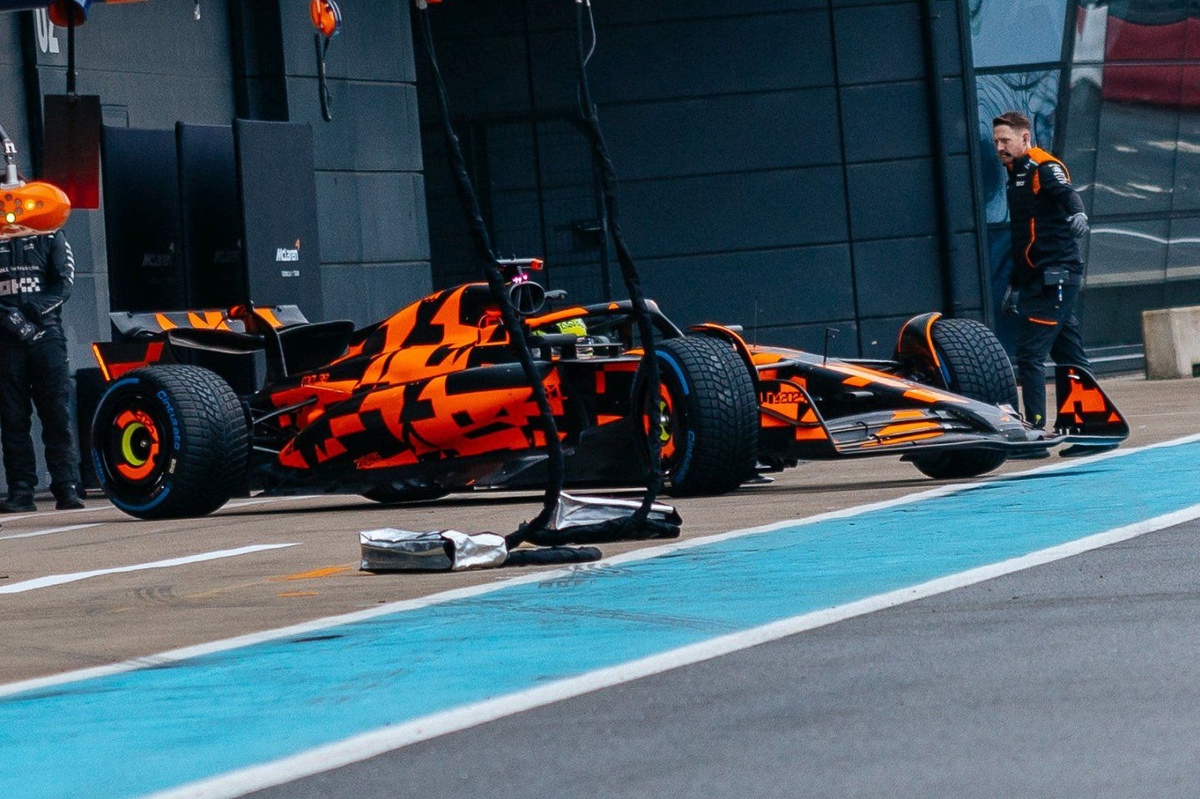
At the launch of the MCL39, McLaren’s 2025 car, Stella highlighted the team’s commitment to continuous improvement. The car was revealed in an eye-catching orange-and-black dazzle camouflage livery, symbolizing their bold approach. "We have not changed the approach or the rate of development," Stella stated. "We have just tried to go as fast as possible in terms of developing the car, ensuring updates during the early races of the season." This aggressive stance is driven by the need to stay ahead in a field where margins are incredibly tight.
The Pressure of Tight Margins
The margins in modern F1 are razor-thin, and standing still can mean a significant drop in performance. In 2024, Red Bull led the pack with an average supertime just 0.202% away from the theoretical best, while McLaren was closely behind at 0.266%. At the bottom, Sauber was 1.9% short. These small percentages translate to significant grid positions, and failing to keep up can mean a quick descent from pole position to P8 on the grid. Stella acknowledged this reality, noting, "I think those margins were so small that considering the development that other teams would have had, had we not gone as fast as possible in terms of development, we might very quickly lose any advantage that we had."
Learning from Past Mistakes
McLaren has its own history to guide its decisions. In 2008, the team, along with Ferrari, was locked in a fierce title battle and continued developing their cars until the last moment. While this approach helped them maintain their competitive edge in 2008, it left them underprepared for the 2009 season. The Brawns and Red Bulls, who had more time to develop their cars, dominated the new rules. Conversely, BMW’s experience of switching too early in 2008 serves as a cautionary tale, with some suggesting that Robert Kubica might have been in title contention had BMW not played it too safe.
Balancing Immediate and Future Goals
Despite these lessons, Stella remains confident in McLaren’s ability to achieve its goals on both fronts. "We will see if we have been able to develop more than our competitors from the 2024 to the 2025 car," he said. The team will gradually shift resources from the 2025 project to the 2026 car, ensuring a timely transition. By maintaining an aggressive development pace and learning from past mistakes, McLaren aims to stay competitive and continue its ascent in the world of Formula 1.